
Search results: 86
SP_ODM2024
Ocean Data Management 2024
This online, fully self-paced training course provides a comprehensive introduction to the management of marine data, including the guiding principles of data management and typical responsibilities for data managers, data stewards and scientists.
This course is developed by, and for, marine data managers, data stewards and researchers, working in institutions responsible for the collection and good management of marine data.
During this training course, you will be introduced to several general aspects related to the management of marine data, including, metadata, quality control, data policy, data sharing and publishing, data management plans and the research data life cycle. By the end of this course, you will be able to describe and implement the core tasks required for the processing of marine data, explain the importance of metadata, advise researchers on the research data life cycle and explain why a good data management plan is key from the very first initiation steps of a project.
Learning outcomes
By the end of this training, participants should be able to:
- Describe the phases of the Research Data Life Cycle
- Explain the concept of a Data Management Plan
- Explain the concept and importance of metadata
- identify suitable file formats for data preservation and sharing
- Identify appropriate repositories for your data
- Summarise the goal of assigning a data licence
- Explain the common concerns related to data reuse
Target audience
Marine data managers, data stewards and researchers, working in institutions responsible for the collection and good management of marine data.
This is a self-taught course that includes quizzes designed to help learners assess their own learning at regular intervals.Learner Assessment
This is a self-taught course that includes quizzes designed to help learners assess their own learning at regular intervals. In order to successfully complete the course and award a Certificate at the end, the following is mandatory:
- complete all lessons in each Module of the course;
- complete all quizzes (70% minimum score for each quiz);
Note: submitting the course feedback survey is mandatory to obtain the course certificate.
Technology requirements
To complete this course, participants should have access to:
- Computer with Windows or Mac operating system
- Latest version of either Chrome, Edge, Firefox, or Safari web browsers
How to enroll
Please register on the OceanExpert website (www.oceanexpert.org). Once your OceanExpert account is approved (this is not done immediately), you can self-enrol in the course. If you already have an OceanExpert account, you can self-enrol in the course using your OceanExpert username and password. Enrolment is available until 1 December 2024.
First log-in OceanTeacher, then access the course page and click on self-enrollment.
The enrolment key is Odm2024-2
For any questions please contact the OTGA Secretariat (ioc.training@unesco.org) always using the name of the course as email subject.
There are no tuition fees.
UNESCO is committed to promote equal access principles. Applications from minority or underrepresented groups are strongly encouraged.
Feedback survey
At the end of the course, you will be asked to fill out a feedback survey. This information will be used to improve future courses.
SP_ODM2025
Ocean Data Management 2025
This online, fully self-paced training course provides a comprehensive introduction to the management of marine data, including the guiding principles of data management and typical responsibilities for data managers, data stewards and scientists.
This course is developed by, and for, marine data managers, data stewards and researchers, working in institutions responsible for the collection and good management of marine data.
During this training course, you will be introduced to several general aspects related to the management of marine data, including, metadata, quality control, data policy, data sharing and publishing, data management plans and the research data life cycle. By the end of this course, you will be able to describe and implement the core tasks required for the processing of marine data, explain the importance of metadata, advise researchers on the research data life cycle and explain why a good data management plan is key from the very first initiation steps of a project.
Details: https://oceanexpert.org/event/4664
Learning outcomes
By the end of this training, participants should be able to:
- Describe the phases of the Research Data Life Cycle
- Explain the concept of a Data Management Plan
- Explain the concept and importance of metadata
- identify suitable file formats for data preservation and sharing
- Identify appropriate repositories for your data
- Summarise the goal of assigning a data licence
- Explain the common concerns related to data reuse
Course contents
- General overview of data management, its principles and organisation
- Research Data Life Cycle
- Data Management Plan
- Open & FAIR data
- Data licences
- Metadata
- Data standards & quality control
Target audience
Marine data managers, data stewards and researchers, working in institutions responsible for the collection and good management of marine data.
Language and computer skills required (Applicants are expected to have):
- a good working knowledge of English
- basic computer skills
- the ability to find resources through search engines
- the ability to be self-directed in learning new technology skills (e.g. following a step-by-step tutorial, online video help, or access to support to learn necessary skills)
Instructors/Organisers
This course is organised by the OceanTeacher Global Academy with the assistance of the Flanders Marine Institute.
Course duration and format:
The course will be delivered online between 1 February 2025 and 31 May 2025. The estimated time to complete the self-paced course is approximately 35 hours.
Learner Assessment:
This is a self-taught course that includes quizzes designed to help learners assess their own learning at regular intervals. In order to successfully complete the course and award a Certificate at the end, the following is mandatory:
- complete all lessons in each Module of the course;
- complete all quizzes (70% minimum score for each quiz).
Note: submitting the course feedback survey is mandatory to obtain the course certificate.
Technology requirements
To complete this course, participants should have access to:
- Computer with Windows or Mac operating system
- Latest version of either Chrome, Edge, Firefox, or Safari web browsers
How to enroll
Please register on the OceanExpert website (www.oceanexpert.org). Once your OceanExpert account is approved (this is not done immediately), you can self-enrol in the course. If you already have an OceanExpert account, you can self-enroll in the course using your OceanExpert username and password. Enrolment is available from 1 February until 15 May 2025.
First log in OceanTeacher, then access the course page and click on self-enrollment.
The enrolment key is ODM*2025
For any questions please contact the OTGA Secretariat (ioc.training@unesco.org) always using the name of the course as email subject.
There are no tuition fees.
UNESCO is committed to promote equal access principles. Applications from minority or underrepresented groups are strongly encouraged.
Feedback survey
At the end of the course, you will be asked to fill out a feedback survey. This information will be used to improve future courses.
SP_ODM2025-2
Ocean Data Management 2025 (2nd cohort)
This online, fully self-paced training course provides a comprehensive introduction to the management of marine data, including the guiding principles of data management and typical responsibilities for data managers, data stewards and scientists.
This course is developed by, and for, marine data managers, data stewards and researchers, working in institutions responsible for the collection and good management of marine data.
During this training course, you will be introduced to several general aspects related to the management of marine data, including, metadata, quality control, data policy, data sharing and publishing, data management plans and the research data life cycle. By the end of this course, you will be able to describe and implement the core tasks required for the processing of marine data, explain the importance of metadata, advise researchers on the research data life cycle and explain why a good data management plan is key from the very first initiation steps of a project.
Details:
Learning outcomes
By the end of this training, participants should be able to:
- Describe the phases of the Research Data Life Cycle
- Explain the concept of a Data Management Plan
- Explain the concept and importance of metadata
- identify suitable file formats for data preservation and sharing
- Identify appropriate repositories for your data
- Summarise the goal of assigning a data licence
- Explain the common concerns related to data reuse
Course contents
- General overview of data management, its principles and organisation
- Research Data Life Cycle
- Data Management Plan
- Open & FAIR data
- Data licences
- Metadata
- Data standards & quality control
Target audience
Marine data managers, data stewards and researchers, working in institutions responsible for the collection and good management of marine data.
Language and computer skills required (Applicants are expected to have):
- a good working knowledge of English
- basic computer skills
- the ability to find resources through search engines
- the ability to be self-directed in learning new technology skills (e.g. following a step-by-step tutorial, online video help, or access to support to learn necessary skills)
Instructors/Organisers
This course is organised by the OceanTeacher Global Academy with the assistance of the Flanders Marine Institute.
Course duration and format:
The course will be delivered online between 1 July 2025 and 31 October 2025. The estimated time to complete the self-paced course is approximately 35 hours.
Learner Assessment:
This is a self-taught course that includes quizzes designed to help learners assess their own learning at regular intervals. In order to successfully complete the course and be awarded a Certificate at the end, the following is mandatory:
- complete all lessons in each Module of the course;
- successfully complete the pre- and post-assessment;
- complete all quizzes (70% minimum score for each quiz).
Note: submitting the course feedback survey is mandatory to obtain the course certificate.
Technology requirements
To complete this course, participants should have access to:
- Computer with Windows or Mac operating system
- Latest version of either Chrome, Edge, Firefox, or Safari web browsers
How to enroll
Please register on the OceanExpert website (www.oceanexpert.org). Once your OceanExpert account is approved (this is not done immediately), you can self-enrol in the course. If you already have an OceanExpert account, you can self-enroll in the course using your OceanExpert username and password. Enrolment is available from 1 July until 15 October 2025.
First log in OceanTeacher, then access the course page and click on self-enrollment.
The enrolment key is ODM*2025
For any questions please contact the OTGA Secretariat (ioc.training@unesco.org) always using the name of the course as email subject.
There are no tuition fees.
UNESCO is committed to promote equal access principles. Applications from minority or underrepresented groups are strongly encouraged.
Feedback survey
At the end of the course, you will be asked to fill out a feedback survey. This information will be used to improve future courses.
SP_ODM2026
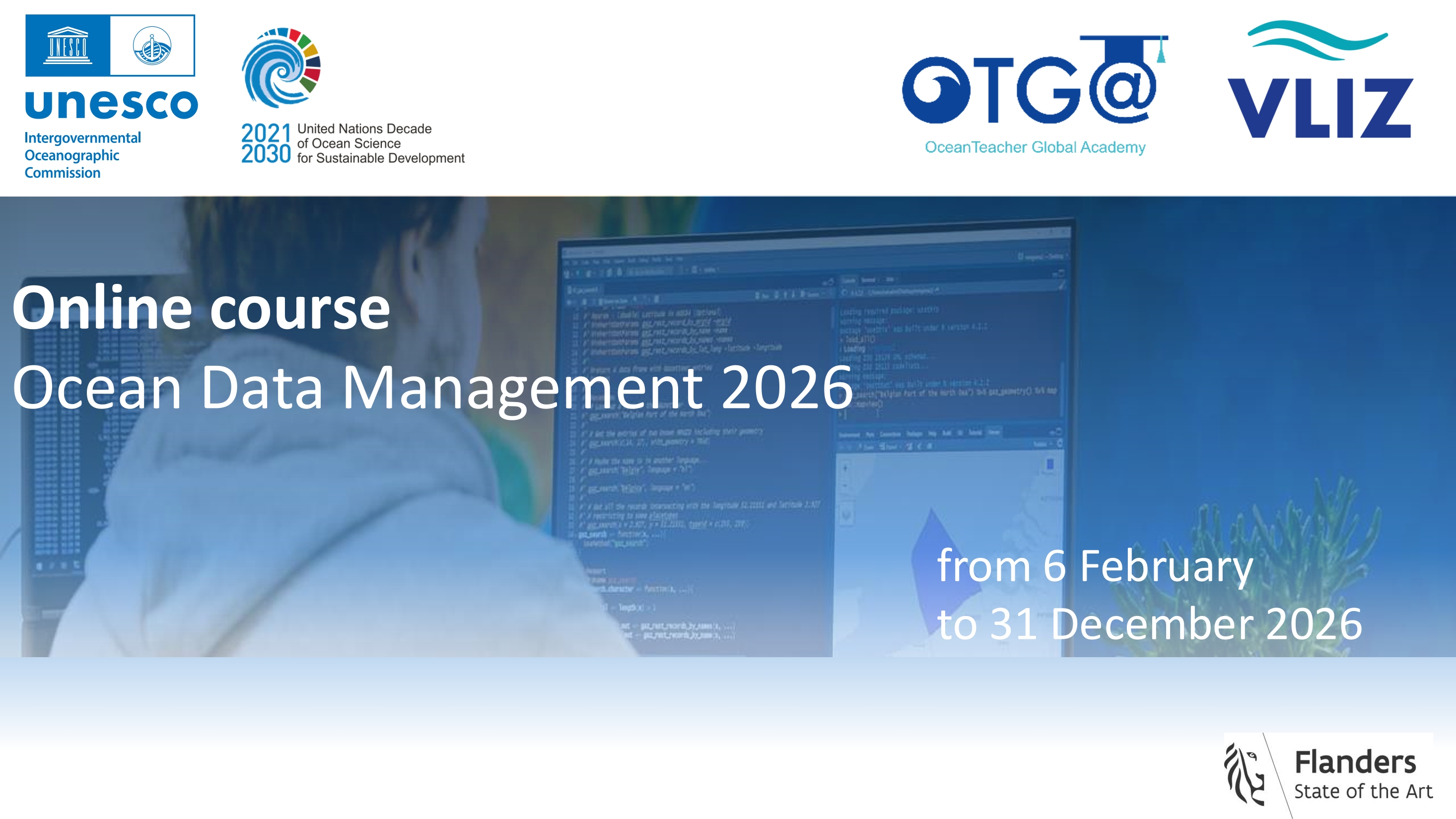
Ocean Data Management 2026
This online, fully self-paced training course provides a comprehensive introduction to the management of marine data, including the guiding principles of data management and typical responsibilities for data managers, data stewards and scientists.
This course is developed by, and for, marine data managers, data stewards and researchers, working in institutions responsible for the collection and good management of marine data.
During this training course, you will be introduced to several general aspects related to the management of marine data, including, metadata, quality control, data policy, data sharing and publishing, data management plans and the research data life cycle. By the end of this course, you will be able to describe and implement the core tasks required for the processing of marine data, explain the importance of metadata, advise researchers on the research data life cycle and explain why a good data management plan is key from the very first initiation steps of a project.
Needs and priorities
This training contributes to IOC action on enhancing the capacity of its Member States to access technology, physical infrastructure, data and information (output 2; IOC Capacity Development Strategy, 2023-2030).
It links to IOC Strategic Plan for Ocean Data and Information Management (2023-2029) by adding to the support of community data principles such as FAIR (Findable, Accessible, Interoperable and Reusable), CARE (Collective benefit, Authority to control, Responsibility, Ethics), and TRUST (Transparency, Responsibility, User Focus, Sustainability, Technology); and by providing training to facilitate publishing of research findings by scientists (with special attention to scientists in developing countries).
Learning outcomes
By the end of this training, participants should be able to:
- Describe the phases of the Research Data Life Cycle
- Explain the concept of a Data Management Plan
- Explain the concept and importance of metadata
- identify suitable file formats for data preservation and sharing
- Identify appropriate repositories for your data
- Summarise the goal of assigning a data licence
- Explain the common concerns related to data reuse
Course content
- General overview of data management, its principles and organisation
- Research Data Life Cycle
- Data Management Plan
- Open & FAIR data
- Data licences
- Metadata
- Data standards & quality control
Target audience
This course is open to any person interested in learning about Ocean Data Management.
It was prepared for: marine data managers, data stewards and researchers, working in institutions responsible for the collection and good management of marine data.
Language and computer skills required:
- a good working knowledge of English
- basic computer skills
- the ability to find resources through search engines
- the ability to be self-directed in learning new technology skills (e.g. following a step-by-step tutorial, online video help, or access to support to learn necessary skills)
Instructors/Organisers
This course is organised by the OceanTeacher Global Academy with the assistance of the Flanders Marine Institute, with the contribuitions of:
- Leen Vandepitte
- Greg Reed
- Katrina Exter
- Laurian Van Maldeghem
- Marie Robberecht
- Charlotte Dhondt
- Ruben Perez Perez
- Alice Pohle
Course duration and format
The course will be delivered online continuously on a yearly basis. This cohort is open until 31 December 2026. The estimated time to complete the self-paced course is approximately 35 hours.
Learner Assessment
This is a self-taught course that includes quizzes designed to help learners assess their own learning at regular intervals. In order to successfully complete the course and be awarded a Certificate at the end, the following is mandatory:
- complete all lessons in each Module of the course;
- successfully complete the pre- and post-assessment; and
- complete all quizzes (70% minimum score for each quiz).
Note: submitting the course feedback survey is mandatory to obtain the course certificate.
Technology requirements
To complete this course, participants should have access to:
- Computer with Windows or Mac operating system
- Latest version of either Chrome, Edge, Firefox, or Safari web browsers
How to enroll
Please register on the OceanExpert website (www.oceanexpert.org). Once your OceanExpert account is approved (this is not done immediately), you can self-enrol in the course. If you already have an OceanExpert account, you can self-enroll in the course using your OceanExpert username and password. Enrolment is available till 31 December 2026.
First log in OceanTeacher, then access the course page and click on self-enrollment.
The enrolment key is Odm**2026
For any questions please contact the OTGA Secretariat (ioc.training@unesco.org) always using the name of the course as email subject.
There are no tuition fees.
UNESCO is committed to promote equal access principles. Applications from minority or underrepresented groups are strongly encouraged.
Feedback survey
At the end of the course, you will be asked to fill out a feedback survey. This information will be used to improve future courses.
ODMR2018
Ocean Data Management for Researchers
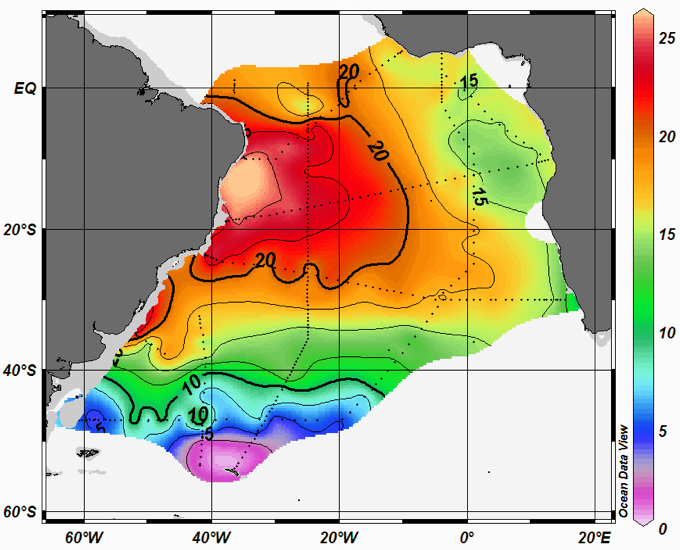
This training course is aimed at researchers at the post-graduate level and provides a comprehensive introduction to a variety of marine datasets and formats and the use of software for synthesis and analysis of marine data. The importance of good research data management practices and the role of researchers will also be highlighted. Personal projects are presented by the students at the end of the course.
DataStewardship2021
Ocean Data Stewardship in the Decade of Ocean Science for Sustainable Development
Co-Growth 2026 China
Ocean Governance & Sustainable Coastal Growth and Resilience Course (Co-Growth 2nd Edition)
This comprehensive course provides an in-depth exploration of coastal resilience concepts that are key in supporting sustainable business practices and protecting communities against natural hazards and climate change-related impacts. Through immersive and hands on onsite activities, participants will learn and implement the principles, technologies, and strategies needed to understand, assess, and bolster resilience within coastal regions, while emphasizing business responsibility and proactive risk management tailored to Asia-Pacific context.
Building on the success of previous editions, this two-week program will run from 5 to 18 September, with sessions held successively across three Chinese coastal cities: Sanya, Hangzhou and Qingdao. Jointly guided by the Ministry of Natural Resources (MNR) of China, the Intergovernmental Oceanographic Commission (IOC) of UNESCO and the International Ocean Institute (IOI), the training is co-organized by National Marine Data and Information Service (NMDIS), the Second Institute of Oceanography (SIO), MR and the Hainan Provincial Oceanic Administration. It serves as a key regional capacity-building activity targeting marine administrators and technical specialists from developing nations across the Western Pacific. The course is also supported by the Decade Collaborative Centre for Coastal Resilience and its Partner Alliance Network, with contributions to the in-person training from Hereon and the University of Bologna.
The baseline Co-Growth learning framework was conceptualized by the Decade Collaborative Centre for Coastal Resilience (DCC-CR), with the support of the IOC’s Decade Capacity Development Facility (CDF) and OceanTeacher Global Academy (OTGA).
Place and venue
-
Sanya: Yazhou Bay Science and Technology City Innovation Research Valley
-
Hangzhou: Second Institute of Oceanography
-
Qingdao: Ocean University of China (West Coast Campus), Wanda Vista Hotel Qingdao Oriental Movie Metropolis.
Needs and priority analysis
This training contributes to IOC action on enhancing the capacity of its Member States to access technology, physical infrastructure, data and information through promoting human resources development at individual and institutional levels (output 1 and 2 of IOC Capacity Development Strategy, 2023-2030); and to the UN Ocean Decade by addressing capacity development needs of partners involved in current and future Ocean Decade Actions.
It also contributes to the implementation of IOC Medium-term Strategy (2022-2029) and IOC WESTPAC Call to action SGOs Tokyo Statement, by facilitating initiatives to improve Resilience to climate change and contribution to its mitigation.
Learning outcomes
After completing this course, participants will be able to:
-
Explain the fundamentals and applications of blue carbon ecosystems, including basic and advanced theory, carbon sequestration mechanisms, and practical case studies drawn from Chinese coastal management experience.
-
Apply remote sensing and machine learning techniques to oceanographic problems, including coastal water monitoring, high-resolution 3D ocean field reconstruction, neural network fundamentals, and AI-driven analysis of extreme sea-level events.
-
Evaluate the impacts of climate change on coastal and marine systems, including sea level rise, statistical modelling of extreme events, storm surge dynamics, and associated adaptation strategies.
-
Assess frameworks for sustainable ocean governance and environmental protection, covering ocean economy and governance principles, management of areas beyond national jurisdiction, coral reef monitoring, and hands-on observation through field site visits and emerging sensor technologies.
Course content
See the final version of the programme HERE.
Target audience and prerequisites
This course is designed for early-career scientists and professionals as part of their professional development and continuing education. It is especially intended for early-career scientists, young professionals working in coastal consulting firms, coastal managers and operators, and staff from environmental protection and civil protection agencies. Priority will be given to researchers and technical staff (such as managers and operators) from national and international institutions involved in ocean science, marine services, and ocean management in the Asia-Pacific region.
Language of instruction: English
Instructors
Course Coordinators
Contributing to the lectures:
Peng Zhao
Ballin Cong
Marco Marani
Lingling Li
Junxiao Zhang
Yuan Bing
Weili Wang
Bing Yuan
Xianqiang He
Wei Chen
Other contributors:
Course format
This is a face-to-face training with live sessions will run daily from 9:00-17:00 approximately. The total course duration is approximately 112 hours.
Learner assessment
This course contains one final report as core assessment. Other non-graded assessments may be included in the hands-on activities.
Evaluation/Certificate
A certificate will be awarded to the participants upon successful completion of:
-
All sessions face-to-face;
-
Final report (passmark: 70%);
-
Completion of a pre and post-test; and
-
Completion of a feedback survey.
Technology requirements/computer skills
-
Basic computer skills and experience in working in a digital learning environment.
-
Notions on QGIS and Python programming (Jupyter notebooks environment).
Application process
Managed externally by the Ministry of Foreign Affairs of China.
Number of participants
Approximately 35.
Costs
This course is offered with no tuition fees.
Participants were granted support for lodging, transportation, and subsistence during the course from the organizers.
Contacts
For additional questions, please contact OTGA Secretariat (ioc.training@unesco.org) always using the name of the course as e-mail subject.
Cancellation policy
In the event of cancellation of the course by the OTGA or its affiliates, we will provide notification of cancellation at least 7 days prior to the course date. In the event of cancellation by the attendee, we should receive notification of cancellation at least 7 days prior to the course date.
OCEANDATACOLOR2017
Ocean-colour data in climate studies
The course will deliver training in ocean-colour data and their applications in climate studies. Remote sensing experts from the Plymouth Marine Laboratory (PML) will guide students through a combination of lectures and computer-based exercises covering the following topics:
- Introduction to ocean colour;
- Modelling primary production;
- Ocean colour applications for ecosystem state assessment;
- Climate impacts and feedbacks;
- Ocean colour in data assimilation;
- Dataset archive, management, visualisation and analysis.
Students will also have opportunity of informal discussion with instructors outside of the formal lectures. A visit of the NERC Earth Observation Data Acquisition and Analysis Service (NEODAAS) that is hosted at PML will be provided.

QAQC2022EN
Quality Assurance and Quality Control on Marine Ecosystem-based Management
This training course will focus on raising the awareness for the need
for Quality Assurance and Quality Control on Marine Ecosystem-based
Management. Participants will be introduced to up-to-date best
practices and standards as well as the quality assurance and quality
control on marine ecosystem observation, and marine
instrument measurement testing, specifically on the four important
sectors of the whole process of QA and QC,
namely sensors, laboratory, data processing, and product application.
The course will use case studies relevant for the Western Pacific.

QMF2017
Quality Management System Essentials for NODCs and ADUs
Overview
The IODE maintains a global network of National Oceanographic Data Centres (NODC) and Associate Data Units (ADU) responsible for the collection, quality control, archive and online publication of many millions of ocean observations. The concept of quality management has become increasingly significant for these centres to meet national and international competency standards for delivery of data products and services. The IODE Quality Management Framework encourages NODCs and ADUs to implement a quality management system which will lead to the accreditation.
Objectives
This training workshop provides an introduction for NODCs and ADUs involved in the development, implementation and management of a Quality Management System which will assist in the adoption of comprehensive management practices and increased confidence in the quality of their data, products and services. The objectives are to:
- Introduce the IODE Quality Management Framework
- Introduce the ISO 9000 series of standards
- Provide a description of a Quality Management System
- Describe the importance of quality management for oceanographic data
- Describe the accreditation process for NODCs and ADUs
Learning Outcomes
By the end of the course, learners should be able to:
- Understand the fundamental requirements of the ISO 9001:2015 international standard
- Identify situations and processes within their own organisations to be included in the quality management system
- Understand the requirements of the IODE accreditation process
Assessment
This is a practical workshop. The participants will work in teams to complete exercises on each topic to reinforce learning and understanding of the requirements for a quality management system and the IODE accreditation for NODCs and ADUs.

QMF2020
Quality Management System Essentials for NODCs and ADUs 2020

QMF2024
Quality Management System Essentials for NODCs and ADUs 2024
Details: https://oceanexpert.org/event/3990
OAGHANA_2026
Regional Training Course on Ocean Acidification Monitoring, Data Management, and SDG 14.3.1 Reporting
Summary
This course will provide participants with foundational and practical training in ocean acidification monitoring, with emphasis on the ocean carbonate system, field sampling, laboratory analysis, data quality control, data management, and reporting in support of Sustainable Development Goal indicator 14.3.1.
The course will guide participants through the full ocean acidification monitoring workflow, from planning field observations and collecting samples to laboratory analysis, data interpretation, quality assurance, and submission of data to relevant global data systems. It will also introduce the role of ocean acidification observations in understanding marine ecosystem vulnerability, coastal resource management, and long term ocean change.
The programme will be delivered as a blended course. The online component will provide core theoretical knowledge and ensure that learners with different levels of prior experience develop a common foundation. The onsite component will focus on practical demonstrations, hands-on field and laboratory methods, data analysis exercises, and development of country level or institutional monitoring plans.
Format and Duration
This is a blended course consisting of two phases:
Phase 1: Online Pre-training Course (self-paced) 25 May – 24 June 2026
Approximately 20 asynchronous hours across 7 modules (video lectures, readings, quizzes).
Total estimated workload Phase 1 : 20 hours.
Phase 2: In-person Practical Training (University of Ghana) 29 June – 3 July 2026
Approximately 40 hours of practical demonstrations, lab sessions, data analysis, and group work.
*Note that the in-person training is will only be available for a limited group of people.
Total estimated workload Phase 1 and 2: 60 hours.
⚠️ Participants are required to complete the online phase before attending the in-person training. Attendance during the onsite phase is mandatory for selected in-person participants.
Venue: University of Ghana, Ghana
Language of instruction: English
Learning outcomes
By the end of this training, participants should be able to:
- Explain the concept of ocean acidification and describe its implications for marine ecosystems, coastal communities, and ocean resources
- Describe the ocean carbonate system and identify key carbonate chemistry parameters (pH, total alkalinity, dissolved inorganic carbon, pCO₂, and calcium carbonate saturation state)
- Identify appropriate field sampling procedures and laboratory methods for OA monitoring
- Apply basic quality assurance and quality control principles to ocean acidification data
- Interpret ocean acidification datasets and assess spatial and temporal variability
- Manage ocean acidification datasets using good data management practices
- Describe the SDG 14.3.1 indicator methodology and explain the data submission process
- Design a basic ocean acidification monitoring plan for their country or institution
Course content
Online
Module 1 : Introduction to Ocean Acidification
Module 2 : The Ocean carbonate system
Module 3 : Data quality and management
Module 4: the 14.3.1 SDG Indicator Methodology
Module 5: Laboratory experiments for ocean acidification
Module 6: Chemical observations in the field
Module 7: Biological observations in the field
Onsite
- Field sampling planning and sample collection and preservation
- Laboratory demonstrations and quality checks
- Data analysis exercises
- Group discussions and participant presentations
- Development of a basic ocean acidification monitoring plan
Target audience
The course is intended for students, early-career researchers, laboratory technicians, marine science professionals, and staff of relevant national institutions from countries in the Eastern Tropical Atlantic region. Priority will be given to applicants affiliated with BIOTTA focal points, national oceanographic institutions, universities, environmental agencies, or laboratories involved in marine monitoring.
Basic knowledge of marine science, chemistry, oceanography, or related fields is recommended.
Places available: 11 participants for the full blended course (online + onsite); up to 24 additional participants for the online component only.
Organizers
This course is jointly organized by the Intergovernmental Oceanographic Commission (IOC) of UNESCO, through the Ocean Science Section and the OceanTeacher Global Academy (OTGA), University of Ghana OTGA Regional Training Centre, The Ocean Foundation, and OMI - Ocean Margins Initiative.
In-person Instructors
- Prof. Kim Currie: National Institute of Water and Atmospheric Research (NIWA)
- Dr. Leticia Barbero: National Oceanic and Atmospheric Administration (NOAA)
Instructors who prepared the online materials for the IOC Ocean Acidification course, first version:
- Prof. Helen Findlay: Plymouth Marine Laboratory
- Dr. Sam Dupont: University of Gothenburg
- Dr. Kirsten Isensee: IOC of UNESCO
- Dr. Adrienne Sutton: NOAA/PMEL
- Prof. Christopher Sabine: University of Hawaii – Manoa
Course Coordinator Prof. Edem Mahu: University of Ghana RTC edemmahu@gmail.com / emahu@ug.edu.gh
Registration, costs, and technological requirements
Applications for this course are now closed (deadline: 25 April 2026). Selected participants have been notified.
(For reference, the original application form was available at: https://lnkd.in/dbu-Xpsc)
Selected participants will not be required to pay course registration or training fees. Support for travel, accommodation, meals, and local transport will be subject to available funding and communicated to selected participants before the course starts.
To complete the online course, participants need access to:
- A computer with Windows, Mac OS, or Linux
- Latest version of Chrome, Edge, Firefox, or Safari
- Stable internet connection (minimum 0.5 Mbps)
- Basic computer literacy; familiarity with spreadsheets recommended
UNESCO is committed to promoting equal access principles. Applications from minority or underrepresented groups are strongly encouraged.
Assessment & Certificate
Certificates will be issued to participants who:
- Complete all required online modules
- Achieve a minimum score of 70% across required quizzes and assessment activities
- Participate in the onsite practical sessions (where applicable)
- Complete the mandatory course evaluation form
Contacts
For course organisation, please contact: Prof. Edem Mahu – edemmahu@gmail.com / emahu@ug.edu.gh
For additional questions, please contact the OTGA Secretariat (ioc.training@unesco.org), always using the name of the course as email subject.
Cancellation policy
In the event of cancellation of the course by the OTGA or its affiliates, we will provide notification of cancellation at least 7 days prior to the course date. In the event of cancellation by the attendee, we should receive notification of cancellation at least 7 days prior to the course date.
RCPM2018BE
Research Cruise Planning & Management
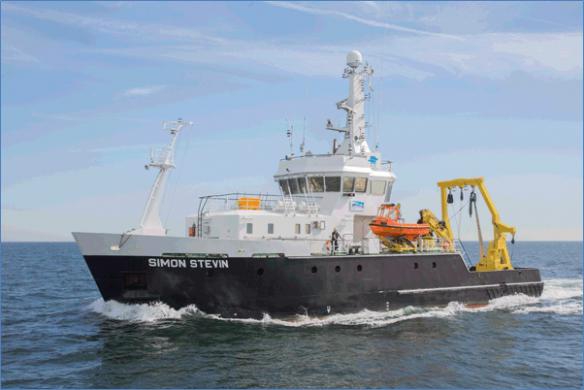
This course provides an overview of requirements for organizing a Research Cruise within a project and/or submitting a request for ship time. The course takes place mainly in a classroom but includes a visit to a Marine station and a research vessel, where participants will be introduced to sampling equipment and marine research infrastructure used for onboard research, including demonstrations of the use and maintenance of marine sampling equipment, oceanographic (biological, chemical and physical data) sampling, data collection and data management.
RDM2017BE
Research Data Management
Basic scientific research requires sound data management practices to support the collection and curation of data to encourage data sharing using internationally agreed rules of data exchange, and to facilitate data discovery and use in the long term. Research Data Management (RDM) covers the planning, creating, storing, organizing, accessing, sharing, describing, publishing and curating of data. RDM is mandated by many funding agencies and increasingly by governments to provide access to funded research results. The management of data, particularly large-scale data, has many challenges, and the roles of researchers, facilities that manage marine data, repositories and libraries are coming together to provide access, preservation and archive of this data and the scholarly products associated with it.

The learning outcomes of this course are to:
- Understand the importance of maintaining integrity (accuracy and completeness) of data.
- Develop skills in writing and implementing a (Research) Data Management Plan, including those associated with Funding agency requirements and mandates.
- Gain knowledge of the terminology of Open Access and Open Data as it applies to Research Data Management.
- Advance knowledge in the current landscape of Research Data Management, and internationally organized efforts to develop standards and tools in this field.
- Recognize the importance of good research data management practice.
- Gain knowledge of the data publishing and citation process.
- Access to European marine data repositories.
- Awareness of main European based marine research projects (e.g. EMODNET, SeaDataCloud, etc)
MOOC 2018 edition Module 1: Project Management
Research Design, Data Management & Data Communication in Marine Sciences - Module 1 - Research Design
Research Design, Data Management & Data Communication in Marine Sciences
MOOC 2018 edition Module 1: Project Management
MOOC 2018 edition Module 2: Data Management
Research Design, Data Management & Data Communication in Marine Sciences - Module 2 - Data Management
Research Design, Data Management & Data Communication in Marine Sciences - MOOC 2018 edition
Module 2: Data Management
MOOC 2018 edition Module 3: Science Communication
Research Design, Data Management & Data Communication in Marine Sciences - Module 3 - Data Communication
Research Design, Data Management & Data Communication in Marine Sciences
Module 3: Scientific Communication
SEAMARCS
Strengthening Sea Level Monitoring and Data Management in East Africa for Coastal Resilience and Community Safety Technical Training
The Strengthening Sea Level Monitoring and Data Management in East Africa for Coastal Resilience and Community Safety Technical Training – SEAMARCS is a five-day technical capacity development course designed to strengthen national and regional capabilities in sea-level observation, data management, and applied sea-level science within the Sub-Saharan Africa and South West Indian Ocean (SWIO) region
The course aims to provide participants with practical and theoretical knowledge required to install, operate and maintain tide gauge stations contributing to the Global Sea Level Observing System (GLOSS). Core content includes:
- Sea-level measurement technologies, station installation, maintenance, and troubleshooting
- Data telemetry and operational data exchange with the IOC Sea Level Station Monitoring Facility (SLSMF) and other international data centres
- Sea-level data processing, quality control (including automated QC using the IOC SLSMF API), tidal analysis and interpretation
- Fundamental sea-level science, including tides, surges, seiches, tsunamis, sea-level rise, and vertical land motion
- Practical field exercises, including a site visit to operational tide gauge stations and basic surveying and levelling techniques (optical and GNSS).
- The training targets technicians, hydrographers, surveyors, and early-career oceanographers who are directly involved in water level observations and data analysis, with an emphasis on hands-on learning and operational problem-solving in a real-world context.
Learning outcomes
Upon successful completion of the Strengthening Sea Level Monitoring and Data Management in East Africa for Coastal Resilience and Community Safety Technical Training – SEAMARCS, participants will be able to:
Identify and describe the main sea-level measurement technologies used in GLOSS tide gauge stations and explain their operational strengths and limitations.
- Configure and manage data telemetry systems to enable timely transmission of sea-level data from national stations to the IOC Sea Level Station Monitoring Facility (SLSMF) and other relevant international data centres.
- Apply standard sea-level data processing and quality control procedures, including the use of automated quality control tools and the IOC SLSMF API.
- Interpret sea-level time series (mareograms) to identify and distinguish physical phenomena such as tides, seiches, storm surges, tsunamis, and longer-term sea-level variability.
- Perform basic tidal analysis and explain the concept and use of tidal datums in hydrographic, oceanographic, and maritime applications.
- Explain the role of vertical land motion and site stability in sea-level observations and integrate levelling and GNSS information into station assessments.
- Demonstrate practical field skills through site visits and hands-on exercises, including basic surveying and inspection of operational tide gauge infrastructure.
Course content
The training will support the subsequent installation of SEAMARCS tide gauge stations at locations in Kenya, Mozambique, Madagascar and Seychelle. The training will strengthen the technical and operational capacities of personnel responsible for sea-level monitoring systems and associated data management in participating countries. The training will provide both theoretical and practical knowledge on tide gauge operation, calibration, maintenance, quality control and data management.
The training combines theoretical lectures, practical exercises, system demonstrations, and a field visit to ensure participants gain applied operational skills in sea-level observation and data management.
1. Introduction and Regional Context
- Overview of the GLOSS and its role within IOC programmes
- Network reports and experience-sharing by participating Member States
- Regional sea-level monitoring challenges and priorities in the Indian Ocean region
2. Sea-Level Measurement Technologies
- Overview of sea-level measurement principles
- Types of tide gauges and sensors used in GLOSS stations
- Strengths, limitations, and suitability of different technologies for operational monitoring
3. Tide Gauge Installation, Operation, and Maintenance
- Anatomy and components of a tide gauge station
- Installation requirements and best practices
- Routine maintenance procedures and operational checks
- Troubleshooting common technical problems affecting station performance
4. Data Telemetry and International Data Exchange
- Data transmission systems and telemetry options
- Establishing and maintaining data delivery links with the IOC Sea Level Station Monitoring Facility (SLSMF)
- Overview of other international and GLOSS sea-level data centres
- Practical troubleshooting session to establish or improve data links
5. Sea-Level Data Processing and Quality Control
- Introduction to sea-level data formats and processing workflows
- Manual and automated quality control procedures
- Use of the IOC SLSMF API for automated quality control
- Practical exercises using real sea-level datasets
- Tidal analysis using TTide
6. Sea-Level Science and Data Interpretation
- Interpretation of mareograms and sea-level records
- Identification of physical processes affecting sea level, including:
- Tides
- Seiches
- Storm surges
- Tsunamis
- Sea-level rise and variability
- Overview of tidal analysis methods and tidal datums
7. Vertical Land Motion and Site Stability
- Concepts of vertical land motion (VLM) and its impact on sea-level observations
- Theory of levelling methods (optical levelling and GNSS)
- Integration of GNSS and levelling data with sea-level observations
- Overview of GNSS and VLM data centres supporting sea-level monitoring
8. Practical Field Activities
- Site visit to an operational tide gauge station
- Hands-on inspection of station components and surroundings
- Basic surveying and levelling exercises in the field
- Application of learned concepts in a real operational environment
Target audience
The training is intended for professionals from IOC Member States in Sub-Saharan Africa and SWIO region who are currently involved, or expected to be involved, in sea-level observation and data management activities. Specifically, the target audience includes:
- Technicians responsible for the operation and maintenance of tide gauge stations including the prospective SEAMARCS stations
- Hydrographers and surveyors working with coastal and water level measurements
- Data analysts involved in processing and quality control of sea-level data
- Early-career or entry-level oceanographers engaged in sea-level or coastal observation programmes
Participants are typically affiliated with national oceanographic, hydrographic, or maritime institutions contributing, or planning to contribute, sea-level data to IOC systems such as GLOSS and the IOC Sea Level Station Monitoring Facility (SLSMF).
Prerequisites
- No prior specialised knowledge of tides or advanced sea-level science is required
- Basic understanding of oceanographic or tidal concepts is desirable
- Basic computer skills are required, including the ability to work with digital data and software tools
- Some familiarity with water level data processing requirements or operational measurement environments is expected
- Willingness and ability to participate in hands-on fieldwork, including a site visit to a tide gauge station and basic survey exercises
Selection Criteria
Professional relevance
- Candidates must be currently involved, or expected to be involved, in sea‑level observation, tide gauge operation, or water‑level data analysis within a national oceanographic, hydrographic, or maritime institution
Institutional role and applicability
Priority is given to nominees whose responsibilities allow them to directly apply the training outcomes to the operation, maintenance, or data management of tide gauge stations contributing to GLOSS and IOC systems
Regional eligibility
- Applicants have been selected from countries which are in the scope of the SEAMARCS project and a follow-on project.
Basic computer skills
- Some familiarity with water‑level data processing or measurement environments
- An ability to participate fully in hands‑on technical and field activities
Language proficiency
- Sufficient working knowledge of English, as the training will be conducted entirely in English
Commitment to full participation
- Availability to attend the entire onsite training period (29 June – 03 July 2026), including practical sessions and the site visit
- Gender and geographic balance (where applicable)
- Selection may take into account equitable geographic representation and gender balance, in line with IOC capacity development principles
Course language: English
Instructors
Duration: 37 hours - 5 days onsite
Learner assessment
Written and oral assessments throughout the training course
Certificate
After completing the written and oral assessment, and the feedback survey, a certificate will be provided.
Technology requirements
Participants should be able to:
- Use a personal computer confidently, including basic operating system functions (file management, installing or running software, connecting to networks)
- Work with digital datasets, including opening, viewing, and managing sea-level or time‑series data files
- Use common productivity software, such as spreadsheets and document viewers, to review, organize, and inspect data outputs
- Access and use web-based platforms and online tools, including browser-based data portals and APIs demonstrated during the training (e.g. IOC Sea Level Station Monitoring Facility tools)
Technical Skills:
- Basic knowledge of water level data processing requirements, sufficient to follow instruction on data quality control and analysis workflows
- Familiarity with digital communication and data transmission concepts, supporting understanding of telemetry and data exchange with international data centres
Willingness and ability to engage in hands-on technical sessions, including practical exercises using IOC tools, APIs, and real sea-level dataset
Venue
Hotel Tivoli Maputo, Av. 25 Setembro, nº 1321
340 Maputo, Moçambique
Organisers
- Intergovernmental Oceanographic Commission of UNESCO (UNESCO‑IOC)’s Global Sea Level Observing System (GLOSS)
Ex-employees of the National Oceanography Centre (NOC), United Kingdom - Flanders Marine Institute (VLIZ)
- UNESCO‑IOC Project Office for IODE (Ostend, Belgium)
Contacts
For course organization, please contact: Angela Hibbert (course organiser)
For additional questions, please contact OTGA Secretariat (ioc.training@unesco.org) always using the name of the course as e-mail subject.
Cancellation policy
In the event of cancellation of the course by the OTGA or its affiliates, we will provide notification of cancellation at least 7 days prior to the course date. In the event of cancellation by the attendee, we should receive notification of cancellation at least 7 days prior to the course date.
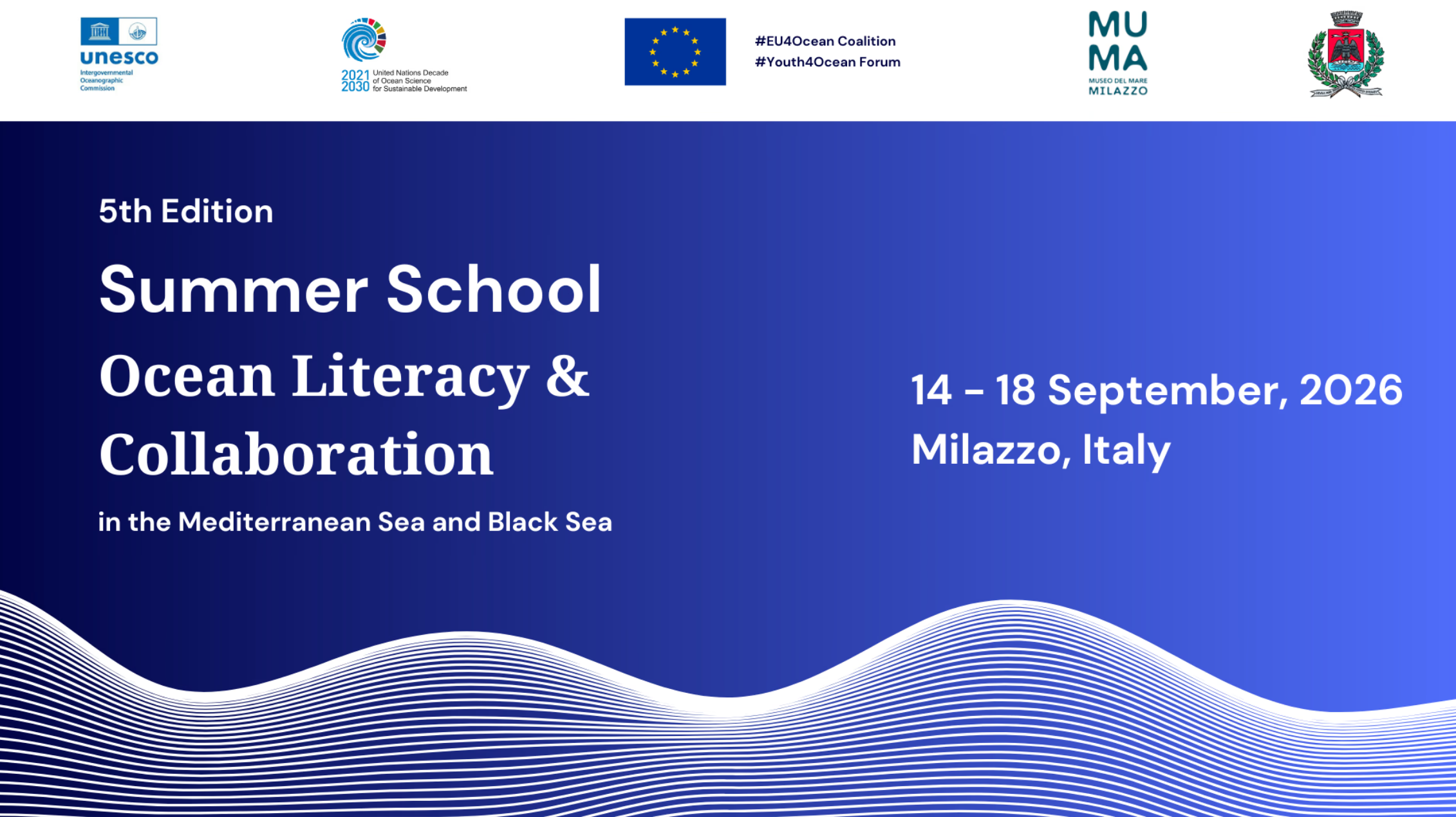
OLSSchool*Milazzo2026
Summer School on Ocean Literacy and Collaboration – Sustainable Blue Tourism in the Mediterranean and Black Seas
-
Gain familiarity with the objectives and activities of the EU4Ocean Coalition and the Youth4Ocean Forum and their contribution to the United Nations Decade of Ocean Science for Sustainable Development;
Explore how ocean literacy can inform tourism planning, destination management, education, and visitor engagement in Mediterranean and Black Sea coastal areas
Develop practical skills for transdisciplinary collaboration in the design and implementation of ocean-related projects;
Learn to integrate diverse knowledge systems, cultural contexts, and local perspectives when working towards a sustainable blue economy;
Strengthen science communication skills through storytelling, public engagement, and policy advocacy
- Francesca Santoro (UNESCO-IOC)
- Ottavia Carlon (UNESCO-IOC)
- Carmelo Isgrò (MuMa – Museo del Mare Milazzo)
- Carolyn Berger (MuMa – Museo del Mare Milazzo)
- Angelo Sciacca (Institute for Sustainable Development and International Relations – IDDRI)
- Ernesto Rollando (Freelance Consultant)
- Elissa Phillips (Incredible Oceans)
- Virginia Di Marco (Assicurazioni Generali)
- Natasa Vaidianu (Ovidius University of Constanța)
- Giovanni Mangano (Capo Milazzo Marine Protected Area)
- Teresa Romeo (Sicily Marine Centre – Stazione Zoologica Anton Dohrn)
- Claudio Berti (Stazione Zoologica Anton Dohrn)
- Gender balance
- Geographical representation
- Age range: up to 35 years old
- Background: all the sectors are encouraged to apply. We will pay attention to create an interdisciplinary group.
- Priority will be given to youth from the Mediterranean Sea and Black Sea, as well as members of the Y4O Forum and ECOPs