
SP_ODM2026
Ocean Data Management 2026
This online, fully self-paced training course provides a comprehensive introduction to the management of marine data, including the guiding principles of data management and typical responsibilities for data managers, data stewards and scientists.
This course is developed by, and for, marine data managers, data stewards and researchers, working in institutions responsible for the collection and good management of marine data.
During this training course, you will be introduced to several general aspects related to the management of marine data, including, metadata, quality control, data policy, data sharing and publishing, data management plans and the research data life cycle. By the end of this course, you will be able to describe and implement the core tasks required for the processing of marine data, explain the importance of metadata, advise researchers on the research data life cycle and explain why a good data management plan is key from the very first initiation steps of a project.
Needs and priorities
This training contributes to IOC action on enhancing the capacity of its Member States to access technology, physical infrastructure, data and information (output 2; IOC Capacity Development Strategy, 2023-2030).
It links to IOC Strategic Plan for Ocean Data and Information Management (2023-2029) by adding to the support of community data principles such as FAIR (Findable, Accessible, Interoperable and Reusable), CARE (Collective benefit, Authority to control, Responsibility, Ethics), and TRUST (Transparency, Responsibility, User Focus, Sustainability, Technology); and by providing training to facilitate publishing of research findings by scientists (with special attention to scientists in developing countries).
Learning outcomes
By the end of this training, participants should be able to:
- Describe the phases of the Research Data Life Cycle
- Explain the concept of a Data Management Plan
- Explain the concept and importance of metadata
- identify suitable file formats for data preservation and sharing
- Identify appropriate repositories for your data
- Summarise the goal of assigning a data licence
- Explain the common concerns related to data reuse
Course content
- General overview of data management, its principles and organisation
- Research Data Life Cycle
- Data Management Plan
- Open & FAIR data
- Data licences
- Metadata
- Data standards & quality control
Target audience
This course is open to any person interested in learning about Ocean Data Management.
It was prepared for: marine data managers, data stewards and researchers, working in institutions responsible for the collection and good management of marine data.
Language and computer skills required:
- a good working knowledge of English
- basic computer skills
- the ability to find resources through search engines
- the ability to be self-directed in learning new technology skills (e.g. following a step-by-step tutorial, online video help, or access to support to learn necessary skills)
Instructors/Organisers
This course is organised by the OceanTeacher Global Academy with the assistance of the Flanders Marine Institute, with the contribuitions of:
- Leen Vandepitte
- Greg Reed
- Katrina Exter
- Laurian Van Maldeghem
- Marie Robberecht
- Charlotte Dhondt
- Ruben Perez Perez
- Alice Pohle
Course duration and format
The course will be delivered online continuously on a yearly basis. This cohort is open until 31 December 2026. The estimated time to complete the self-paced course is approximately 35 hours.
Learner Assessment
This is a self-taught course that includes quizzes designed to help learners assess their own learning at regular intervals. In order to successfully complete the course and be awarded a Certificate at the end, the following is mandatory:
- complete all lessons in each Module of the course;
- successfully complete the pre- and post-assessment; and
- complete all quizzes (70% minimum score for each quiz).
Note: submitting the course feedback survey is mandatory to obtain the course certificate.
Technology requirements
To complete this course, participants should have access to:
- Computer with Windows or Mac operating system
- Latest version of either Chrome, Edge, Firefox, or Safari web browsers
How to enroll
Please register on the OceanExpert website (www.oceanexpert.org). Once your OceanExpert account is approved (this is not done immediately), you can self-enrol in the course. If you already have an OceanExpert account, you can self-enroll in the course using your OceanExpert username and password. Enrolment is available till 31 December 2026.
First log in OceanTeacher, then access the course page and click on self-enrollment.
The enrolment key is Odm**2026
For any questions please contact the OTGA Secretariat (ioc.training@unesco.org) always using the name of the course as email subject.
There are no tuition fees.
UNESCO is committed to promote equal access principles. Applications from minority or underrepresented groups are strongly encouraged.
Feedback survey
At the end of the course, you will be asked to fill out a feedback survey. This information will be used to improve future courses.
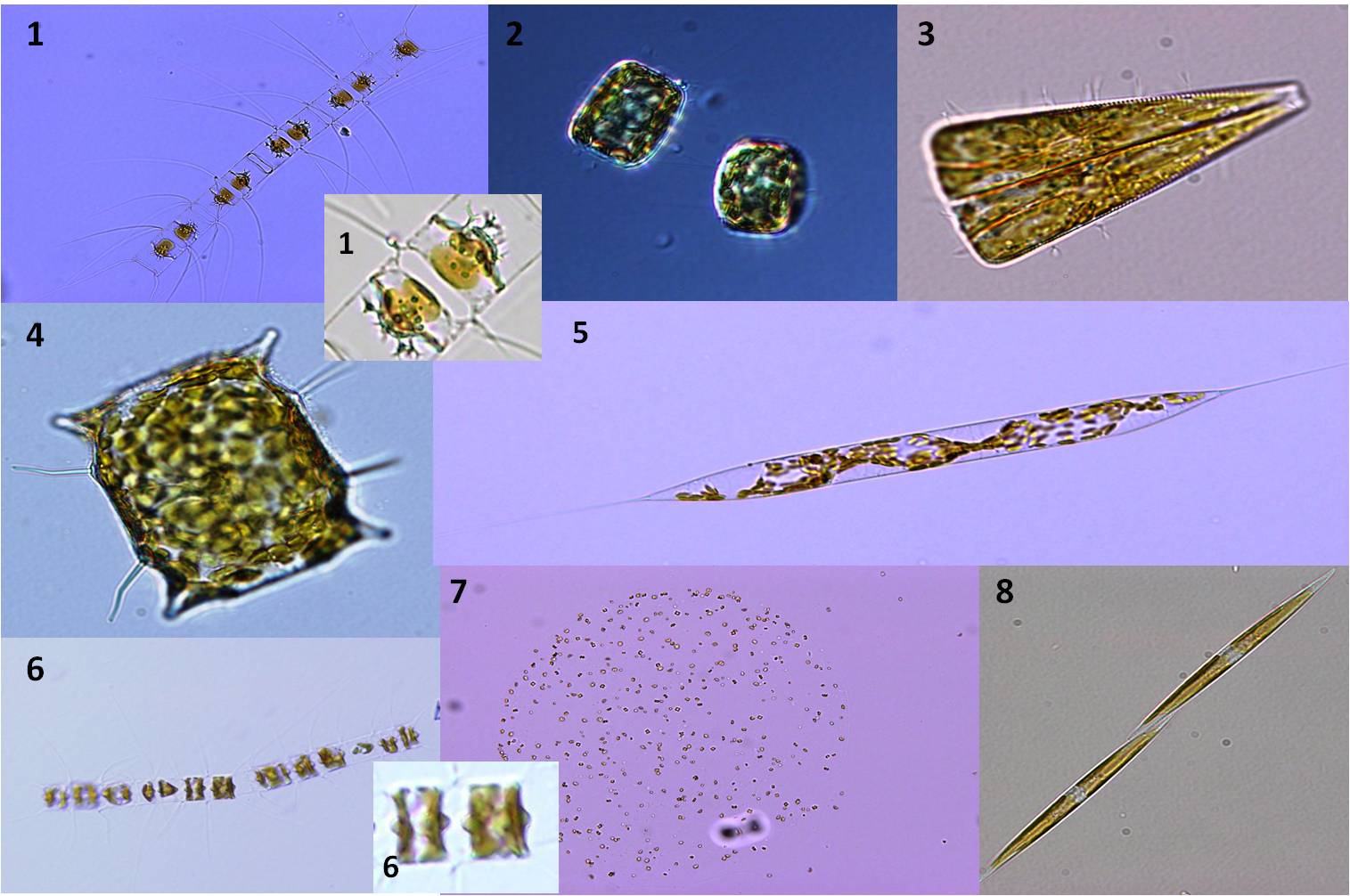
IPI_2026
HAB/IRTA: International Phytoplankton Intercalibration (IPI)
https://otga.wufoo.com/forms/m1sf4rew165zqw7/
If you have problems registering through our website, please contact directly our IPI coordinator Margarita Fernández Tejedor (margarita.fernandez@irta.cat).
The administrator will need your laboratory name and address, number of analysts, Analysts’ full name and e-mail addresses.
Payment must be received before samples are shipped to the participating laboratories.
Payments can be made by bank transfer or credit card. Please ensure that your payment includes all bank charges incurred for transferring fees.
Please note: Custom payments or fees incurred on delivery and release of parcels are paid by the receiving laboratory.
SCGR2026online Asia-Pacific
Sustainable Coastal Growth and Resilience_2026
This comprehensive course provides an in-depth exploration of Coastal Resilience concepts that are key in supporting sustainable business practices and protecting communities against natural hazards and climate change-related impacts. Through five interconnected online modules and a range of interactive learning activities, participants will learn and implement the principles, technologies, and strategies needed to understand, assess, and bolster resilience within coastal regions, while emphasizing business responsibility and proactive risk management tailored to Asia-Pacific context.
Building on the success of its first edition, this course is a fully online training focused on the Asia-Pacific regional needs and priorities, jointly coordinated by the Second Institute of Oceanography of China, Ministry of Natural Resources (SIOMNR), the IOC OceanTeacher Global Academy Regional Training Centre China (National Marine Data and Information Service-China, NMDIS), the Decade Collaborative Centre for Coastal Resilience (DCC-CR), the Western Pacific Subcommission of the Intergovernmental Oceanographic Commission of UNESCO (IOC WESTPAC), Decade Capacity Development Facility (CDF), the Euro-Mediterranean Center on Climate Change (CMCC) of Italy and the CINECA Interactive Computing Services in Bologna, Italy.
Needs and priority
This training contributes to Intergovernmental Oceanographic Commission of UNESCO (IOC)'s action on enhancing the capacity of its Member States to access technology, physical infrastructure, data and information through promoting human resources development at individual and institutional levels (output 1 and 2 of IOC Capacity Development Strategy, 2023-2030); and to the UN Ocean Decade by addressing capacity development needs of partners involved in current and future actions.
This activity also contributes to the implementation of IOC Medium-term Strategy (2022-2029) and IOC WESTPAC Call to action SGOs Tokyo Statement, by facilitating initiatives to improve resilience to climate change and contribute to its mitigation.
Learning outcomes
After completing this course, participants will be able to:
- Understand the fundamentals of coastal resilience and its implications for science-based services and operations.
- Utilize operational oceanography products for hazard assessment.
- Apply enabling technologies to coastal resilience challenges.
- Develop practical resilience solutions for critical coastal infrastructure.
- Showcase innovative applied solutions through Real-World coastal resilience projects
Course content
The course is composed of five online modules:
- Overview of Coastal Resilience and its importance for Business
- Understanding coastal hazards from operational oceanography products
- Impact Assessment and risk management
- Enabling technologies for Coastal Resilience
- Solutions for Coastal Resilience
The content will be further complemented by interactive discussions, case studies, and collaborative learning activities to support knowledge exchange and practical application.
Target audience
This course is designed for early-career ocean scientists and professionals as part of their professional development and continuing education. It is especially intended for early-career ocean scientists and professionals working in coastal consulting firms, coastal managers and operators, and staff from environmental protection and civil protection agencies. Priority will be given to researchers and technical staff (such as managers and operators) from national and international institutions involved in ocean science, marine services, and ocean management in the Asia-Pacific region.
The eligible list of countries includes: Bangladesh*, Brunei Darussalam, Cambodia, China*, Cook Islands*, Democratic People's Republic of Korea*, Federated States of Micronesia, Fiji*, French Polynesia, Indonesia*, Kiribati*, Lao PDR, Malaysia*, Maldives*, Myanmar*, Nauru*, New Caledonia, Niue*, Palau*, Papua New Guinea*, Philippines*, Republic of the Marshall Islands, Samoa*, Solomon Islands*, Sri Lanka*, Thailand*, Timor-Leste*, Tonga*, Tuvalu*, Vanuatu*, Viet Nam*. (* are IOC Member States).
Pre-requisites
Educational and Professional Qualification:
-
A minimum of a Masters degree in one of the following fields: Environmental Sciences, Marine Biology, Coastal Engineering, Urban Planning, Political Science, International Affairs, Economics, Business, or a related discipline; OR a minimum of 5 years of relevant work experience in areas such as coastal management, environmental consulting, urban planning, marine conservation, or other related fields.
-
Professional affiliation with national or international infrastructure (within ocean/marine or related entities and agencies) and/or 1-5 years of relevant work experience in coastal management, environmental consulting, urban planning, marine conservation, or related fields.
Language Proficiency:
-
Demonstrated proficiency in written and spoken English.
Additional Requirements:
-
Submission of a complete application, including a Statement of Purpose.
-
Priority consideration will be given to international applicants from Least Developed Countries or Small Island Developing States in the Asia-Pacific Region. See the list of eligible countries above.
Technology requirements/computer skills:
- Basic computer skills and experience in working in a digital learning environment.
- Experience with QGIS and Python programming (Jupyter notebooks environment).
Language of instruction: English
Course Coordinators
Contributing subject experts will be available later on.
Course Format & Duration
The online modules include both self-paced activities and weekly synchronous sessions (attendance is strongly recommended and tracked, but not mandatory). The online modules comprise an estimated 70 hours of training and will be available from 2 June until 11 August, 2026.
Assessment & Certificate
This course contains self-paced automated assessments as well as written and oral assignments. A certificate will be awarded to the participants upon successful completion of:
- All modules and lessons;
- Assessments and assignments (passmark: 70%);
- Completion of a pre and post-test; and
- Completion of a feedback survey.
Application
A limited number of seats are available, to be confirmed by the organizers at a later stage, depending on the support and accessibility required to the training activities.
Applications process will run through OTGA online form. Please fill out the online application form available at this LINK. Applications open on 11 March 2026. The deadline to submit the application is 26 March 2026 (23:59 CET: Central European Time). Extended deadline: 02 April 2026 (23:59 CEST). NEW and LAST Extended deadline: 8 April 2026 (23:59 CEST).
Documents requested
Applicants will be requested to describe and/or upload the following documents and information:
- CV containing a description of education and technical background, a description of professional experience, details on the current affiliation;
- Proof of English Proficiency (Fluency); and
- A Statement of Purpose of 1000 words explaining motivation and alignment with course goals, and requirements.
Additional documentation, such as a letter of endorsement of affiliated institution and personal documents, may be requested by OTGA during the selection process.
Selection criteria
UNESCO is committed to promoting equal access principles. Applications from minority or underrepresented groups are strongly encouraged.
Selection will be based on fit to the best fit to the pre-requisites mentioned above.
Costs
Free of charge. There are no tuition fees.
Contacts
For any questions, please contact OTGA Secretariat (ioc.training@unesco.org) always using the name of the course as e-mail subject.
Cancellation policy
In the event of cancellation of the course by the OTGA or its affiliates, we will provide notification of cancellation at least 7 days prior to the course date. In the event of cancellation by the attendee, we should receive notification of cancellation at least 7 days prior to the course date.
Marine Data Management, Governance and the MEDIN toolset (February 2026)
The Marine Environmental Data and Information Network (MEDIN) is a partnership of UK organisations committed to improving access to marine data. MEDIN is open to all with an interest in marine data and information. MEDIN is funded by a consortium of 16 sponsors and has over 60 partners that represent government departments and agencies, research organisations and private companies committed to practise good data management. MEDIN reports to the UK Marine Science Coordination Committee.
This ONLINE course demonstrates how data management ‘best practice’ can improve organisational efficiency in data acquisition, analysis, curation and sharing. It covers data use with respect to corporate risk, re-use, audit and traceability, whilst at the same time helping minimising costs.
The course will equip attendees to better meet the challenge of keeping on top of the ever-increasing volumes and types of data that is being created and how to manage this data and make it available to users as meaningful information, whether using proprietary or open-source software and systems as enablers.
Aims & Objectives
The course aims to give participants a broad understanding of data governance, management principles, and system components and how data can be published information and re-used with a focus on the tools that the Marine Environmental Data and Information Network (MEDIN) provides as examples of best practice.
Expected Learning Outcomes
- An understanding of MEDIN and why data management is important and how it can reduce costs, risk, and add value through extending its original purpose.
- An understanding of the fundamentals of how data is collected, managed, published and used plus how important metadata is!
- An appreciation of data management components based on the International Data Management Association Book of Knowledge (DM-BOK)
- Knowledge of the importance of metadata and practical guidance in its creation, maintenance and dissemination
- Have an appreciation of the need to use words, phrases and terms to describe or explain marine data content and to understand how controlled vocabularies are used within the MEDIN standard and guidelines
- Appreciate how geospatial data can be accurately represented
- Understand the role and value of adopting data governance and how this relates to business management and corporate governance.
- Understand what discovery metadata is, what the MEDIN discovery metadata standard is and how it is used on the MEDIN portal.
- Be able to use the online metadata editor and metadata maestro to create MEDIN compliant discovery metadata records.
- Understand the ways in which data is now published and considerations associated with sharing and re-use
- Appreciate that the MEDIN data guidelines are a tool to create consistent datasets with comprehensive metadata, that allows data to be shared, understood and reused by others with ease.
Course content
The course comprises a series of presentations, demonstrations and check-point reviews, with a large practical element to help users become familiar with:
- Why data management is important and how it can and arguably should be part of an organisations business management framework alongside quality, occupational health and safety, and information security, all of which are covered by ISO accreditation.
- The role of a data policy and management plan, and things to consider and how data can be shared, published and re-used.
- Data management principles, standards and components, including data lifecycle and quality, the role of vocabularies (or data dictionaries) and the importance of creating, maintaining and publishing metadata.
- The resources and other benefits of MEDIN and practical instruction in the use of the MEDIN data guidelines, metadata standard and controlled vocabularies.
Course modules include:
- Module 1. Course content and objectives
- Module 2. Introduction to MEDIN as an exemplar data partnership and management framework
- Module 3. Data management overview, principles and organisation
- Module 4. Data in a Business Management Framework (Policy, Planning, Review)
- Module 5. Standards Overview
- Module 6. Data management components frameworks and infrastructure
- Module 7. Practical session
- Module 8. MEDIN Data Guidelines
- Module 9. Data Sharing and Publishing
- Module 10. Course Summary
Target audience and prerequisites
This training course is suitable for anyone responsible for collecting or managing marine environmental data in the public sector, industry, or for education or research, for example:
- Existing and potential data managers who wish to gain an overview of data governance, policy and principles and/or want to learn more about using the MEDIN metadata standard data guidelines in their day to day work.
- Contractors who want to implement good data management practice and/or have been asked to supply MEDIN compliant metadata.
- Bachelors/masters/PhD students or recent graduates interested in data management best practice and adding to their professional skill set.
Pre-requisites: An understanding of marine data collection is beneficial, however no prior knowledge of MEDIN or data management is required. Familiarity with different marine data types, and how data is acquired and used, would be helpful but not essential. Prior knowledge or practical experience in data management is not required.
Language of Instruction: English
Instructors
- Roseanna Wright (MEDIN/NOC)
- Colm Walsh (MEDIN/NOC)
- Alice Rysiecki (MEDIN/NOC)
- Chloe Figueroa-Ashforth (DASSH/MBA)
- Mike Osborne (OceanWise)
Course Format and Duration
The course takes place over 5 days with online lectures delivered in live sessions (2-3 hours, with regular breaks) in the mornings (UK time) and independent-study and practical assignments in the afternoons.
Monday-Friday: approx. 09:00-12:00 GMT/BST + drop-in sessions 14:00-14:30 GMT/BST
Attendance not mandatory, sessions are recorded.
Application Process
Please self-enroll on the course on the OceanTeacher Global Academy e-Learning Platform:
The course enrolment key can be requested from the course organiser (MEDIN). Number of places is limited to 60 participants.
Contacts:
-
MEDIN: Roseanna Wright (roswri@bodc.ac.uk) (Course Organiser)
-
OTGA Secretariat: ioc.training@unesco.org
In case of need for further clarifications please use the contacts above, always using as email subject:
(Online) Marine Data Management, Governance and the MEDIN toolset, February 2026
Costs
No tuition fee.
This course is organised by MEDIN in collaboration with UNESCO IOC OceanTeacher Global Academy.
More information about MEDIN's workshops can be found on https://www.medin.org.uk/medin-workshops
Assessment and Certificates
A combination of quizzes and assignments to ensure understanding and practical application of knowledge and skills acquired during the course.
Certificates will be issues based on the required activities (chapters, quizzes and assignments) for each pathway (Governance, Practical MEDIN, or Combined) being completed.
The course has been awarded official recognition as contributing to the Continuing Professional Development (CPD) requirements of the Institute of Marine Engineering, Science and Technology’s (IMarEST’s) members.
Feedback survey:
At the end of the course, you will be asked to fill out a feedback survey. This information will be used to improve future courses.
Cancellation policy:
In the event of cancellation of the course by the OTGA or its affiliates, we will provide notification of cancellation at least 7 days prior to the course date. In the event of cancellation by the attendee, we should receive notification of cancellation at least 7 days prior to the course date.
IOC BBNJ 2026
Using Science, Knowledge & Tools to operationalise the BBNJ Agreement
Background
A legally binding agreement for the conservation and sustainable use of marine biological diversity of areas beyond national jurisdiction (BBNJ Agreement) is the third implementing agreement under the United Nations Convention on the Law of the Sea. Entry into force in January 2026 marks 20 years since discussions at UN level had begun. The BBNJ Agreement combines the conservation of marine species and their sustainable use and includes diverse stakeholders in the future design of ocean governance, including Indigenous Peoples and local communities, scientists, industry, and decision-makers. It is a significant step towards comprehensive protection and use of marine biodiversity in areas beyond national jurisdiction.
The Agreement establishes a number of subsidiary bodies and mechanisms for its implementation: a scientific and technical body, providing science and knowledge advice in the process; a clearing house mechanism as a centralized data sharing platform, a financial mechanism, and various committees on benefit-sharing, capacity building and technology transfer, and implementation and compliance. Science and knowledge play a crucial role in the implementation of the agreement and are the focus of this course.
Course overview and objectives
This online training introduces the BBNJ Agreement and focuses on the role that ocean science and knowledge play for its implementation, including implications for the global community and opportunities for science, services and management in and about ABNJ.
The course aims to support individuals and institutions of diverse groups in understanding the scientific realities of the ocean and data sharing opportunities (i.e. across maritime zones between countries and different ocean depths; between the Exclusive Economic Zones and High Seas; and across sectors and geographical regions for enhanced cooperation and coordination with and among other instruments, frameworks and bodies).
The use of science and knowledge on the ocean and its marine ecosystems are particularly evident in operationalization of the Agreement’s processes to assess potential impacts on the marine environment of planned activities, including in considerations for strategic environmental assessments and when assessing cumulative impacts, as well as in the establishment of area-based management tools, including marine protected areas, in the efforts to conserve and sustainably use marine biodiversity through geographical tools in a dynamic, connected and changing ocean. Additionally, understanding capacity needs, accessing existing capacity building and technology transfer initiatives, provided by different institutions and linking different types of ocean data and information can strengthen our knowledge on marine biodiversity in an interconnected ocean.
Format and Duration
This is a self-paced online course, comprising various learning resources, activities and assessments, with a total of 20 hours estimated for completion.
Language of instruction: English
Learning outcomes
After successfully completing this course, learners will:
- Have an improved understanding about the context out of which the BBNJ Agreement emerged
- Be able to detail its objectives and four pillars
- Recognize the potential implications of the BBNJ Agreement for national, regional and global contexts—particularly in terms of ocean science, area-based management, activities in ABNJ, environmental impact assessment, and capacity building and the transfer of marine technology
- Be able to name databases and services useful for the operationalization of the BBNJ Agreement
- Know how to consider the scientific realities of a connected and changing ocean in policy measures and management
- Be sensitive to a variety of actors active in exploring, protecting, using and valuing the ocean.
- Recognize factors for successful operationalization of the agreement.
Course content
The course is composed of three online modules:
Module 1. Introduction to marine biodiversity of areas beyond national jurisdiction, which provides an overview of natural environment of the open ocean, existing ocean governance framework, and the related ocean science and knowledge.
M1-Lesson 1. Life in the Sea: A connected and changing ocean
M1-Lesson 2. Ocean Biodiversity Governance
M1-Lesson 3. Global Ocean Science & Knowledge
Module 2. BBNJ Agreement in Practice, which covers elements & aims of the Agreement, technical competencies needed for its operationalization across all pillars, and needs and priorities for ocean science.
M2-Lesson 1. Marine Genetic Resources
M2-Lesson 2. Area-Based Management Tools, including Marine Protected Areas
M2-Lesson 3. Environmental Impact Assessment
M2-Lesson 4. Capacity Building and Transfer of Marine Technology
M2-Lesson 5. Cross-cutting topics
Module 3. Actors, Mechanisms, Data Sharing and Tools under the BBNJ Agreement, which covers opportunities for individuals and nations, pathways for strengthening cooperation and coordination in the implementation of the Agreement, reflections on emerging technologies, and the intrinsic value of marine biodiversity.
M3-Lesson 1. Ocean Cooperation
M3-Lesson 2. Overview of Instruments, Frameworks, and Bodies
M3-Lesson 3. Potential opportunities to engage
M3-Lesson 4. Data and Tools supporting BBNJ Agreement
M3-Lesson 5. Emerging ocean technologies
M3-Lesson 6. The inherent value of marine biodiversity
Target audience
This course is open to everyone interested in the science and knowledge in support of the BBNJ Agreement, and it was designed primarily to support the ocean science community, including researchers, practitioners, technical staff, decision-makers, students, and other groups of society.
Organizers
This course was developed by the Intergovernmental Oceanographic Commission of UNESCO (IOC), in support of the joint training activities of the Ocean Decade Capacity Development Facility (CDF) and the OceanTeacher Global Academy (OTGA).
The learning materials compile ocean science data, information, and knowledge available globally in support of BBNJ Agreement, supplemented by consultations and contributions of invited experts, institutions, and national authorities worldwide.
Facilitators
This training was developed with the assistance of Dr. Ina Tessnow-Von Wysocki, in collaboration with NaYeon Kim, Dr. Ana Carolina Mazzuco, and Sophie Guibert.
Learning materials were complemented by various Expert Contributions through interviews or lectures, including: Abbe Brown, Adel Heenan, Abdi Tunggal Priyanto, Adel Heenan, Aimée Komugabe-Dixson, Alice McDonald, Aline Kuehl-Stenzel, Amehr Hakim, Anna Metaxas, Ashley Dias, Becky Hitchin, Carlos A. Zuniga, Aurelie Spadone, Clement Mulalap, Cong Bailin, Daniel Kachelriess, David Johnson, Fuad Bateh, Gerald Singh, Harriet Harden-Davies, Hugo Gorziglia, Jaqueline Espenilla, Joelle Richard, Jodi Edwards, Julian Barbierie, Júlia Schütz Veiga, Karen Evans, Laurent Chmiel, Linlin Zhao, Lisa Levin, Lowri Griffiths, Marcel Jaspars, Makrita Solitei, Melissa Abderrahim, Michelle Bender, Olaf Meynecke, Paul DeBruyn, Paul Snelgrove, Peter Burger, Quentin Hanich, Robert Blasiak, Sarah Lothian, Shenghao Liu, Susan Gardner, Thomas Vanagt, Ward Appeltans, Yafeng Yang, and Youngdawng Moh.
Registration, costs, and technological requirements
This course is offered on a continuous basis, with open registrations as yearly cohorts, with no tuition fees.
To follow this course, participants shall have:
-
Access to a computer or mobile device with Windows, Android, or Mac OS.
-
Latest version of either Chrome, Edge, Firefox or Safari web browsers, with JavaScript and cookies enabled
-
Broadband internet access (minimum bandwidth of 0.5 Mbps (Receive and Send)
-
Audio speakers or headphones
-
Basic computer skills, such as finding resources through search engines and the ability to be self-directed in learning new technology skills (e.g. following a step-by-step tutorial, online video help, or access to support to learn necessary skills)
How to enroll:
Enrolment is available from 25 March 2026, for this cohort. Note that the course materials will be available for registered participants from 13 April 2026.
To access this course, you must register on the OceanExpert (www.oceanexpert.org) and have an individual account approved (this is not done immediately). Once your OceanExpert account is activated, you must:
- Log in OTGA e-Learning Platform, using your OceanExpert username and password; and
- Register with the enrolment key: IOCbbnj-2026
Assessment & Certificate
This course contains self-paced automated online knowledge checks and assessments.
In order to successfully complete the course and be awarded a certificate, the following are mandatory:
- Complete all modules and lessons.
- Complete all quizzes (80% pass mark, 3 attempts).
- Complete the pre and post-assessment questionaries.
- Submit the feedback survey.
Contacts
For any questions, please contact OTGA Secretariat (ioc.training@unesco.org) always using the name of the course as e-mail subject.
Cancellation policy
In the event of cancellation of the course by the OTGA or its affiliates, we will provide notification of cancellation at least 7 days prior to the course date. In the event of cancellation by the attendee, we should receive notification of cancellation at least 7 days prior to the course date.
OBIS2026EN
Contributing and publishing datasets to OBIS (self-paced)
The Ocean Biodiversity Information System (OBIS) is the most comprehensive gateway to the world’s ocean biodiversity and biogeographic data and information. OBIS provides open access to this quality-controlled data that adhere to biodiversity standards (Darwin Core, EML). This course is a continuation of the Contributing and publishing datasets to OBIS (self-paced), which remained open only for staff and collaborators of OBIS Nodes (under invitation of OBIS Secretariat).
The aim of this course is to teach the step-by-step basics for how to format and publish datasets according to these standards to contribute to OBIS, and adopt best practices in the management of marine life data. This training course is self-guided and designed to teach learners how to structure datasets to contribute to OBIS. The course will guide users step-by-step through the OBIS data life cycle, including: identifying an appropriate data structure, applying Darwin Core Archive formatting, conducting quality control steps, publishing data, and accessing data from OBIS.
This course is an updated version - 2025/2026.
Participation in this course is restricted to staff and collaborators in OBIS Nodes, invited by OBIS Secretariat, open initially from 15 December 2025 to 15 December 2026.
https://oceanexpert.org/event/4930
Watch the video below for a brief overview and introduction by the course instructor, Elizabeth Lawrence.
Learning goals
- Describe the OBIS data life cycle
- Restructure a flat dataset into a Darwin Core-Archive format, following OBIS best practices
- Identify appropriate Biodiversity Information Standards (TDWG) vocabulary for your dataset
- Interpret and resolve quality control flags
- Publish data and metadata on an IPT
- Obtain OBIS data from the Mapper tool, R, API
Target audience
Participation in this course is restricted to staff and collaborators in OBIS Nodes, invited by OBIS Secretariat, open initially from 15 December 2025 to 15 December 2026.
Course content
The course is divided into the following Modules:
Module 1. Introduction to data publishing and Darwin Core
Module 2. Introduction to data formatting
Module 3. Formatting data tables
Module 4. DNA Derived Data
Module 5. Controlled Vocabulary
Module 6. Conducting Quality Control
Module 7. Publishing your Data
Module 8. Accessing Data from OBIS
These modules will cover:
- Darwin Core standards (Relational databases, Core and Extension tables)
- Formatting data to publish in OBIS (Creating Event, Occurrence, and ExtendedMeasurementOrFact tables; Mapping standardized vocabulary; Using World Register of Marine Species (WoRMS) Taxon Match tool; Understand how to compile genetic, acoustic, habitat, imaging, and/or tracking data for OBIS)
- Conducting quality control (Dealing with uncertain data fields e.g. temporal, spatial, taxonomic; Troubleshooting difficult data types or missing data)
- Publishing data (Filling metadata; Using, publishing, and updating datasets on IPT)
- Accessing and downloading data from OBIS (Full data exports, R, API; Using Mapper tool to subset data)
Duration
This is a 32-hour self-paced online course (asynchronously), open continuously from 15 December 2025 to 31 December 2026.
Lead Instructor
- Dr. Elizabeth Lawrence (OBIS training officer)
Other course contributors
- Carolina Peralta Brichtova
- Ruben Perez Perez
- Pieter Provoost
- Saara Suominen
- Leen Vandepitte
- Marcos Zárate
- Mr. Ward Appeltans (OBIS project manager)
Language
English
Learner assessment
This is a self-taught course that includes quizzes designed to help learners assess their own learning at regular intervals. In order to successfully complete the course and be awarded a Certificate at the end, the following is mandatory:
- complete all lessons in each Module of the course;
- complete all quizzes (80% minimum score);
- submit the assignments and receive a minimum grade of 80% or 'satisfactory' according to the exercise type.
Note: Filling in the course feedback survey is mandatory to obtain the course certificate, as well as a pre and post assessment.
Pre-requisites:
- be a staff or collaborator in an OBIS Node
- a working knowledge of English
- background knowledge in biological and marine sciences
- basic computer skills (either Windows or Mac systems)
- the ability to be self-directed in learning new technology skills (e.g. following a step-by-step tutorial, online video help, or access to support to learn necessary skills)
Technology requirements
To complete this course, participants should have access to:
- Latest version of either Chrome, Edge, Firefox, or Safari web browsers
- JavaScript and cookies enabled
- Broadband internet access (minimum bandwidth of 0.5 Mbps (Receive and Send)
- Speakers or headphones, Microphone
How to enrol
If you are a member of an OBIS node, please contact OBIS secretariat (helpdesk@obis.org) for instructions on how to enroll.
For any questions please contact the OTGA Secretariat (ioc.training@unesco.org) or the OBIS secretariat (helpdesk@obis.org) always using the name of the course as email subject.
UNESCO is committed to promote equal access principles. Participation from minority or underrepresented groups are strongly encouraged.
Costs
There are no tuition fees.
This training course has been developed with financial support from NORAD and LifeWatch ERIC.
Feedback survey
At the end of the course, you will be asked to fill out a feedback survey. This information will be used to improve future courses.
Cancellation policy:
In the event of cancellation of the course by the OTGA or its affiliates, we will provide notification of cancellation at least 7 days prior to the course date.
In the event of cancellation by the attendee, we should receive notification of cancellation at least 7 days prior to the course date.

OODM-MSP2026en
MSPglobal course on ocean observations and data management for MSP (ENGLISH)
This online self-paced course aims to support ocean practitioners in understanding how effective data management and ocean observations underpin evidence-based Marine/Maritime Spatial Planning (MSP). It highlights the critical role that reliable, accessible, and well-managed data play in informing planning processes, supporting decision-making, and enabling sustainable use of marine and coastal areas.
Building on internationally recognized practices and guidance developed by the Intergovernmental Oceanographic Commission (IOC) of UNESCO and MSPglobal initiative, this course introduces fundamental concepts of data, metadata, and data management relevant to MSP, and suggests relevant tools and services for MSP practitioners. Participants will explore the role of Spatial Data Infrastructures (SDIs) as key enablers for data sharing, interoperability, and collaboration, and will examine why SDIs are particularly beneficial for MSP initiatives. Practical insights are provided on how SDIs can be established, maintained, and continuously improved to meet evolving planning needs.
Additionally, the course introduces key elements of ocean observations and their relevance for MSP, including an overview of observation systems, data types, and monitoring approaches. The basics of Essential Ocean Variables (EOVs) and Essential Climate Variables (ECVs) are also included, explaining how these standardized variables support consistent, comparable, and policy-relevant information for marine planning. Participants will learn how to identify, access, and assess suitable ocean observation data to support specific MSP objectives and contexts. The course also highlights emerging trends and future directions in data management, SDIs, and ocean observations, and discusses implications for the evolving practice of MSP.
Needs and priority
There is increasing demand from IOC Member States and regions for practical guidance on how ocean observations and data management can be effectively applied within Marine/Maritime Spatial Planning (MSP) processes. Many MSP initiatives continue to face challenges related to limited access to reliable and interoperable marine data, fragmented data management systems, and insufficient capacity to translate ocean observations into planning-relevant information. Addressing these gaps is critical to support evidence-based MSP.
This course responds to these needs by strengthening capacities in ocean observation and data management as essential enablers of MSP. It supports IOC Programmes and regional priorities by promoting internationally recognized standards, tools, and guidance developed by the IOC and the MSPglobal initiative, including the use of Spatial Data Infrastructures (SDIs), Essential Ocean Variables (EOVs), and Essential Climate Variables (ECVs). By building foundational knowledge and practical understanding, the course enhances the ability of practitioners to identify, access, and apply suitable data for MSP in diverse national and regional contexts.
The course directly contributes to the IOC Capacity Development Strategy by providing accessible, self-paced training through the OceanTeacher Global Academy, enabling broad participation across regions and supporting equitable access to capacity development opportunities, particularly for capacity-constrained Member States.
The course contributes to the achievement of all IOC’s high-level objectives, in particular Objective 1: Heathy ocean and sustained ocean ecosystem services; Objective 3: Resilience to climate change and contribution to its mitigation and Objective 4: Scientifically-founded services for the sustainable ocean economy. It also directly contribute to the strategic objectives of the IOC-Wide Strategy on Sustainable Ocean Planning and Management (2025–2030) and the objectives of the IOC Strategic Plan for Ocean Data and Information Management (2023–2029).
Format and Duration
This is a self-paced online course, comprising various learning resources, activities and assessments, with a total of 25 hours estimated for completion.
Language of instruction: English
Learning outcomes
After successfully completing this course, learners will:
- Explain the role of ocean observation and data in supporting evidence-based Marine Spatial Planning.
- Identify key types of environmental, socio-economic, and spatial data used in MSP processes.
- Understand core principles of data management, including FAIR, CARE, and TRUST frameworks.
- Describe how spatial data infrastructures (SDIs) enable the organisation, sharing, and use of marine data.
- Recognise the main ocean observation platforms, technologies, and essential variables used to monitor marine environments.
- Apply ocean observation data to support planning processes, including analysis, scenario development, and decision-support tools.
- Understand how emerging technologies, such as digital twins, big data, and artificial intelligence, are transforming ocean data analysis.
- Recognise the importance of collaboration, data sharing, and global observation networks in strengthening MSP and sustainable ocean governance.
Course content
The course is composed of four online modules:
Module 1: Introduction to data and its importance to MSP
This module provides an introduction to MSP context, including the role of data in ocean management, fundamental data management principles and practices, the basics of spatial data, and principles of data security and responsible data sharing.
Module 2: Spatial Data Infrastructure for MSP
This module introduces Spatial Data Infrastructures and their role in supporting MSP, including its main components, creation and maintenance, institutional arrangements, stakeholder engagement, and capacity development.
Module 3: Ocean Observations for MSP
This module provides a comprehensive overview of ocean observation and its integration into MSP, within ocean data collection, management, coordination, and application to support evidence-based decisions. It also includes key concepts, technologies, frameworks, and practical aspects.
Module 4: Emerging trends in ocean observation for MSP
This module covers emerging topics of global importance, such as advances in sensor technology and autonomous systems applications, data availability and resolution, the Digital Twins of the Ocean, big data and artificial intelligence, global cooperation, transboundary marine spatial planning, and emerging ocean industries data.
Target audience
Delivered as a self-paced online course with open enrollments, this training is designed for practitioners working in the technical context of ocean and coastal data management, Spatial Data Infrastructures (SDI), and Ocean Observations within Marine Spatial Planning (MSP) initiatives. This includes data and information managers, Geographical Information System (GIS) specialists, ocean observation professionals, technical advisors, and planners with a strong data and analytical role. The course provides a shared learning framework that strengthens technical capacity and data literacy for MSP, contributing to MSPglobal’s vision of a well-informed, connected, and evidence-driven global community of MSP practitioners and stakeholders.
Pre-requisites:
- Basic understanding of the concept of data and data management.
- Basic knowledge of ocean data.
- Basic computer literacy.
- Good English working knowledge.
Organizers
This course was developed by MSPglobal, through IOC’s Marine Policy and Regional Coordination Section, Ocean Observations and Services Section, and the International Oceanographic Data & Information Exchange Programme.
Facilitators
This course was developed by:
- Annette Scheffer [OE profile]
- Niccolò Bassan [OE profile]
- Michele Quesada da Silva [OE profile]
We also acknowledge the contribution of different experts:
- Andrej Abramic [OE profile]
- Carolina García Valencia [OE profile]
- Dawn Wright [OE profile]
- Louis Demargne [OE profile]
- Manuel Frias [OE profile]
- Maeva Tesan [OE profile]
- Nathalie Tonné [OE profile]
- Pascal Derycke [OE profile]
- Stefano Menegon [OE profile]
- Veronica Nieves [OE profile]
Registration, costs, and technological requirements
This course is offered on a continuous basis, with open registrations as yearly cohorts, with no tuition fees.
To follow this course, participants shall have:
-
Access to a computer or mobile device with Windows, Android, or Mac OS.
-
Latest version of either Chrome, Edge, Firefox or Safari web browsers, with JavaScript and cookies enabled
-
Broadband internet access (minimum bandwidth of 0.5 Mbps (Receive and Send)
-
Audio speakers or headphones
-
Basic computer skills, such as finding resources through search engines and the ability to be self-directed in learning new technology skills (e.g. following a step-by-step tutorial, online video help, or access to support to learn necessary skills)
How to enroll:
Enrolment is available from 7 April 2026, for this yearly cohort.
To access this course, you must register on the OceanExpert (www.oceanexpert.org) and have an individual account approved (this is not done immediately). Once your OceanExpert account is activated, you must:
- Log in OTGA e-Learning Platform, using your OceanExpert username and password; and
- Register with the enrolment key: IOCoodm-2026
Assessment & Certificate
This is a self-taught course that includes quizzes designed to help learners assess their own learning at regular intervals. In order to successfully complete the course and award a Certificate at the end, the following is mandatory:
- Complete every lesson, activity, and assessment;
- Complete all quizzes (80% minimum score, maximum 3 attempts, 40 minutes time limit for each attempt, questions may differ between attemps);
- Complete the mandatory pre-test and post-test; and
- Submit the required feedback form, which is mandatory for all OTGA courses.
Contacts
For any questions, please contact OTGA Secretariat (ioc.training@unesco.org) always using the name of the course as e-mail subject.
Cancellation policy
In the event of cancellation of the course by the OTGA or its affiliates, we will provide notification of cancellation at least 7 days prior to the course date. In the event of cancellation by the attendee, we should receive notification of cancellation at least 7 days prior to the course date.
Additional acknowledgement
This course was developed based on the MSPglobal Data Toolboxes Volume 1“How to develop a Spatial Data Infrastructure for MSP” and Volume 2 “How to use Ocean Observations for MSP”. We gratefully acknowledge all contributors who made these publications possible.
We thank the external partners who granted use of images/visuals to enhance the materials of this course, including: British Antarctic Survey; European Space Agency (ESA) / ATG medialab; Clive McMahon.
BICS-MSP2026es
Curso de MSPglobal sobre la PEM inclusiva de la biodiversidad y climáticamente inteligente
Descripción del curso
Esta capacitación tiene como objetivo ayudar a los profesionales del sector marino y marítimo a comprender cómo se pueden integrar los conocimientos sobre biodiversidad y ciencia climática en la Planificación espacial marina/marítima (PEM), contribuyendo así a un océano saludable, productivo y resiliente. Se basa en las ideas clave de los nuevos volúmenes de la Guía Internacional de MSPglobal sobre Planificación Espacial Marina/Marítima (Volume 2 – Biodiversity Inclusive Principle y Volume 3 – Climate-smart Principle) que traduce la guía técnica en una capacitación accesible y orientada a la práctica.
Durante el curso, los participantes tendrán la oportunidad de analizar las conexiones ecológicas entre la biodiversidad y los sistemas climáticos y cómo estas interacciones influyen en la salud del océano y el bienestar humano. El curso también revisa los principales marcos globales y regionales de biodiversidad y clima que hacen un llamado a la acción de medidas y explora la función de la PEM para ayudar a los países a cumplir estos compromisos. Estructurado en torno a las fases del proceso de PEM, el curso ofrece recomendaciones, ejemplos y herramientas prácticas para integrar las consideraciones sobre la biodiversidad y el clima en cada etapa. Se hace énfasis en la gobernanza inclusiva, la integración de diversos sistemas de conocimiento y los enfoques de comunicación eficaces.
Resultados del aprendizaje
Al completar con éxito el curso, los [AM3.1]participantes serán capaces de:
- Explicar los fundamentos de la PEM y el enfoque ecosistémico (EE), y describir cómo contribuyen a la sostenibilidad, la conservación de la biodiversidad y la resiliencia climática.
- Explicar las interconexiones entre la biodiversidad marina, los sistemas climáticos y el bienestar humano, e identificar ejemplos de soluciones basadas en la naturaleza que contribuyen a la adaptación y la mitigación.
- Reconocer los principales marcos globales y regionales en materia de biodiversidad y clima (como el CDB, el GBF, la CMNUCC y los ODS) y explicar cómo la PEM puede apoyar la implementación nacional de estos compromisos globales.
- Relacionar las recomendaciones inclusivas de la biodiversidad y climáticamente inteligentes con las diferentes fases del proceso de la PEM, y describir enfoques prácticos para su implementación, incluidos los principios de gobernanza equitativa.
- Sintetizar los mensajes clave sobre la integración de las consideraciones relativas a la biodiversidad y el clima en la PEM y articular su relevancia para la gobernanza inclusiva y la participación de las partes interesadas.
Destinatarios
Esta capacitación, que se imparte como un curso en línea a ritmo propio con inscripción abierta, y está diseñado para profesionales del ámbito marino/marítimo, tales como:
Planificadores marinos y marítimos, responsables políticos, funcionarios gubernamentales, expertos técnicos, profesionales involucrados en la Gobernanza oceánica, representantes de la sociedad civil, científicos y estudiantes de posgrado.
Contenido del curso
El curso se estructura en ocho módulos:
- Módulo 0: Bienvenida y orientación del curso
- Módulo 1: Fundamentos y necesidades cambiantes de la Planificación espacial marina
- Módulo 2: Ecosistemas, presiones climáticas y soluciones basadas en la naturaleza
- Módulo 3: Marcos políticos globales y regionales sobre biodiversidad y clima
- Módulo 4: El Enfoque ecosistémico como denominador común
- Módulo 5: Elementos clave de la PEM inclusiva de la biodiversidad y climáticamente inteligente
- Módulo 6: Integración de la biodiversidad y el clima en todo el proceso PEM
- Módulo 7: Gobernanza inclusiva y comunicación
Las actividades de aprendizaje incluyen lecciones breves, materiales de lectura, vídeos, pruebas de conocimientos interactivas, preguntas basadas en escenarios y reflexiones guiadas de autoevaluación.
Evaluación del alumno
El progreso de los participantes se evalúa mediante métodos de evaluación formativa, que incluyen cuestionarios de verificación de conocimientos con calificación automática (para evaluar la comprensión de los conceptos clave y las conexiones), preguntas basadas en escenarios y actividades de reflexión de autoevaluación sin calificación (tareas de reflexión que invitan a los participantes a relacionar el contenido del curso con su contexto laboral). Las verificaciones de conocimientos al final del módulo combinan la memorización de hechos y datos así como el razonamiento aplicado, que confirman la preparación para avanzar.
Se utiliza un cuestionario final de revisión de conocimientos para confirmar la finalización del curso.
Certificado
Se expedirá un certificado de finalización a los participantes que cumplan los criterios de finalización del curso, de acuerdo con los procedimientos de certificación de la OTGA. Esto significa que los participantes deben completar todas las lecciones, actividades y evaluaciones y obtener una puntuación mínima del 70 % en el cuestionario final de revisión de conocimientos.
Es obligatorio rellenar la encuesta de opinión sobre el curso para obtener el certificado del curso.
Requisitos previos
No se requieren requisitos previos formales. El curso está diseñado para participantes con diferentes niveles de conocimientos previos, y los conceptos se introducen de forma progresiva.
Idioma de instrucción
Español. Los recursos externos pueden estar solo en inglés.
Requisitos tecnológicos/conocimientos informáticos
- Acceso informático, conocimientos básicos de informática, conexión a Internet estable.
- No se requiere ningún software especializado.
- Computador con sistema opertativo Windows o Mac OS
- Última versión de los navegadores web Chrome, Edge, Firefox o Safari
- JavaScript y cookies habilitados
- Acceso a Internet de banda ancha (ancho de banda mínimo de 0,5 Mbps (recepción y envío)
- Altavoces o auriculares, micrófono
Instructores:
- Catarina Fonseca [OE profile] - Consultora de la COI, Experta en conservación y cambio climático de MSPglobal
- Niccolò Bassan [OE profile] -COI, Oficial asociado de MSPglobal
Duración del curso
20 horas
Cómo inscribirse
Regístrese en el sitio web de OceanExpert (www.oceanexpert.org). Una vez que se apruebe su cuenta de OceanExpert (esto no se realiza de inmediato), puede inscribirse por su cuenta en el curso. Si ya tiene una cuenta de OceanExpert, puede inscribirse por su cuenta en el curso utilizando su nombre de usuario y contraseña de OceanExpert. La inscripción está disponible hasta el 31 de diciembre de 2026 (para esta cohorte).
- Paso 1. Inicie sesión en OceanTeacher y luego acceda a la página del curso:https://classroom.oceanteacher.org/course/view.php?id=1192
- Paso 2. Haga clic en autoinscripción. La clave de inscripción para el curso es: BiodiversityMSP**2026
Esta cohorte estará abierta hasta el 31 de diciembre de 2026 (23:59 CEST: hora de Europa Central). La UNESCO se compromete a promover los principios de igualdad de acceso. Se recomienda encarecidamente la presentación de solicitudes de grupos minoritarios o subrepresentados.
Costos: No hay cuota de matrícula.
Encuesta de retroalimentación
Todos los cursos de la OTGA se evalúan mediante una encuesta estandarizada y anónima en línea que se utiliza para recoger las opiniones de los participantes en el curso. Cada curso se evalúa en función de los resultados de aprendizaje, las actividades de formación y las disposiciones requeridas, con el fin de mejorar los procesos de aprendizaje. Por ello, al finalizar cada curso, se pide a cada participante que rellene la encuesta de opinión el último día del curso.
Cancellation policy:
En caso de cancelación del curso por parte de la OTGA o sus afiliados, notificaremos la cancelación con al menos 7 días de antelación. En caso de cancelación por parte del asistente, recibiremos la notificación con al menos 7 días de antelación.
BICS-MSP2026fr
Cours MSPglobal sur la PEM respectueuse de la biodiversité et intelligente sur le plan climatique (FRANÇAIS)
Cette formation vise à aider les professionnels des secteurs marins et maritimes à comprendre comment intégrer les connaissances sur la biodiversité et le climat dans la planification de l’espace marin (PEM), contribuant ainsi à un océan sain, productif et résilient. Elle s’appuie sur les idées clés des nouveaux volumes du Guide international MSPglobal sur la planification de l’espace marin (volume 2 : Principe d’intégration de la biodiversité et volume 3 : Principe de résilience climatique), dont les orientations techniques sont traduites en une formation accessible et axée sur la pratique.
Au cours de cette formation, les participants auront l'occasion d'analyser les liens écologiques entre la biodiversité et le système climatique, ainsi que la manière dont ces interactions influencent la santé de l’océan et le bien-être humain. La formation passe également en revue les principaux cadres mondiaux et régionaux en matière de biodiversité et de climat qui appellent à l'action, et explore le rôle de la PEM pour aider les pays à respecter ces engagements. Structuré autour des phases du processus de PEM, le cours propose des recommandations, des exemples et des outils pratiques pour intégrer les considérations relatives à la biodiversité et au climat à chaque étape. L'accent est mis sur la gouvernance inclusive, l'intégration de divers systèmes de connaissances et les approches de communication efficaces.
Dispensé sous la forme d’un cours en ligne à suivre à son propre rythme, il est conçu pour un large public international – comprenant des décideurs politiques, des planificateurs de l’espace marin, des scientifiques, des représentants de la société civile et des étudiants – et offre un cadre d’apprentissage partagé qui contribue à la vision de MSPglobal d’une communauté de professionnels et de parties prenantes de la PEM bien informée et interconnectée à travers le monde.
Ce cours répond à la demande d’un guide pratique renforcé sur la manière dont les considérations relatives à la conservation de la biodiversité et au changement climatique peuvent être mises en œuvre dans les processus de PEM, conformément aux engagements internationaux tels que la Convention sur la diversité biologique, le Cadre mondial de la biodiversité de Kunming-Montréal, la Convention-cadre des Nations Unies sur les changements climatiques et l'Agenda 2030 pour le développement durable.
Ce cours soutient la Stratégie de renforcement des capacités de la COI en renforçant la connaissance et la compréhension de la PEM en tant qu'outil d'appui aux politiques, en promouvant des approches écosystémiques et intelligentes sur le plan climatique, et en proposant une formation accessible via la plateforme d'apprentissage en ligne Ocean Teacher Global Academy. Le format en ligne, qui permet d’étudier à son propre rythme, facilite une large participation dans toutes les régions et contribue à un accès équitable aux opportunités de renforcement des capacités.
Analyse des besoins et des priorités
Ce cours contribue à la réalisation de tous les objectifs de haut niveau de la COI, en particulier l'Objectif 1 : Un océan en bonne santé et des services écosystémiques durables ; l'Objectif 3 : Résilience face au changement climatique et contribution à son atténuation ; et l'Objectif 4 : Des services fondés sur la science pour une économie océanique durable. Il contribue également directement aux objectifs stratégiques de la Stratégie de la COI pour la planification et la gestion durables des océans (2025-2030).
Résultats d'apprentissage
À l'issue du cours, les participants seront capables de :
-
Expliquer les fondements de la PEM et de l’approche écosystémique (EBA), et décrire comment ils contribuent à la durabilité, à la conservation de la biodiversité et à la résilience climatique.
-
Expliquer les interconnexions entre la biodiversité marine, les systèmes climatiques et le bien-être humain, et identifier des exemples de solutions fondées sur la nature qui contribuent à l’adaptation et à l’atténuation.
-
Reconnaître les principaux cadres mondiaux et régionaux en matière de biodiversité et de climat (tels que la CDB, le KMGBF, la CCNUCC et les ODD) et expliquer comment la PEM peut soutenir la mise en œuvre nationale de ces engagements mondiaux.
-
Mettre en relation les recommandations respectueuses de la biodiversité et intelligentes sur le plan climatique avec les différentes phases du processus de la PEM, et décrire des approches pratiques pour leur mise en œuvre, y compris les principes de gouvernance équitable.
-
Synthétiser les messages clés relatifs à l’intégration des considérations liées à la biodiversité et au climat dans la PEM et expliquer leur importance pour une gouvernance inclusive et la participation des parties prenantes.
Contenu du cours
Le cours s’articule autour de huit modules :
-
Module 0 : Accueil et orientation du cours
-
Module 1 : Fondements et évolution des besoins de la planification de l’espace marin
-
Module 2 : Écosystèmes, pressions climatiques et solutions fondées sur la nature
-
Module 3 : Cadres politiques mondiaux et régionaux sur la biodiversité et le climat
-
Module 4 : L'approche écosystémique comme dénominateur commun
-
Module 5 : Éléments clés d’une PEM respectueuse de la biodiversité et intelligente sur le plan climatique
-
Module 6 : Intégration de la biodiversité et du climat dans l'ensemble du processus de PEM
-
Module 7 : Gouvernance inclusive et communication
Les activités d'apprentissage comprennent des leçons courtes, des supports de lecture, des vidéos, des activités interactives de vérification des connaissances, des questions basées sur des scénarios et des réflexions guidées d'auto-évaluation.
Public cible et prérequis
Cette formation, dispensée sous la forme d’un cours en ligne à suivre à son propre rythme et à inscription ouverte, est conçue pour les professionnels des secteurs marin et maritime, tels que :
Les planificateurs de l’espace marin, les décideurs politiques, les fonctionnaires, les experts techniques, les professionnels impliqués dans la gouvernance des océans, les représentants de la société civile, les scientifiques et les étudiants de troisième cycle.
Prérequis:
Aucun prérequis formel n'est requis. Le cours est conçu pour des participants ayant différents niveaux de connaissances préalables, et les concepts sont introduits de manière progressive.
Langue d’enseignement: Français. Les ressources externes peuvent être uniquement en anglais.
Enseignants
Formateurs :
Catarina Fonseca, consultante à la COI
Niccolo Bassan, COI
Coordinateurs :
Michele Quesada da Silva, COI
Collaborateurs :
Le cas échéant, les personnes ayant contribué à la réalisation des vidéos
Évaluation des apprenants
La progression des apprenants est évaluée par des méthodes d'évaluation formative, notamment des questionnaires de connaissances à correction automatique (visant à tester la compréhension des concepts clés et de leurs liens), des questions basées sur des scénarios et des activités d'auto-évaluation et de réflexion non notées (invitant les apprenants à relier le contenu du cours à leur contexte professionnel). Les évaluations de fin de module combinent la restitution de connaissances factuelles et le raisonnement appliqué et confirment l'aptitude à progresser.
Un questionnaire final de révision des connaissances permet de confirmer la réussite du cours.
Attestation
Une attestation de réussite sera délivrée aux apprenants qui satisfont aux critères de réussite du cours, conformément aux procédures de certification de l'OTGA. Cela signifie que les participants doivent avoir suivi toutes les leçons, réalisé toutes les activités et toutes les évaluations, et obtenir une note minimale de 70 % au questionnaire final de révision des connaissances.
Remplir le questionnaire d'évaluation du cours est obligatoire pour obtenir l'attestation.
Prérequis
Aucun prérequis formel n'est exigé. Le cours est conçu pour des participants ayant différents niveaux de connaissances préalables, et les concepts sont introduits progressivement.
Configuration technique requise
- Accès à un ordinateur, compétences informatiques de base, connexion internet stable.
- Aucun logiciel spécialisé n'est requis. Ordinateur sous Windows ou Mac OS
- Dernière version d'un navigateur web parmi Chrome, Edge, Firefox ou Safari
- JavaScript et cookies activés
- Accès internet haut débit (bande passante minimale de 0,5 Mbps en réception et en envoi)
- Haut-parleurs ou casque, microphone
Durée
20 heures
Remarques
Inscription : Veuillez vous inscrire sur le site web d'OceanExpert (www.oceanexpert.org). Une fois votre compte OceanExpert approuvé (cela peut prendre un certain temps), vous pourrez vous inscrire vous-même au cours. Si vous possédez déjà un compte OceanExpert, vous pouvez vous inscrire vous-même en utilisant votre nom d'utilisateur et votre mot de passe OceanExpert. Les inscriptions sont ouvertes jusqu'au 30 décembre 2026 à 23h59. CET
Connectez-vous d'abord à OceanTeacher, puis accédez à la page du cours et cliquez sur « Auto-inscription ».
Lien du cours : https://classroom.oceanteacher.org/course/view.php?id=1190
La clé d'inscription pour ce cours est : BiodiversityMSP_FR
Pour toute question, veuillez contacter le Secrétariat de l'OTGA (ioc.training@unesco.org) en indiquant systématiquement le nom du cours dans l'objet de votre courriel.
La formation est gratuite.
Questionnaire d'évaluation : À la fin du cours, vous serez invité(e) à remplir un questionnaire d'évaluation. Vos réponses nous permettront d'améliorer les formations futures.
Politique d'annulation :
En cas d'annulation du cours par l'OTGA ou ses partenaires, vous serez informé(e) de l'annulation au moins 7 jours avant la date du cours. En cas d'annulation par le participant, nous devons être informés de l'annulation au moins 7 jours avant la date du cours.
BICS-MSP2026en
MSPglobal course on Biodiversity Inclusive and Climate-Smart Marine/Maritime Spatial Planning (MSP)
Course description
translating technical guidance into an accessible, practice-oriented training.
Recognize key global and regional biodiversity and climate frameworks (such as the CBD, GBF, UNFCCC, and SDGs) and explain how MSP can support national implementation of these global commitments
ocean practitioners, such as:
Marine and maritime planners, policymakers, government officials, technical experts, practitioners involved in ocean governance, civil society representatives, scientists, and postgraduate students.
Instructors
- Catarina Fonseca [OE profile] - IOC Consultant, MSPglobal Expert on Conservation & Climate Change
- Niccolò Bassan [OE profile] - IOC, MSPglobal Associate Officer
hours
20 hours
Notes
How to enrol: Please register on the OceanExpert website (www.oceanexpert.org). Once your OceanExpert account is approved (this is not done immediately), you can self-enrol in the course. If you already have an OceanExpert account, you can self-enrol in the course using your OceanExpert username and password. Enrolment is possible till 30 December 2026 23: 59 CET
First log-in OceanTeacher, then access the course page and click on self-enrolment.
course link: https://classroom.oceanteacher.org/course/view.php?id=1190
The enrolment key for the course is: BiodiversityMSP_ENG
For any questions please contact the OTGA Secretariat (ioc.training@unesco.org) always using the name of the course as email subject.
There are no tuition fees.
Feedback survey: At the end of the course, you will be asked to fill out a feedback survey. This information will be used to improve future courses.
Cancellation policy:
In the event of cancellation of the course by the OTGA or its affiliates, we will provide notification of cancellation at least 7 days prior to the course date. In the event of cancellation by the attendee, we should receive notification of cancellation at least 7 days prior to the course date.
ocean practitioners, such as:
Marine and maritime planners, policymakers, government officials, technical experts, practitioners involved in ocean governance, civil society representatives, scientists, and postgraduate students.

Building Skills for Coastal Restoration with Nature and People
Course description
By the end of the course you:
Instructors
Assessment
Variety of quizzes receiving an minimum grade of 70 % for each quiz
Certificate
to obtain a certificate you need to complete all the modules, complete all the quizzes and obtain a minimum grade of 70 % for each quiz - complete the feedback survey.
Technical requirements
Learning Management System (Moodle)
- Computer with Windows or Mac OS
- Latest version of either Chrome, Edge, Firefox, or Safari web browsers
- JavaScript and cookies enabled
- Broadband internet access (minimum bandwidth of 0.5 Mbps - Receive and Send)
- Speakers or headphones
Device Compatibility
- Access to a computer, laptop, or tablet with reliable internet connectivity.
- Capability to stream video content, as the course includes recorded video sessions.
- A stable and reasonably fast internet connection to ensure seamless access to course materials, videos, and interactive platforms.
- Basic software for document creation and reading, like Microsoft Word or Google Docs, for assignments and PDF reader for course readings.
Computer skills required
You should be proficient in the following:
- Basic Computer Literacy - General familiarity with operating a computer or a similar device.
- Ability to navigate the web, such as accessing websites and using search engines.
- Communication Skills - Basic email skills for communication with trainers or peers, if required.
- Document Creation and Management - Skills for creating, editing, and sharing documents and assignments, if required. Ability to download, open, and read PDF files and other standard document formats.
- Multimedia Interaction - Basic skills to play, pause, and interact with online video content. Optionally, if there are interactive multimedia elements or assignments, the ability to engage with these tools would be beneficial.
No prior knowledge required
Self enrolment process: this course will open 22 May till 31 December 2026.
Please register on the OceanExpert website (www.oceanexpert.org). Once your OceanExpert account is approved (this is not done immediately), you can self-enrol in the course. If you already have an OceanExpert account, you can self-enrol in the course using your OceanExpert username and password.
First log-in OceanTeacher, then access the course page and click on self-enrolment. The enrolment key for all courses in 2026 is Coast#2026
For any questions please contact the OTGA Secretariat (ioc.training@unesco.org) always using the name of the course as email subject.
this course is free of charge
Cancellation policy
In the event of cancellation of the course by the OTGA or its affiliates, we will provide notification of cancellation at least 7 days prior to the course date. In the event of cancellation by the attendee, we should receive notification of cancellation at least 7 days prior to the course date.
BC-VLab4
How to use a Virtual Laboratory on Marine Environmental Indicators
Summary
This 8-hour course is designed to empower ocean scientists by providing comprehensive understanding and practical skills in using the Marine Environmental Indicators Virtual Laboratory running in Blue-Cloud Virtual Research Environments (VREs). Evaluating environmental conditions of marine areas is crucial to provide data-based support for decision-making in ocean management. In this course, the participants will learn about important and widely used marine environmental indicators: 1) Marine Heatwave (MHW), 2) Ocean Heat Content (OHC), 3) Trophic Index (TRIX), and 4) Storm Severity Index (SSI).
The general goal is to equip ocean scientists with the knowledge and skills to effectively navigate, utilize, and customize the Marine Environmental Indicators Virtual Lab for assessing marine environmental conditions and supporting ocean management decisions.
This course is organized by CMCC, INGV, OGS, KNMI, and VLIZ, with the support of the UNESCO IOC OceanTeacher Global Academy (OTGA).
Format and Duration
This is a fully online, self-paced course with no synchronous sessions. The estimated time required to complete the course is approximately 4 hours of asynchronous activities, including video lectures, readings, quizzes, and practical exercises.
Venue
Online
Language of Instruction: English
Learning Outcomes
Upon successful completion of this training, learners will be able to:
- Use the Virtual Laboratory within a Virtual Research Environment
- Explain the relevance of marine environmental indicators
- Calculate the Marine Heatwave (MHW) indicator
- Interpret spatial trends of the Marine Heatwave (MHW) indicator
- Explain the Ocean Heat Content (OHC) indicator
- Analyze spatial trends of the Ocean Heat Content (OHC) indicator
- Identify potential eutrophication hotspots using the Trophic Index (TRIX)
- Understand and compute the Storm Severity Index (SSI), interpret its spatial and temporal patterns, and analyze storm impacts using Jupyter Notebooks and cloud-based tools within the Virtual Research Environment
- Use the MEI Web Application to generate environmental indicators
Course Content
The course is composed of six online modules:
- Module 1: Introduction This module provides a comprehensive overview of marine environmental indicators, delving into their significance in assessing ocean health and their application in informed decision-making. Participants will learn about the crucial role these indicators play in evaluating marine ecosystems and gain an understanding of the BlueCloud VLab and its partners involved in this initiative.
- Module 2: Marine Heatwave (MHW) This module explores the computation of the Marine Heatwave indicator, providing insights into its relevance for understanding climate change effects on sea surface temperature. Participants will gain a clear understanding of the data sources used to calculate this indicator, and learn to navigate and utilize the provided notebook for practical analysis and visualization.
- Module 3: Ocean Heat Content (OHC) This module provides a thorough exploration of the Ocean Heat Content indicator, offering a comprehensive understanding of its significance as a key metric in assessing global climate change and its impact on ocean dynamics. Participants will delve into the various data sources that inform this indicator, and acquire practical skills in utilizing the provided notebook for in-depth analysis and interpretation of OHC data.
- Module 4: Trophic Index (TRIX) This module examines the impact and application of the Trophic Index, focusing on its utility as a key indicator of eutrophication and overall water quality in marine environments. Participants will be introduced to the relevant data sources that are used to calculate the Trophic Index, and will gain hands-on experience using the provided notebook for data analysis and informed interpretation of Trophic Index values.
- Module 5: Storm Severity Index (SSI) This module delves into the impact of the Storm Severity Index, investigating its role as a crucial measure of coastal vulnerability and its implications for risk assessment and management. Participants will explore the data sources used in calculating the SSI and gain the expertise needed to apply the provided notebook for practical calculations and informed interpretation of storm-related impacts. In addition users will be taught how to run the Storm Severity Index on the Cloud Computing Platform.
- Module 6: Using the MEI Web Application This module provides a practical introduction to the MEI Web Application, which allows users to compute and explore all Marine Environmental Indicators through an intuitive graphical interface. This module focuses on how to use the web app to run the same analyses covered in the previous modules using Jupyter Notebookin, in a simpler, code-free environment. Participants will learn how to navigate the web interface, select indicators, configure parameters, and interpret the generated outputs.
Target Audience
This course was prepared for researchers, data scientists, and academic professionals involved in ocean science and related fields who are interested in enhancing research capabilities through advanced digital tools and collaborative platforms. It is also suitable for:
- Graduate students and postdoctoral researchers in marine and environmental sciences
- IT professionals supporting research activities in scientific institutions
- Project managers and coordinators involved in research projects that utilize Virtual Research Environments (VREs)
Prior experience with D4Science or Virtual Research Environments and scientific programming may be required.
Organizers
- CMCC https://www.cmcc.it, https://oceanexpert.org/institution/15381
- INGV https://www.ingv.it, https://oceanexpert.org/institution/6939
- OGS https://www.ogs.it/en, https://oceanexpert.org/institution/6941
- KNMI https://www.knmi.nl/home, https://oceanexpert.org/institution/12233
- VLIZ https://vliz.be/nl, https://oceanexpert.org/institution/6223
Facilitators
- Francesco Palermo: CMCC (https://oceanexpert.org/expert/77906)
- Rafael De Menezes: CMCC (https://oceanexpert.org/expert/30900)
- Simona Simoncelli: INGV (https://oceanexpert.org/expert/22199)
- Enrico Baglione: INGV (https://oceanexpert.org/expert/56170)
- Nydia Catalina Reyes Suarez: OGS (https://oceanexpert.org/expert/37482)
- Jan Willem Noteboom: KNMI (https://orcid.org/0000-0002-4909-7865)
- Marco Lettere: Nubisware
Registration, Costs, and Technological Requirements
This course has no tuition fee and is open to everyone. No application is required, self-enrolment with open registrations.
To follow this course, participants need access to:
- A computer with a modern operating system (Windows, macOS, or Linux)
- Latest version of Chrome, Edge, Firefox, or Safari
- JavaScript and cookies enable
- dBroadband internet access (minimum 0.5 Mbps)
- Speakers or headphones, microphone
Prior experience with D4Science or Virtual Research Environments and scientific programming may be required for some activities. Additional resources can be found at: https://blue-cloud.org/
UNESCO is committed to promoting equal access principles. Registration from minority or underrepresented groups is strongly encouraged.
How to enrol
Please register on the OceanExpert website (www.oceanexpert.org). Once your OceanExpert account is approved (this is not done immediately), you can self-enrol in the course. If you already have an OceanExpert account, you can self-enrol in the course using your OceanExpert username and password.
First log-in OceanTeacher, then access the course page and click on self-enrolment. The enrolment key for all courses is VLab4*2026EN1
Assessment & Certificate
This course contains a set of multiple-question automated assessments to evaluate your learning. You will be required to complete a pre and post self-assessment related to the course content, and be requested to fill out a feedback survey at the end of the course to reflect on your learning experience and identify areas for improvement. This will also provide valuable feedback for course teachers and organisers to enhance future training sessions.
Note: All quizzes are graded automatically, and the grades are returned to you immediately.
A certificate will be awarded to all participants that successfully completed all the lessons, activities and assessments. The passmark is 80%. Responding to the feedback survey is a requirement for certificates to be awarded in all OTGA courses.
Contacts
For course organisation, please contact: Cyrielle Delvenne; cyrielle.delvenne@vliz.be
For additional questions, please contact the OTGA Secretariat (ioc.training@unesco.org), always using the name of the course as email subject.
Cancellation Policy
In the event of cancellation of the course by the OTGA or its affiliates, we will provide notification of cancellation at least 7 days prior to the course date. In the event of cancellation by the attendee, we should receive notification of cancellation at least 7 days prior to the course date.
MSPglobal2024EN
MSPglobal Online Training Course (ENGLISH)
This course covers a wide range of topics related to marine/maritime spatial planning (MSP), including the connections with integrated ocean governance approaches, the process for developing a marine spatial plan, and how to use a marine spatial plan at the global, regional, and local levels. It will explore the definition and elements of an effective MSP from a theoretical perspective and further present how these theoretical approaches are delivered through the MSP process.
The learning resources explain the importance of marine spatial planning (MSP) and the activities aim to increase understanding about how to develop a marine spatial plan, how to use this plan for better decision-making, the importance of setting the scene for plan development, how to conduct inclusive stakeholder engagement, gender considerations, transboundary aspects, and robust data evidence. The course also has case studies from around the world exploring different approaches to MSP development and uses of marine spatial plans.
MSPglobal2024ES
Curso de formación en línea de MSPglobal (ESPAÑOL)
), su relación con otros enfoques de gobernanza integrada de los océanos, el proceso de elaboración de un plan espacial marino/marítimo y cómo utilizar un plan espacial marino/marítimo. Explora la definición y los elementos de la planificación espacial marina/marítima efectiva desde una perspectiva teórica y luego presenta cómo se aplican estos enfoques teóricos a través del proceso PEM.
Se explorará la importancia de la planificación espacial marina/marítima (PEM) y se realizarán actividades de aprendizaje para apoyar la comprensión de la PEM, cómo desarrollar un plan espacial marino/marítimo y cómo utilizar la PEM para una buena toma de decisiones. Se explorará la importancia de establecer el escenario para el desarrollo del plan, la participación inclusiva de las partes interesadas y las consideraciones de género, los aspectos transfronterizos y la evidencia de datos sólidos como base de la PEM. Se incluirán estudios de casos de todo el mundo sobre distintos enfoques de la elaboración y el uso de planes espaciales marinos/marítimos.
MSPglobal2024FR
Cours de formation en ligne de MSPglobal (FRANÇAIS)
Planification de l’Espace Marin/Maritime (PEM), sa relation avec d'autres approches de gouvernance intégrée de l’océan, le processus d'élaboration d'un plan de l’espace marin et comment l’utiliser. Il explore la définition et les éléments d'un plan de l’espace marin efficace d'un point de vue théorique et cherche ensuite à présenter la mise en œuvre de ces approches théoriques dans le cadre du processus de PEM.
Planification de l’Espace Marin/Maritime (PEM) sera explorée et des activités d'apprentissage seront organisées pour aider à comprendre la PEM, comment développer un plan d'espace marin et comment utiliser la PEM pour une bonne prise de décision. L'importance de préparer le contexte pour le développement du plan, l'engagement inclusif des parties prenantes et les considérations de genre, les aspects transfrontaliers ainsi que l’acquisition des données solides comme base de la planification de l'espace marin seront explorés. Des études de cas provenant du monde entier et portant sur différentes approches de l'élaboration et de l'utilisation des PEM seront également présentées.

TsunamiAware2024
UNESCO-IOC Tsunami Awareness
This online, self-paced course is the first of a series of tsunami courses organized by the UNESCO-IOC Tsunami Resilience Section and its Tsunami Information Centres. Tsunami Awareness provides a basic understanding of the tsunami phenomenon, tsunami hazards and risks, tsunami warning systems, and tsunami preparedness. Tsunami Awareness is a pre-requisite for enrolling in later UNESCO-IOC tsunami courses.
Learning outcomes
The purpose of this course is to create awareness on tsunamis. By the end of the training, you should be able to:
- Describe the tsunami phenomena, and the causes and impacts of tsunamis.
- Understand what a tsunami warning system is, how tsunami warning centres work, and what products they issue.
- Explain the different preparedness actions that communities can take to be ready for the next tsunami
- Identify the natural tsunami warning signs and response actions for a local tsunami
Course content
The course is divided into the following lessons:
- Lesson 1. Tsunami Basics. The goal of this lesson is to introduce basic tsunami science, including the hazards produced by tsunamis, the causes and generation mechanisms of tsunamis, the propagation of tsunamis, and the ways tsunamis manifest themselves near or at the shore.
- Lesson 2. Tsunami Warning Systems. The goal of this lesson is to provide an overview of an end-to-end tsunami warning system with a focus on the operational components of a tsunami warning system, the processes involved in detecting and warning for a tsunami, and the products issued by a tsunami warning centre.
- Lesson 3. Tsunami Preparedness. The goal of this lesson is to highlight the importance of preparedness, with a focus on community response strategies that will effectively reduce tsunami risk.
- Resources. Tsunami Glossary. The UNESCO-IOC Tsunami Glossary (2019) includes the definitions of tsunami-related technical terms, and information on the global intergovernmental coordination groups for tsunami warning and mitigation.
Target audience
The audience for this course includes Government decision-makers and Community leaders, Emergency management officials, Response personnel, such as Police, Fire, and First Responders, Coastal Zone managers and planners, School principals and staff, Public and Private sector, including Tourism sector, non-government organizations, Media, General Public.
Proficiency in the following is required:
- The ability to be self-directed in learning new technology skills (e.g. following a step-by-step tutorial, online video help, or access to support to learn necessary skills)
- Basic computer skills
- Finding resources through search engines
Language of instruction
English
Certificate
This is a self-paced course that includes presentations and quizzes designed to help learners assess their own learning at regular intervals. In order to successfully complete the course and receive a certificate of completion, the following is mandatory:
- Complete all modules/topics in sequence. You cannot proceed to the next lesson or activity before completing the preceding lesson.
- Complete the Post Test and receive a pass grade 70%. The Post Test should take up to about 1 hour and 3 attempts are allowed.
A Tsunami Awareness certificate is a pre-requisite for all later UNESCO-IOC Tsunami courses.
Technology requirements
To complete this course, participants should have access to:
- Computer with Windows or Mac operating system
- Latest version of either Chrome, Edge, Firefox, or Safari web browsers
Pre-requisites
No
Course duration and format
The course will be available online between 20 January 2025 and 15 December 2025. The estimated time to complete the self-paced course is approximately 6 hours.
How to enrol
Please register on the OceanExpert website (www.oceanexpert.org). Once your OceanExpert account is approved (this is not done immediately), you can self-enrol in the course. If you already have an OceanExpert account, you can self-enrol in the course using your OceanExpert username and password. Enrolment is available until 15 December 2025.
- Step 1. Log in OceanTeacher, then access the course page https://classroom.oceanteacher.org/course/view.php?id=707
- Step 2. Click on self-enrolment. The enrolment key for the course is: Aware2025
The self-paced course will be open until 15 December 2025 (23:59 CEST: Central European Time).
UNESCO is committed to promoting equal access principles. Applications from minority or underrepresented groups are strongly encouraged. For any questions please contact the OTGA Secretariat (ioc.training@unesco.org) always using the name of the course as the email subject.
Contacts
- OTGA Secretariat: ioc.training@unesco.org
For any questions please contact the OTGA Secretariat always using the name of the course as the email subject.
Costs: There are no tuition fees.
Feedback survey
At the end of the course, you will be asked to fill out a feedback survey. This information will be used to improve future courses. Note: submitting the course feedback survey is mandatory to obtain the course certificate.
Cancellation policy
In the event of cancellation of the course by the OTGA or its affiliates, we will provide notification of cancellation at least 7 days prior to the course date. In the event of cancellation by the attendee, we should receive notification of cancellation at least 7 days prior to the course date.

TsunamiReady2024
UNESCO-IOC Tsunami Ready
This online course is the second of a series of tsunami courses organized by the UNESCO-IOC Tsunami Resilience Section and its Tsunami Information Centres. Tsunami Ready provides a basic understanding of the tsunami hazards and the UNESCO-IOC Tsunami Ready programme.
Note: The successful completion of the UNESCO-IOC Tsunami Awareness is a pre-requisite for enrolling in this course. Go to https://oceanexpert.org/event/4369 for details on how to enrol in the Tsunami Awareness course.
Learning outcomes
The purpose of this course is to introduce the concept, process and indicators of the UNESCO-IOC Tsunami Ready Recognition Programme. By the end of the training, you should be able to:
- Describe tsunami hazards and tsunami early warning system.
- Describe the background and importance of Tsunami Ready.
- Explain general information about the Tsunami Ready Recognition Programme.
- Explain the process to obtain UNESCO-IOC Tsunami Ready recognition
- List the 12 UNESCO-IOC Tsunami Ready Recognition Programme indicators.
Course content
The course is divided into the following lessons:
Lesson 1. Tsunami Ready Background. This lesson will review the global tsunami hazards, discuss the global coordination of the Tsunami Warning and Mitigation System and learn about the history of Tsunami Ready (UNESCO-IOC Tsunami Ready Recognition Programme).
Lesson 2. Tsunami Ready Implementation Process. This lesson will describe the implementation and recognition process of Tsunami Ready, review the roles of the National Tsunami Ready Board, Regional Tsunami Ready Board, Tsunami Ready Local Committee and Tsunami National Contacts.
Lesson 3. Tsunami Ready Indicators. This lesson will describe the 12 UNESCO-IOC Tsunami Ready Indicators.
Target audience
The audience for this course includes:
- Persons whose line of work is in Disaster Risk Reduction (DRR)
- Staff of Disaster Management Offices
- Staff of Tsunami Warning Centres
- Non-Government Organizations
- Scientist-researchers from the University or research agencies
- Community members interested in applying for UNESCO-IOC Tsunami Ready Recognition
Proficient in the following is required:
- The ability to be self-directed in learning new technology skills (e.g. following a step-by-step tutorial, online video help, or access to support to learn necessary skills)
- Basic computer skills
- Finding resources through search engines
Language of instruction
English
Certificate
This is a self-paced course that includes presentations and quizzes designed to help learners assess their own learning at regular intervals. In order to successfully complete the course and receive a certificate of completion, the following is mandatory:
- Complete all modules/topics in sequence. You cannot proceed to the next lesson or activity before completing the preceding lesson.
- Complete the Post Test and receive a pass grade 70%. The Post Test should take up to about 1 hour and 3 attempts are allowed.
Technology requirements
To complete this course, participants should have access to:
- Computer with Windows or Mac operating system
- Latest version of either Chrome, Edge, Firefox, or Safari web browsers
Pre-requisites
The successful completion of the UNESCO-IOC Tsunami Awareness course.
Course duration and format
The course will be available online between 17 January 2025 and 15 December 2025. The estimated time to complete the self-paced course is approximately 6 hours.
How to enrol
If you have successfully completed the UNESCO-IOC Tsunami Awareness then you will be provided with details on how to enrol.
UNESCO is committed to promoting equal access principles. Applications from minority or underrepresented groups are strongly encouraged. For any questions please contact the OTGA Secretariat (ioc.training@unesco.org) always using the name of the course as the email subject.
Contacts
- OTGA Secretariat: ioc.training@unesco.org
For any questions please contact the OTGA Secretariat always using the name of the course as the email subject.
There are no tuition fees.
Feedback survey
At the end of the course, you will be asked to fill out a feedback survey. This information will be used to improve future courses.
Please note that filling out the feedback survey is a criteria to obtain the certificate
Cost: This course has no tuition fees.
Cancellation policy
In the event of cancellation of the course by the OTGA or its affiliates, we will provide notification of cancellation at least 7 days prior to the course date. In the event of cancellation by the attendee, we should receive notification of cancellation at least 7 days prior to the course date.

SP_OL_Gen
Ocean Literacy: Why the ocean should matter to us all (Self Paced)
We all depend on the ocean, yet Ocean Literacy needs to be further enhanced worldwide. Ocean Literacy (OL) is ‘the understanding of human influence on the ocean and the ocean’s influence on people’. It is not only about increasing awareness on the state of the ocean, but it is also about providing tools and approaches to transform ocean knowledge into actions that promote ocean sustainability.
This is a self-taught course that includes presentations, references and quizzes designed to help learners assess their own learning at regular intervals. In order to successfully complete the course and receive a Certificate, it is a requirement to complete all quizzes ((unlimited attempts allowed).
To enrol, please register on the OceanExpert website (www.oceanexpert.org). Once your OceanExpert account is Approved, you can self-enrol in the course. If you already have an OceanExpert account, you can self-enrol in the course using your OceanExpert user name and password.
The enrolment key is Ol**2026

SP_OL_Gov
Mainstreaming Ocean Literacy in Governance (Self Paced)
The ocean provides numerous public benefits yet there is a pressing need to further mainstream Ocean Literacy in governance. Ocean Literacy (OL) is ‘the understanding of human influence on the Ocean and the Ocean’s influence on people’. This course will provide government officials with an overview of the importance of the Ocean. It will showcase the ocean as a source for development, present challenges and introduce tools and approaches for decision-making and governance regarding ocean sustainability.
This course will provide government officials with an overview of the importance of the Ocean. It will showcase the ocean as a source for development, present challenges and introduce tools and approaches for decision-making and governance regarding ocean sustainability.
This is a self-taught course that includes presentations, references and quizzes designed to help learners assess their own learning at regular intervals. In order to successfully complete the course and receive a Certificate, it is a requirement to complete all quizzes ((unlimited attempts allowed).
To enrol, please register on the OceanExpert website (www.oceanexpert.org). Once your OceanExpert account is Approved, you can self-enrol in the course. If you already have an OceanExpert account, you can self-enrol in the course using your OceanExpert user name and password.
The enrolment key is Ol**2026