
Resultado da procura: 86

RDM2017
OTGA/KMFRI Research Data Management
The course will provide comprehensive training in research data management in order to lay the foundations for a common approach for research data management amongst researchers, repositories and facilities (including libraries) that manage marine data, thereby helping to ensure that the data is accessible, standardized and maintained over time.
MEDIN_Cefas2022
An introduction to MEDIN and marine data management for Cefas (Nov 2022)
This free training course is suitable for anyone responsible for collecting or managing marine environmental data within Cefas. Familiarity with different marine data types, and how data is acquired and used, would be helpful but not essential. Prior knowledge or practical experience of data management is not required.
SP_BDM_2024
Biological Data Management
This course will provide a comprehensive introduction for the management and archive of marine biological data, including the guiding principles of biological data management and typical responsibilities for data managers. Several types of biological data will be tackled, including observational data, image-derived data and omics data and how these data can be formatted, standardized and quality controlled before being submitted to wider regional, national and international initiatives. Watch the video below for a brief overview and introduction.
Find all the information on how to enroll in this course on OceanExpert: https://oceanexpert.org/event/4213
SP_BDM_2025
Biological Data Management 2025
This course will provide a comprehensive introduction for the management and archive of marine biological data, including the guiding principles of biological data management and typical responsibilities for data managers. Several types of biological data will be tackled, including observational data, image-derived data and omics data and how these data can be formatted, standardized and quality controlled before being submitted to wider regional, national and international initiatives. Watch the video below for a brief overview and introduction.
Find all the information on how to enroll in this course on OceanExpert:
SP_BDM_2025-2
Biological Data Management 2025 (2nd cohort)
This course will provide a comprehensive introduction for the management and archive of marine biological data, including the guiding principles of biological data management and typical responsibilities for data managers. Several types of biological data will be tackled, including observational data, image-derived data and omics data and how these data can be formatted, standardized and quality controlled before being submitted to wider regional, national and international initiatives. Watch the video below for a brief overview and introduction.
Find all the information on how to enroll in this course on OceanExpert: https://oceanexpert.org/event/4846
As a follow-up of the bi-annually opened Ocean Data Management Training course, this course provides a comprehensive introduction for the management and archive of marine biological data, including the guiding principles of biological data management and typical responsibilities for data manager. Several types of biological data will be tackled, including observational data, image-derived data and omics data and how these data can be formatted, standardized and quality controlled before being submitted to wider regional, national and international initiatives.
By the end of this course, participants will be able to describe the core tasks required for the processing and distributing of biological marine data, explain the importance of following standards, both for the data and the metadata and identify possible data flow mechanisms and pathways to ensure their data are shared as widely as possible, thereby stimulating re-use.
Learning outcomes
Upon successful completion of this training, learners will be able to:
- Describe the core tasks required for the processing and distributing of biological marine data
- Explain the importance of following standards, both for the data and the metadata
- Identify possible data flow mechanisms and pathways to ensure their data are shared as widely as possible, thereby stimulating re-use
Course contents
Topics will include: Guiding principles in data management, Data formats, metadata, quality control, data policy, data sharing and publishing, and a main focus on data management of various types of biological data. It is organized in the following modules:
- Module 1. Guiding principles in data management
- Module 2. Fundamentals of marine biological data management and the Research Data Life Cycle
- Module 3. Best practices for data capture
- Module 4. Transferring your (meta)data to Darwin Core
- Module 5. Common issues with data format and quality
- Module 6. Preservation & publication of marine biological data
- Module 7. Imagery data
- Module 8. DNA-derived data
- Module 9. Data archaeology & rescuing historical data
Target audience
- Marine data managers
- NODC and/or ADU staff
- Data stewards and researchers
- Early career researchers
Language and computer skills required
- a good working knowledge of English
- basic computer skills
- the ability to find resources through search engines
- the ability to be self-directed in learning new technology skills (e.g. following a step-by-step tutorial, online video help, or access to support to learn necessary skills)
Instructors/Organisers
This course is organised by the OceanTeacher Global Academy with the assistance of the Flanders Marine Institute:
- Leen Vandepitte (general coordination) – Flanders Marine Institute (VLIZ)
- Laura Marquez
- Lynn Delgat
- Charlotte Dhondt
- Patricia Cabrera
- Carolien Knockaert
- Ruben Perez
- Salvador Fernandez
- Stefanie Dekeyzer
- Wim Decock
- Cyril Radermecker
Course duration and format:
The course will be delivered online between 3 September 2025 and 30 November 2025. The estimated time to complete the self-paced course is approximately 35 hours.
Learner Assessment:
This is a self-taught course that includes quizzes designed to help learners assess their own learning at regular intervals. In order to successfully complete the course and award a Certificate at the end, the following is mandatory:
-
- Complete all lessons in each Module of the course
- Complete all quizzes with 70% minimum score. For each quiz you are allowed 2 attempts and the highest grade is recorded
- Complete pre and post tests
Note: submitting the course feedback survey is mandatory to obtain the course certificate.
Technology requirements
To complete this course, participants should have access to:
- Computer with Windows or Mac operating system
- Latest version of either Chrome, Edge, Firefox, or Safari web browsers
How to enrol
Please register on the OceanExpert website (www.oceanexpert.org). Once your OceanExpert account is approved (this is not done immediately), you can self-enrol in the course. If you already have an OceanExpert account, you can self-enrol in the course using your OceanExpert username and password. Enrolment is available until 15 July 2025.
First log-in OceanTeacher, then access the course page and click on self-enrollment.
The enrolment key is BDM**2025-c2
For any questions please contact the OTGA Secretariat (ioc.training@unesco.org) always using the name of the course as email subject.
There are no tuition fees.
UNESCO is committed to promote equal access principles. Applications from minority or underrepresented groups are strongly encouraged.
Feedback survey
At the end of the course, you will be asked to fill out a feedback survey. This information will be used to improve future courses.
Cancellation policy
In the event of cancellation of the course by the OTGA or its affiliates, we will provide notification of cancellation at least 7 days prior to the course date. In the event of cancellation by the attendee, we should receive notification of cancellation at least 7 days prior to the course date.
SP_BDM_2026
Biological Data Management 2026
This course will provide a comprehensive introduction for the management and archive of marine biological data, including the guiding principles of biological data management and typical responsibilities for data managers. Several types of biological data will be tackled, including observational data, image-derived data and omics data and how these data can be formatted, standardized and quality controlled before being submitted to wider regional, national and international initiatives. Watch the video below for a brief overview and introduction.
Find all the information on how to enroll in this course on:
https://oceanexpert.org/event/5000
As a follow-up of the bi-annually opened Ocean Data Management Training course, this course provides a comprehensive introduction for the management and archive of marine biological data, including the guiding principles of biological data management and typical responsibilities for data manager. Several types of biological data will be tackled, including observational data, image-derived data and omics data and how these data can be formatted, standardized and quality controlled before being submitted to wider regional, national and international initiatives.
By the end of this course, participants will be able to describe the core tasks required for the processing and distributing of biological marine data, explain the importance of following standards, both for the data and the metadata and identify possible data flow mechanisms and pathways to ensure their data are shared as widely as possible, thereby stimulating re-use.
Learning outcomes
Upon successful completion of this training, learners will be able to:
- Describe the core tasks required for the processing and distributing of biological marine data
- Explain the importance of following standards, both for the data and the metadata
- Identify possible data flow mechanisms and pathways to ensure their data are shared as widely as possible, thereby stimulating re-use
Course contents
Topics will include: Guiding principles in data management, Data formats, metadata, quality control, data policy, data sharing and publishing, and a main focus on data management of various types of biological data. It is organized in the following modules:
- Module 1. Guiding principles in data management
- Module 2. Fundamentals of marine biological data management and the Research Data Life Cycle
- Module 3. Best practices for data capture
- Module 4. Transferring your (meta)data to Darwin Core
- Module 5. Common issues with data format and quality
- Module 6. Preservation & publication of marine biological data
- Module 7. Imagery data
- Module 8. DNA-derived data
- Module 9. Data archaeology & rescuing historical data
Target audience
- Marine data managers
- NODC and/or ADU staff
- Data stewards and researchers
- Early career researchers
Language and computer skills required
- a good working knowledge of English
- basic computer skills
- the ability to find resources through search engines
- the ability to be self-directed in learning new technology skills (e.g. following a step-by-step tutorial, online video help, or access to support to learn necessary skills)
Instructors/Organisers
This course is organised by the OceanTeacher Global Academy with the assistance of the Flanders Marine Institute:
- Leen Vandepitte (general coordination) – Flanders Marine Institute (VLIZ)
- Laura Marquez
- Lynn Delgat
- Charlotte Dhondt
- Patricia Cabrera
- Carolien Knockaert
- Ruben Perez
- Salvador Fernandez
- Stefanie Dekeyzer
- Wim Decock
- Cyril Radermecker
Course duration and format:
The course will be delivered online between April and December 2026. The estimated time to complete the self-paced course is approximately 35 hours.
Learner Assessment:
This is a self-taught course that includes quizzes designed to help learners assess their own learning at regular intervals. In order to successfully complete the course and award a Certificate at the end, the following is mandatory:
-
- Complete all lessons in each Module of the course
- Complete all quizzes with 70% minimum score. For each quiz you are allowed 2 attempts and the highest grade is recorded
- Complete pre and post tests
Note: submitting the course feedback survey is mandatory to obtain the course certificate.
Technology requirements
To complete this course, participants should have access to:
- Computer with Windows or Mac operating system
- Latest version of either Chrome, Edge, Firefox, or Safari web browsers
How to enrol
Please register on the OceanExpert website (www.oceanexpert.org). Once your OceanExpert account is approved (this is not done immediately), you can self-enrol in the course. If you already have an OceanExpert account, you can self-enrol in the course using your OceanExpert username and password. Enrolment is available until 15 December 2026 and the course closes 31 December 2026
First log-in OceanTeacher, then access the course page and click on self-enrollment.
The enrolment key is BDM**2026
For any questions please contact the OTGA Secretariat (ioc.training@unesco.org) always using the name of the course as email subject.
There are no tuition fees.
UNESCO is committed to promote equal access principles. Applications from minority or underrepresented groups are strongly encouraged.
Feedback survey
At the end of the course, you will be asked to fill out a feedback survey. This information will be used to improve future courses.
Cancellation policy
In the event of cancellation of the course by the OTGA or its affiliates, we will provide notification of cancellation at least 7 days prior to the course date. In the event of cancellation by the attendee, we should receive notification of cancellation at least 7 days prior to the course date.
![Building Capacity on Biodiversity-Inclusive and Climate-Smart MSP and Area-Based Management for ABNJ [onsite training]](https://classroom.oceanteacher.org/pluginfile.php/129899/course/overviewfiles/eventImage.png)
MSP-BBNJ Korea 2026
Building Capacity on Biodiversity-Inclusive and Climate-Smart MSP and Area-Based Management for ABNJ [onsite training]
This in-person training is a joint initiative aiming to enhance national and regional capacity for marine spatial planning (MSP) with tools applied to areas within and beyond national jurisdiction, including ecosystem-based and climate-resilient approaches, and area-based management methodologies and processes.
The training includes two parts:
Part 1 - Regional training on Biodiversity Inclusive and Climate Smart Marine Spatial Planning for Asia and Pacific
A 2-day course aiming to strengthen the capacity of MSP practitioners and decision-makers to integrate biodiversity conservation, climate adaptation and mitigation, and inclusive governance into planning processes. Building on the MSPglobal International Guide and its complementary volumes on Biodiversity-Inclusive and Climate-Smart MSP , the course combines conceptual alignment with hands-on application. Participants will develop a shared understanding of ecosystem-based and climate-resilient planning principles, explore the implications of biodiversity loss and climate change for marine management, and examine policy alignment and inclusive governance approaches. Through interactive exercises and a simulated MSP process, they will learn how to apply these principles across all phases of the MSP cycle from scoping and assessment to plan development, implementation, monitoring, and adaptive management.
Part 2 - Applying Marine Spatial Planning Tools to Area-Based Management in Areas Beyond National Jurisdiction (ABNJ) for Asia and Pacific
This 3-day training equips practitioners working in MSP or MPA management, ocean governance, conservation, management, and related fields with the frameworks and practical knowledge needed to design Area-Based Management Tool (ABMT) proposals in Areas Beyond National Jurisdiction (ABNJ) under the BBNJ Agreement. Building on the MSPglobal International Guide on Marine Spatial Planning, the course bridges established MSP methodologies with the scientific and technical requirements of BBNJ governance and operationalization, exploring how biodiversity, climate, and equity — including the integration of traditional knowledge of Indigenous Peoples and Local Communities (IPLCs) — apply in ABNJ contexts.
Format and Duration
All sessions will happen synchronously ONSITE. The agenda of the sessions will be shared once confirmed.
This course has an estimated time duration of:
-
16 hours (Part 1), from 13 to 14 July 2026
-
24 hours (Part 2), from 15 to 17 July 2026
*Note that participants may choose or be selected to participate in only one or both parts of the training.
Venue:
South Korea, Busan; Hotel Conference Room
Language of instruction: English
Learning outcomes
Part 1 - Regional training on Biodiversity Inclusive and Climate Smart Marine Spatial Planning for Asia and Pacific
By the successful completion of the first part of the training, participants will be able to:
-
-
Apply biodiversity-inclusive and climate-smart principles across the different phases of the MSP process;
-
-
-
Identify entry points for integrating biodiversity, climate, and equity considerations throughout the MSP cycle;
-
-
-
Design and facilitate stakeholder engagement processes that support inclusive and equitable marine governance;
-
-
-
Communicate MSP strategies effectively to diverse audiences and stakeholders;
-
-
-
Engage in and contribute to regional and global communities of practice on biodiversity-inclusive and climate-smart MSP.
-
Part 2 - Applying Marine Spatial Planning Tools to Area-Based Management in Areas Beyond National Jurisdiction (ABNJ) for Asia and Pacific
Upon successful completion of this second course, participants will be able to:
-
-
Detail the scientific and technical requirements for ABMT proposals under the BBNJ Agreement, including supporting methodologies.
-
-
-
Distinguish components of biodiversity-inclusive and climate-smart spatial planning applied to ABNJ governance.
-
-
-
Understand the use of MSP-based analysis in ABMT proposals for ABNJ, including integration of global spatial datasets on biodiversity, human activities, and climate to identify areas of significance.
-
-
-
Discuss the implications of data gaps for spatial decision-making and ABMT design and implementation.
-
-
-
Assess the transferability of MSP spatial analysis approaches demonstrated in the case studies to their own national or regional ABNJ contexts, identifying relevant data sources, governance actors (including the role of Indigenous Populations and Local Communities’ knowledge), and potential constraints.
-
Course content
Part 1 - Regional training on Biodiversity Inclusive and Climate Smart Marine Spatial Planning for Asia and Pacific
Day 1 (From Concepts to Planning Foundations) focuses on establishing a common interpretation of what biodiversity-inclusive and climate-smart MSP means in operational terms, including implications of biodiversity loss, climate change, and sustainability for MSP decisions. Through facilitated discussions and applied exercises, participants will examine marine ecosystem functioning, climate pressures, nature-based solutions, ecosystem-based planning principles, policy alignment, and inclusive governance, developing a shared conceptual language that distinguishes biodiversity-inclusive and climate-smart MSP from conventional planning approaches. This training day will include the following sessions:
Session 1.1 —Why Biodiversity-Inclusive and Climate-Smart MSP?
Session 1.2 — Marine Ecosystems, Climate Change and Nature-Based Solutions
Session 1.3 — Ecosystem-Based Approach as the Operational Backbone of MSP
Session 1.4 — Aligning MSP with Biodiversity and Climate Policy Frameworks
Session 1.5 — Inclusion, Rights and Knowledge in Marine Planning
Day 2 (Applying Biodiversity-Inclusive and Climate-Smart MSP Across the Planning Cycle) is fully application-oriented and structured around a simulated MSP process. Working in multidisciplinary teams, participants will apply biodiversity-inclusive and climate-smart principles across the full MSP cycle, from framing the planning context and objectives to assessment, plan development, implementation, monitoring, and adaptive management. Using simplified spatial data and planning scenarios, participants will explore ecological sensitivities, climate risks, cumulative impacts, trade-offs, and governance options, and translate plans into implementable strategies and communication messages. The training concludes with reflection on leadership, communication, and stakeholder engagement, reinforcing the role of MSP as a strategic, adaptive, and inclusive governance tool in the face of biodiversity and climate challenges. This training day will include the following sessions:
Session 1.6 — Framing the Planning Context and Designing a Biodiversity Inclusive Climate-Smart MSP Process
Session 1.7 — Assessing Ecosystems, Climate Risks and Spatial Pressures
Session 1.8 — Developing Biodiversity-Inclusive and Climate-Smart Spatial Strategies
Session 1.9 — From Plan to Action: Implementation, Monitoring and Adaptive Management
Session 1.10 — Communicating MSP and Building Long-Term Support
Part 2 - Applying Marine Spatial Planning Tools to Area-Based Management in Areas Beyond National Jurisdiction (ABNJ) for Asia and Pacific
Days 3 to 5 focus on applying biodiversity-inclusive and climate-smart planning within the framework of the BBNJ Agreement, with an emphasis on how the process feeds into developing Area-Based Management Tool (ABMT) proposals. These sessions guide participants from understanding proposal requirements and design options, building on scientific and spatial evidence to applying these elements through demonstration of practical case studies.
Day 3 (Understanding ABMT and the development of proposals in the context of the BBNJ Agreement). Participants will work through the sequence from identifying a relevant candidate site in Areas Beyond National Jurisdiction, and examining the Annex I biodiversity criteria, including how each can be demonstrated through spatial and scientific evidence. The sessions will also introduce ABMT design approaches and relevant legal instruments, frameworks, and bodies , and, discuss how national MSP experience can inform ABMT design in areas beyond national jurisdiction, including how IPLC knowledge and rights can be reflected in proposals.
Day 4 (Building the evidence base required for ABMT proposals). Participants will explore ecosystem-based management and conservation tools such as key biodiversity areas (KBAs) and ecosystem and biologically significant areas (EBSAs), and related approaches, in support of Annex I criteria. The sessions will also cover the role of Environmental Impact Assessments (EIA) and Strategic Environmental Assessments (SEA) under the BBNJ framework, including the data required to perform these evaluations and develop proposals.
Day 5 (Applying ABMT in single and multi-sector case studies and various data contexts. Participants will examine, through case scenarios, how biodiversity evidence, impact assessment, and governance arrangements inform ABMT proposals, including the coordination and cooperation across existing sectoral bodies to support decision-making. The training sessions conclude with reflection on lessons learned, common gaps, and the steps needed to advance ABMT development in participants’ own contexts.
Target audience
This training is designed for practitioners working in marine spatial planning (MSP), ocean governance, or related fields — particularly those involved in MSP processes or BBNJ implementation at national or regional levels, including the design and application of area-based management tools (ABMTs) in ABNJ. It aims to strengthen participants’ capacity to integrate biodiversity and climate considerations across the MSP cycle, while also developing practical insights into the design and implementation of ABMT proposals in Areas Beyond National Jurisdiction (ABNJ) inspired by MSP principles, tools and experience. Typical participants include government officials, staff of regional organizations (e.g. RFMOs and Regional Seas Programmes), and technical operators from NGOs engaged in MSP or ABNJ-related work.
Organizers
This training course is jointly organized by the IOC (in support of the MSPglobal, Ocean Decade Capacity Development Facility, OceanTeacher Global Academy, and IOC Sub-Commission for the Western Pacific (WESTPAC) activities) in collaboration with the Korea Institute of Ocean Science and Technology (KIOST), and the Irish Marine Institute.
Part 1 of the training is developed under the MSPglobal initiative with the support of co-funding from the European Union. Part 2 of the training is developed under CDF/OTGA with funding with the support of co-funding from KIOST and Irish Marine Institute (Our Shared Oceans).
Facilitators
The training sessions will be delivered with the support of experts from IOC (including, Catarina Fonseca, Niccolo Bassan, NaYeon Kim, and Ana Carolina Mazzuco, others to be confirmed), the Korea Institute of Ocean Science and Technology (names to be confirmed); and the Irish Marine Institute (names to be confirmed).
Registration, costs, and technological requirements
Candidates should meet at least one of the following criteria:
-
Currently working in an operational MSP or BBNJ-related role (e.g., MSP or BBNJ focal point, or equivalent)
-
Employed by a government agency, regional organization (RFMO, Regional Seas Programme), or NGO with an active mandate in marine spatial planning or ocean governance
-
Formally nominated or endorsed by their organization or government, confirming institutional support for participation
List of eligible countries for the open call for participation: Cook Islands, Fiji, Kiribati, Maldives, Marshall Islands, Micronesia (Federated States of), Nauru, Niue, Palau, Papua New Guinea, Samoa, Solomon Islands, Timor-Leste, Torkelau, Tonga, Tuvalu, and Vanuatu.
*Note remaining part of the available places will be dedicated to direct contact invitations issued by IOC WESTPAC to its Members.
Application and selection:
- Individuals wishing to participate in the open call shall submit their information in this APPLICATION FORM, open from 10 to 30 April 2026. A limited number of seats will be available for this category of participation.
- Invited participants will receive a direct email communication from IOC, and including additional guidance and instructions.
Costs:
This course has no tuition fees.
Lunch and dinner will be provided on-site to all selected participants.
For the open call for participation, travel support will be provided to a limited number of participants (approximately 12), including accommodation and flight tickets.
Additional travel support may be available to a very restricted number of participants of the invited poll (WESTPAC). Details to be shared with selected invitees and adapted to the participation modality in reference of part 1 and 2.
-
Access to a computer or mobile device with Windows, Android, or Mac OS.
-
Latest version of either Chrome, Edge, Firefox or Safari web browsers, with JavaScript and cookies enabled
-
Broadband internet access (minimum bandwidth of 0.5 Mbps (Receive and Send)
-
Audio speakers or headphones
-
Basic computer skills, such as finding resources through search engines and the ability to be self-directed in learning new technology skills (e.g. following a step-by-step tutorial, online video help, or access to support to learn necessary skills)
Additional requisites:
All participants are strongly encouraged to complete the following online courses prior to attending the training:
-
MSPglobal course on Biodiversity-Inclusive and Climate-Smart MSP (20h, OTGA) — strongly recommended for Part 1
-
Using Science, Knowledge & Tools to Operationalise the BBNJ Agreement (35h, OTGA) required for Part 2, as the in-person sessions build directly on this content
Assessment & Certificate
This training will include pre-and-post self-assessments, and a final assignment report.
*Note that the preparation online courses suggested in the pre-requisites have a different assessment rationale, and certificate of completion.
To receive a Certificate of Completion, for each part of the training course, participants shall:
-
Fully attend to the in-person sessions
-
Engage and complete every proposed training activity
-
Successfully complete the report assignment
-
Complete the mandatory pre- and post-assessment.
Submit the required feedback form is mandatory.
Contacts
For course organization, please contact: TO BE ADDED
For additional questions, please contact OTGA Secretariat (ioc.training@unesco.org) always using the name of the course as e-mail subject.
Cancellation policy
In the event of cancellation of the course by the OTGA or its affiliates, we will provide notification of cancellation at least 7 days prior to the course date. In the event of cancellation by the attendee, we should receive notification of cancellation at least 7 days prior to the course date.

Building Skills for Coastal Restoration with Nature and People
Course description
By the end of the course you:
Instructors
Assessment
Variety of quizzes receiving an minimum grade of 70 % for each quiz
Certificate
to obtain a certificate you need to complete all the modules, complete all the quizzes and obtain a minimum grade of 70 % for each quiz - complete the feedback survey.
Technical requirements
Learning Management System (Moodle)
- Computer with Windows or Mac OS
- Latest version of either Chrome, Edge, Firefox, or Safari web browsers
- JavaScript and cookies enabled
- Broadband internet access (minimum bandwidth of 0.5 Mbps - Receive and Send)
- Speakers or headphones
Device Compatibility
- Access to a computer, laptop, or tablet with reliable internet connectivity.
- Capability to stream video content, as the course includes recorded video sessions.
- A stable and reasonably fast internet connection to ensure seamless access to course materials, videos, and interactive platforms.
- Basic software for document creation and reading, like Microsoft Word or Google Docs, for assignments and PDF reader for course readings.
Computer skills required
You should be proficient in the following:
- Basic Computer Literacy - General familiarity with operating a computer or a similar device.
- Ability to navigate the web, such as accessing websites and using search engines.
- Communication Skills - Basic email skills for communication with trainers or peers, if required.
- Document Creation and Management - Skills for creating, editing, and sharing documents and assignments, if required. Ability to download, open, and read PDF files and other standard document formats.
- Multimedia Interaction - Basic skills to play, pause, and interact with online video content. Optionally, if there are interactive multimedia elements or assignments, the ability to engage with these tools would be beneficial.
No prior knowledge required
Self enrolment process: this course will open 22 May till 31 December 2026.
Please register on the OceanExpert website (www.oceanexpert.org). Once your OceanExpert account is approved (this is not done immediately), you can self-enrol in the course. If you already have an OceanExpert account, you can self-enrol in the course using your OceanExpert username and password.
First log-in OceanTeacher, then access the course page and click on self-enrolment. The enrolment key for all courses in 2026 is Coast#2026
For any questions please contact the OTGA Secretariat (ioc.training@unesco.org) always using the name of the course as email subject.
this course is free of charge
Cancellation policy
In the event of cancellation of the course by the OTGA or its affiliates, we will provide notification of cancellation at least 7 days prior to the course date. In the event of cancellation by the attendee, we should receive notification of cancellation at least 7 days prior to the course date.

COES-WIO2025
Coastal Ocean Environment School in Western Indian Ocean (COES-WIO) on Coastal and Oceanographic Processes, Marine Pollution, Fisheries and Data Management
The Coastal Ocean Environment School in Western Indian Ocean (COES-WIO) in Kenya is thrilled to open applications for its inaugural program. Modelled after the successful Coastal Ocean Environment Summer School in Nigeria and Ghana (COESSING; https://coessing.org/), which has fostered oceanography skills and capacity across West Africa since 2015, COES-WIO offers a transformative learning experience in ocean science.
The program includes an immersive, in-person week from 21st to 27th September 2025 in Mombasa, Kenya, where participants will engage in hands-on activities, including fieldwork, laboratory analysis, data interpretation, and presentations. This experience is designed to enhance practical skills, connect with experts, and build networks that support continued growth and international collaboration in ocean sciences. Participants will have the opportunity to learn advanced ocean-related practices and global frameworks, important tools to advance capacity in research, management, and services.
The training is developed as a pre-activity of the 13th Western Indian Ocean Marine Science Association Symposium, and is organized in the context of the United Nations Decade of Ocean Science for Sustainable Development (2021-2030). The school will gather 75 international young professionals from the WIO region.
Venue: Mombasa, Kenya
The training will take place at the Technical University of Mombasa (TUM) with some sessions hosted at Pwani University and Kenya Marine and Fisheries Research Institute (KMFRI).
Learning outcomes
By the end of the course, the learners are expected to:
- Be familiar with field surveys and experimental techniques within the different project tracks.
- Understand how to use different equipment for physical and biological data collection within the different project tracks.
- Be familiar with processes involved in the different project tracks including fish handling, postharvest processes, marine plastics and laboratory sample processes.
- Develop reports to communicate the scientific concepts learnt in the various project tracks.
Course contents
- Small Scale Fisheries & Postharvest losses, Mariculture potential in the WIO
- Climate change - Beach Erosion & Coastal Processes
- Physical and Chemical Oceanography
- Marine Plastics & Pollution
- Ecological Survey Techniques and Data Management
Target audience
Students (Bachelors, masters, PhD), early-career researchers, and professionals in marine science and oceanography-related fields, including sectoral stakeholders from the WIO region.
Language of instruction: English
Moderators and Instructors
- Cosmas Munga, TUM
- Ali Maarifa, PU
- Brian Arbic, U-Michigan
- Janae' Collier, U-Michigan
- Eben Nyadjro, Mississippi State University
- Richmond Q., Plastic Punch, Ghana
- John Walter, UNILAG
- Audrey Delpech, CNRS France
- Chenzhu (William) Xu, Oregon State University
- Peter Knoop, U-Michigan
- Tracey Schafer, U-Michigan
- Gabriel Akoko Juma, Alfred Wegener Institute
- Joseph Tunje, PU
- Francis Mutuku, TUM
- Saeed Mwaguni, TUM
- David Mirera, KMFRI
- John Mbugani, UDOM
- Clara Rivers, U-Copenhagen
- Anthony Nzioka, KMFRI
- Peter Odote, KMFRI-Associate
- Frank Mirobo, UDOM
- Nimit Kumar
- Ritabrata Thakur, IIT New Delhi
Organizers
The training is organized by the University of Michigan (UoM), USA in collaboration with Technical University of Mombasa (TUM), Pwani University (PU), and Kenya Marine and Fisheries Research Institute (KMFRI).
Activities were made possible with additional support of the Western Indian Ocean Marine Science Association, BlueCaD Project – Early Career Ocean Professionals Programme, Western Indian Ocean Early Career Scientists Network (WIO-ECSN), and UNESCO IOC OceanTeacher Global Academy and Ocean Decade Capacity Development Facility.
Course duration and format:
In-person course, with a total of 42 hours of training time involving on-site activities.
Please note that some project tracks might have about 4 hours of synchronous (online) sessions to prepare the students for on-site activities. These sessions will be communicated to the respective learners after selection. The online sessions will take place from 17:00 HRS to 19:00 HRS, Nairobi time to allow for participation of teachers and students from a wide range of time zones.
Each project track will have 15 selected based on preference, during application.
A detailed timetable will be shared with the students 3 weeks prior to the course.
Learner Assessment and Certificate
The certificate will be issued after the completion and full attendance of the activities in the respective project tracks, including successfully completing the group presentations.
Note: submitting the course feedback survey is mandatory to obtain the course certificate.
Pre-requisites and requirements
To complete this course, you should have access to:
- A laptop from which the students can perform tasks and join the synchronous sessions (you will be required to carry your laptop to the training site).
- Latest version of either Chrome, Edge, Firefox, or Safari web browsers
- Linux (preferably Ubuntu 16.04 or above)
- Access to the Internet for online sessions
- Availability to travel and take part in the 1-week onsite course in Malta
Prior to the course, the learners will be required to:
- Register and familiarize yourself with the OTGA platform.
- Download and install R and other software that will be communicated.
- Download the datasets that will be uploaded on the OTGA platform
- Do a self-introduction on the OTGA platform and highlight their expectations
- Read the course materials notes that will be prepared by the lecturers.
- Confirm their availability for the in-person training in Malta
How to apply
This course has a limited number of participants.
Please complete the online application form available on this LINK. The applications start on 2 July 2025 and the deadline to submit is 15 July 2025 (23:59 CEST: Central European Summer Time).UNESCO is committed to promoting equal access principles. Applications from minority or underrepresented groups are strongly encouraged.
Selection criteria
The application and selection process will be coordinated by the organizers. Participants will be selected according to the following criteria:
Gender balance
Nationalities of or studying in WIO countries, that is; from Somalia, Kenya, Tanzania, Mozambique, South Africa, Comoros, Madagascar, Seychelles, Mauritius and Reunion.
Geographical representation
Age range: up to 35 years old
Background: all the sectors are encouraged to apply. We will pay attention to create an interdisciplinary group, and distribute learners in the different project tracks based on preference.
Contacts
- Course Coordinators: Gabriel Juma gabriel.akoko.juma@awi.de and Cosmas Munga ckamunga2014@tum.ac.ke
- OTGA Secretariat: ioc.training@unesco.org
Costs
This training has no tuition fees.
15 grants are available to cover the travel costs (for non-Kenyan participants). Accommodation for the whole week is provided to all the participants; breakfasts, lunches and dinners are included. Other participants will have to cover the costs of travel.
Feedback survey:
At the end of the course, you will be asked to fill out a feedback survey. This information will be used to improve future courses.
Cancellation policy
In the event of cancellation of the course by the OTGA or its affiliates, we will provide notification of cancellation at least 7 days prior to the course date. In the event of cancellation by the attendee, we should receive notification of cancellation at least 7 days prior to the course date.
OceanExpert Announcement: https://oceanexpert.org/event/4820
CRSLR_2025
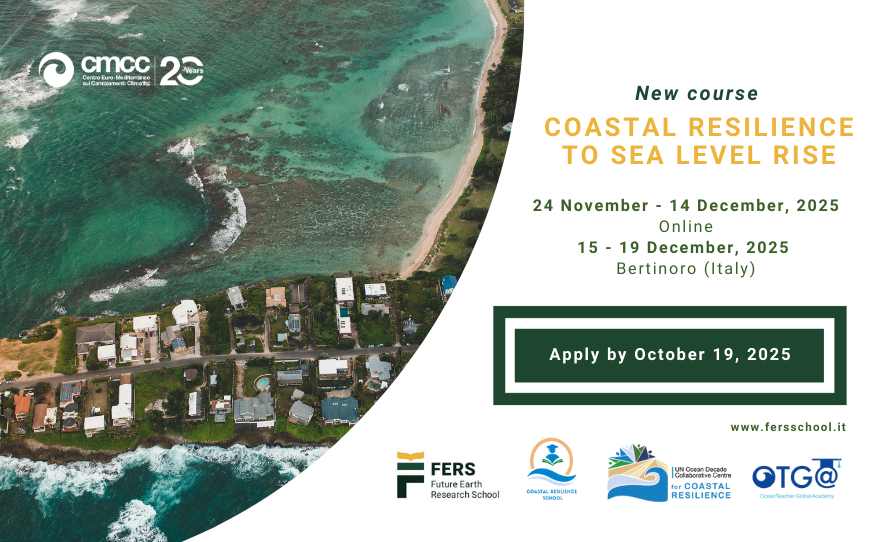
Coastal Resilience to Sea Level Rise
course summary
rise is one of the most pressing challenges facing coastal communities, ecosystems, and infrastructure around the world. Understanding the risks, causes, and impacts of rising sea levels and the consequences on coastal regions is pivotal to design effective adaptation strategies and policies to enhance climate resilience.
the driving physical processes—such as ocean thermal expansion, polar ice melt, glacial retreat, and atmospheric dynamics—as well as the human and ecological impacts – such as increased coastal flooding, saltwater intrusion, habitat loss, and displacement of communities.
tools like flood modelling and vulnerability mapping.
Understand of the physical processes driving SLR risks
Asses regional vulnerabilities and coastal risks
(provide EXAMPLES) for planning and decision-making
, industry and high level education institutions
COMPASS-Philippines2025
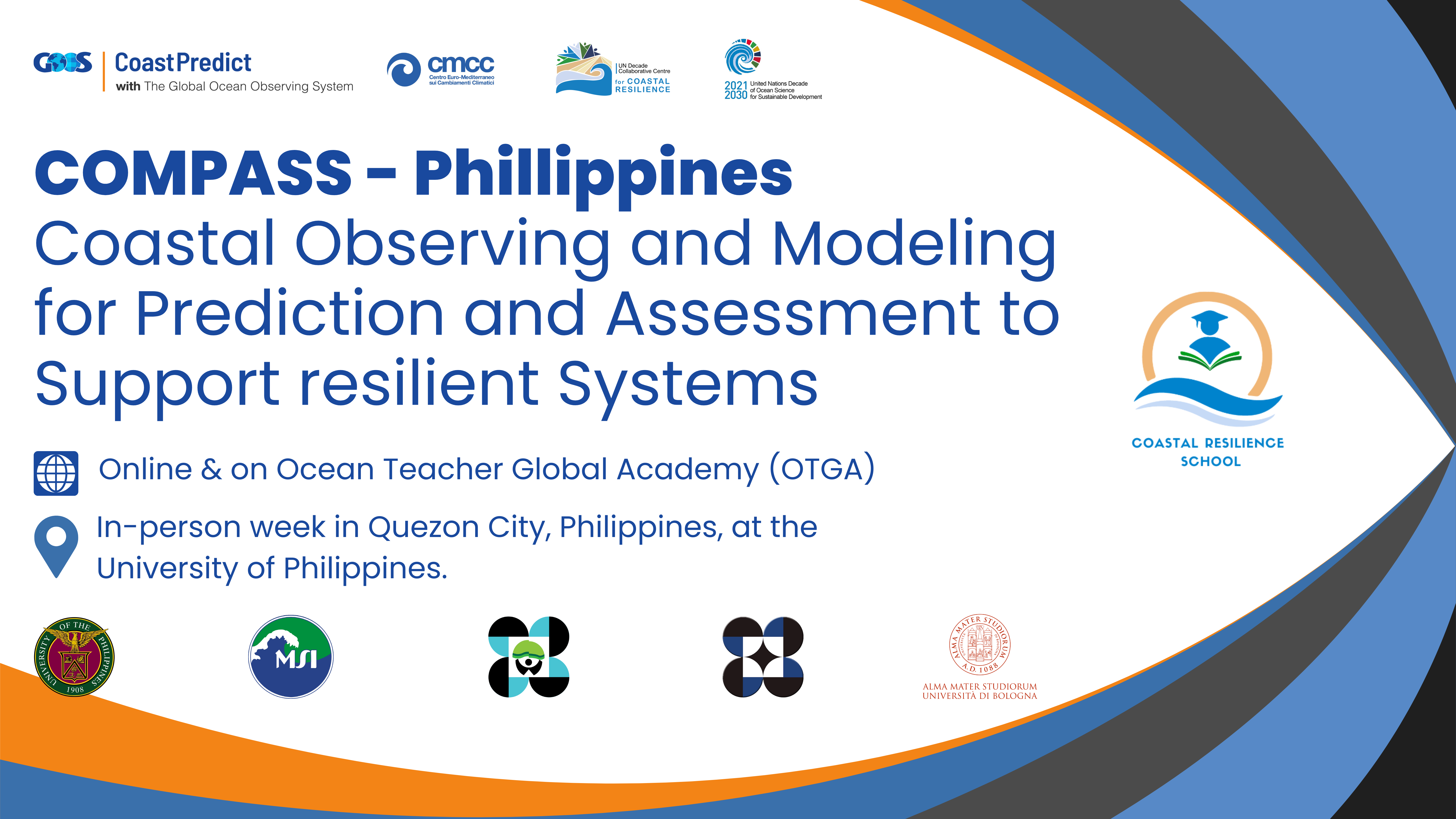
COMPASS Philippines - Coastal Observing and Modeling for Prediction and Assessment to Support resilient Systems
This training course is part of CoastPredict UN Ocean Decade GOOS Programme’s capacity-building efforts and is a collaboration with the SUSTAIN project (UN endorsed project affiliated to CoastPredict). The training focuses on advancing skills in coastal ocean, wave, and biogeochemical modeling, and introduces innovations in observation and remote sensing, to strengthen coastal resilience in the Philippines. The course is organized by CoastPredict in collaboration with the Decade Collaborative Centre for Coastal Resilience (DCC-CR) ‘Coastal Resilience School’ and CMCC Foundation - Euro-Mediterranean Center on Climate Change, Italy, with the support of OceanTeacher Global Academy (OTGA).
Details: https://oceanexpert.org/event/4643
Course objective
The course is designed to provide participants with a comprehensive understanding of numerical ocean modeling, machine learning techniques, and remote sensing applications to simulate and analyze the dynamic and biodiverse marine environments of the Philippines.
A key feature of the course is hands-on training using the SURF ocean modeling platform, enabling participants to simulate real-world scenarios through detailed tutorials and case studies centered on the Philippine coastal region. The program emphasizes integrating physical, biological, and chemical processes in marine systems to support the protection and sustainable management of natural resources. Through this initiative, the course aims to enhance capacity for implementing data-driven solutions and strategies for resilience that can serve as a replicable model for other regions facing similar challenges.
Venue
The course will be subdivided into two phases:
An online phase will take place through OTGA e-learning platform.
An in-person phase which will be held in Quezon City, Philippines, at the University of Philippines.
Learning outcomes
By the end of the course the participants should be able to:
- Understand the fundamentals of ocean circulation, wave dynamics, and biogeochemical modeling.
- Set up and execute downscaling experiments using the SURF platform.
- Apply advanced AI modeling techniques to predict and analyze coastal chlorophyll concentrations.
- Understand key concepts in satellite data processing and remote sensing for oceanographic monitoring
- Understand how decision-support systems can assist in marine hazard management, oil spill forecasting, and ship route optimization
- Gain practical knowledge of coastal observations and hands-on experience in implementing and operating low-cost sea-level monitoring systems.
Target audience
The course is targeted particularly towards mid-career scientists and professionals from environmental protection agencies, governmental officers and postgraduate students (with basic knowledge of oceanography and modeling).
Technological requirements/computer skills
- Python, Jupyter notebook
Course content and agenda
- Module 1 Lessons (online through BigBlueButton on OTGA platform)
24 Feb 2025: 8.00 CET / 15:00 GMT+8 (3 hours)
- Lesson 1: Overview of the Relocatable Ocean Modeling platform SURF
- Lesson 2: Overview of coastal wave modelling
- Lesson 3: Introduction to biogeochemical 1-D modelling
- Lesson 4: Introduction to Cineca’s cloud computing system
- Lesson 5: Practical application of SURF
- Assignment of exercises: Instructions and overview (for downscaling and wave modeling).
- Q&A Live session- 1 hour - 26 Feb 2025: 8.00 CET/15:00 GMT+8 - (BigBlueButton on OTGA platform)
3 March 2025 - 9:00 - 16:00 (GMT +8)
- Welcome and recap of preparatory sessions
- Regional physical oceanography
- Remote sensing applications in the Philippines
- Observation and modeling in the Philippines
- Applications of SURF ocean model in the Philippines
- Numerical modeling of marine ecosystems
4 March 2025 - 9:00 - 16:00 (GMT +8)
- Numerical ocean circulation, dynamical downscaling, and the NEMO model: Advanced techniques and applications
- Practical session 1: Review of exercises completed after online lectures, and case study simulations - instructions on what is needed at the end of week for evaluated presentations.
- Practical session 2: Downscaling experiment using the SURF platform
- Decision support system applications for Oil spills
- Ship voyage optimisation with VISIR-2
5 March 2025 - 9:00 - 16:30 (GMT +8)
- Practical session 3: Wave modelling
- Practical session 4: Biogeochemical models - 1D
- Machine-learning model for chlorophyll
- Practical session 5: Machine learning model implementation
6 March 2025 - 9:00 - 16:00 (GMT +8)
- Coastal observations and citizen science
- Practical Session 6: Finalizing the case study simulation
- Presentation preparations
7 March 2025 - 9:00 - 12:30 (GMT +8)
- Final Presentations and Applications
- Group Presentations
- Discussion and Q&A
- Closing Remarks and Certificates
8 March 2025 - 9:00 - 12:00 (GMT +8)
- Field Trip - installation of low-cost sea level sensors
Language of instruction: English
Course instructors
- Aiko Love B. del Rosario - Marine Science Institute - University of the Philippines
- Aletta T. Yñiguez - Marine Science Institute - University of the Philippines Diliman
- Cesar L. Villanoy - Marine Science Institute - University of the Philippines
- Federica Benassi - CMCC Foundation - Euro-Mediterranean Center on Climate Change, Italy
- Francesco Trotta - CMCC Foundation - Euro-Mediterranean Center on Climate Change, Italy
- Gianandrea Mannarini - CMCC Foundation - Euro-Mediterranean Center on Climate Change, Italy
- Igor Atake - CMCC Foundation - Euro-Mediterranean Center on Climate Change, Italy
- Laura T. David - Marine Science Institute - University of the Philippines
- Lorenzo Mentaschi - University of Bologna
- Luca Giunti - CMCC Foundation - Euro-Mediterranean Center on Climate Change, Italy
- Marco Zavatarelli - University of Bologna
- Samantha Siedlecki - Department of Marine Sciences - University of Connecticut
- Viviana Piermattei - CMCC Foundation - Euro-Mediterranean Center on Climate Change, Italy
Organizers
- Marine Science Institute, University of the Philippines Diliman (Philippines)
- CMCC Foundation - Euro-Mediterranean Center on Climate Change, Italy.
- CoastPredict
- University of Bologna
- Coastal Resilience School - DCC-CR - Decade Collaborative Centre for Coastal Resilience
- Department of Science and Technology Philippine Council for Agriculture, Aquatic and Natural Resources Research and Development DOST PCAARRD
Course Duration
The course has a total of approx 46.5 hours, according to the following structure:
- 24 Feb - 8:00 CET/15:00 Philippines time (GMT+8) - 3.5 hours (synchronous, online)
- 26 Feb - 8:00 CET/15:.00 Philippines time (GMT+8) 1 hour (synchronous, online)
- Assignments ~ 8 hours (asynchronous, online)
- 5 days (3-7 March)- 9:00-16:00 (GMT+8) ~ 6 hours /day ( ~ 30 hours) (synchronous, face-to-face)
Certificate
OTGA Certificate will be awarded to the participants upon successful completion of assignments online and delivery of a group presentation according to the course planning.
Notes
Application process
This course is by invitation only, with a limited number of seats (10-15) participants.
Selection criteria
UNESCO is committed to promoting equal access principles. Applications from minority or underrepresented groups are strongly encouraged.
A minimum of a Master's degree in relevant fields such as environmental science, marine science, meteorology, fisheries, coastal engineering, or urban planning, or with equivalent relevant experience, from the Philippines and surrounding regions.
Costs
Free of charge. There are no tuition fees.
The course is offered free of charge to the participants. The participants would have to cover their own costs of their travel and stay in Quezon city. Instructors are self-funded.
Contacts
For any questions, please contact OTGA Secretariat (ioc.training@unesco.org), always using the name of the course as e-mail subject.
Cancellation policy
In the event of cancellation of the course by the OTGA or its affiliates, we will provide notification of cancellation at least 7 days prior to the course date. In the event of cancellation by the attendee, we should receive notification of cancellation at least 7 days prior to the course date.
OBIS2026EN
Contributing and publishing datasets to OBIS (self-paced)
The Ocean Biodiversity Information System (OBIS) is the most comprehensive gateway to the world’s ocean biodiversity and biogeographic data and information. OBIS provides open access to this quality-controlled data that adhere to biodiversity standards (Darwin Core, EML). This course is a continuation of the Contributing and publishing datasets to OBIS (self-paced), which remained open only for staff and collaborators of OBIS Nodes (under invitation of OBIS Secretariat).
The aim of this course is to teach the step-by-step basics for how to format and publish datasets according to these standards to contribute to OBIS, and adopt best practices in the management of marine life data. This training course is self-guided and designed to teach learners how to structure datasets to contribute to OBIS. The course will guide users step-by-step through the OBIS data life cycle, including: identifying an appropriate data structure, applying Darwin Core Archive formatting, conducting quality control steps, publishing data, and accessing data from OBIS.
This course is an updated version - 2025/2026.
Participation in this course is restricted to staff and collaborators in OBIS Nodes, invited by OBIS Secretariat, open initially from 15 December 2025 to 15 December 2026.
https://oceanexpert.org/event/4930
Watch the video below for a brief overview and introduction by the course instructor, Elizabeth Lawrence.
Learning goals
- Describe the OBIS data life cycle
- Restructure a flat dataset into a Darwin Core-Archive format, following OBIS best practices
- Identify appropriate Biodiversity Information Standards (TDWG) vocabulary for your dataset
- Interpret and resolve quality control flags
- Publish data and metadata on an IPT
- Obtain OBIS data from the Mapper tool, R, API
Target audience
Participation in this course is restricted to staff and collaborators in OBIS Nodes, invited by OBIS Secretariat, open initially from 15 December 2025 to 15 December 2026.
Course content
The course is divided into the following Modules:
Module 1. Introduction to data publishing and Darwin Core
Module 2. Introduction to data formatting
Module 3. Formatting data tables
Module 4. DNA Derived Data
Module 5. Controlled Vocabulary
Module 6. Conducting Quality Control
Module 7. Publishing your Data
Module 8. Accessing Data from OBIS
These modules will cover:
- Darwin Core standards (Relational databases, Core and Extension tables)
- Formatting data to publish in OBIS (Creating Event, Occurrence, and ExtendedMeasurementOrFact tables; Mapping standardized vocabulary; Using World Register of Marine Species (WoRMS) Taxon Match tool; Understand how to compile genetic, acoustic, habitat, imaging, and/or tracking data for OBIS)
- Conducting quality control (Dealing with uncertain data fields e.g. temporal, spatial, taxonomic; Troubleshooting difficult data types or missing data)
- Publishing data (Filling metadata; Using, publishing, and updating datasets on IPT)
- Accessing and downloading data from OBIS (Full data exports, R, API; Using Mapper tool to subset data)
Duration
This is a 32-hour self-paced online course (asynchronously), open continuously from 15 December 2025 to 31 December 2026.
Lead Instructor
- Dr. Elizabeth Lawrence (OBIS training officer)
Other course contributors
- Carolina Peralta Brichtova
- Ruben Perez Perez
- Pieter Provoost
- Saara Suominen
- Leen Vandepitte
- Marcos Zárate
- Mr. Ward Appeltans (OBIS project manager)
Language
English
Learner assessment
This is a self-taught course that includes quizzes designed to help learners assess their own learning at regular intervals. In order to successfully complete the course and be awarded a Certificate at the end, the following is mandatory:
- complete all lessons in each Module of the course;
- complete all quizzes (80% minimum score);
- submit the assignments and receive a minimum grade of 80% or 'satisfactory' according to the exercise type.
Note: Filling in the course feedback survey is mandatory to obtain the course certificate, as well as a pre and post assessment.
Pre-requisites:
- be a staff or collaborator in an OBIS Node
- a working knowledge of English
- background knowledge in biological and marine sciences
- basic computer skills (either Windows or Mac systems)
- the ability to be self-directed in learning new technology skills (e.g. following a step-by-step tutorial, online video help, or access to support to learn necessary skills)
Technology requirements
To complete this course, participants should have access to:
- Latest version of either Chrome, Edge, Firefox, or Safari web browsers
- JavaScript and cookies enabled
- Broadband internet access (minimum bandwidth of 0.5 Mbps (Receive and Send)
- Speakers or headphones, Microphone
How to enrol
If you are a member of an OBIS node, please contact OBIS secretariat (helpdesk@obis.org) for instructions on how to enroll.
For any questions please contact the OTGA Secretariat (ioc.training@unesco.org) or the OBIS secretariat (helpdesk@obis.org) always using the name of the course as email subject.
UNESCO is committed to promote equal access principles. Participation from minority or underrepresented groups are strongly encouraged.
Costs
There are no tuition fees.
This training course has been developed with financial support from NORAD and LifeWatch ERIC.
Feedback survey
At the end of the course, you will be asked to fill out a feedback survey. This information will be used to improve future courses.
Cancellation policy:
In the event of cancellation of the course by the OTGA or its affiliates, we will provide notification of cancellation at least 7 days prior to the course date.
In the event of cancellation by the attendee, we should receive notification of cancellation at least 7 days prior to the course date.
Python2024-LAC
Data Analysis with Python Programming for Early Career Ocean Professionals (ECOPs)
Given the development of new tools in studying the ocean in more detail and on larger scales, early-career ocean professionals, students and other oceanographers need programming skills for effective data management and analysis. This course serves as an introduction to the Python programming language and software environment, enabling participants to process, analyze and visualize data more robustly. It is specially designed for early career ocean professionals who are beginners in Python programming, and who aim to explore different ocean datasets in their research. The training will utilize relevant oceanographic datasets, including physical, chemical and biological data, as well as fisheries datasets. This approach makes it easier to relate to, understand and apply concepts covered in the course.
Details: https://oceanexpert.org/event/4054

DCO-QA/QC
Data quality assurance (QA) and quality control (QC) in the Ocean Decade
Summary
Be able to describe QA and QC processes their ocean data have been through in metadata shared with global data ocean data systems
Understand issues in QC of ocean data from a range of thematic areas and be able to perform basic QC of these data
Actions
advised
Learning will be measured through short assessments and quizzes
Evaluation/Certificate:
Certificate will be issued, the criteria is to complete all lessons in each Module of the course and complete all quizzes (70% minimum score for each quiz)
Complete final course feedback survey
Technology requirements:
● Computer with Windows or Mac operating system
Pre-requisites: advisable: take the Ocean Data Management course (see www.oceanteacher.org) - available till 31st October 2025
Application process:
Please apply through this LINK. Apply before 15 September 2025 (23:59 CEST)
number of participants admitted: 40 people
costs: no cost
For any questions please contact the OTGA Secretariat (ioc.training@unesco.org) always using the name of the course as email subject.
There are no tuition fees.
UNESCO is committed to promote equal access principles. Applications from minority or underrepresented groups are strongly encouraged.
Feedback survey
At the end of the course, you will be asked to fill out a feedback survey. This information will be used to improve future courses.
FishMan_2022
Earth Observation data and techniques for fisheries management
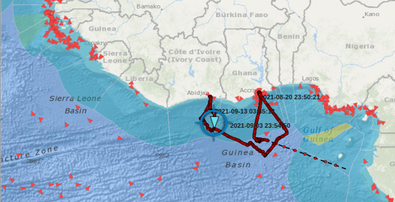
Fishing vessel traffic data derived from Automatic Identification System (AIS) has become an essential component for building fisheries intelligence. Enforce and related fisheries management strategies rely on such information to curb illegal fishing, plan and implement policies for the sustainability of marine living resources.
Fisheries managers and enforcers require specialized skills to processes the large volume of positional, navigational and voyage related information embedded in AIS data. Open-source programming software such as Python has lots of third-party modules for building packages and functions. This makes Python an asset for the creation of customized data processing, analyses and visualization to support in making informed decisions in the management of natural resources.
This training course will provide participants an understanding of the movement of fishing vessels and skills in processing AIS data.
EOFish-2025
Earth Observation for Enhanced Fisheries Monitoring, Control, and Surveillance
: Data manipulation and analysis
- Overview of the Automatic Identification System (AIS)
- Key attributes of AIS data
- Importance of AIS data for monitoring, control, and surveillance
- Sources of AIS data and formats
- Reading AIS data files using Pandas
- Cleaning and preparing AIS data for analysis
- Handling missing or erroneous data in AIS datasets
- Visualising vessel tracks using Python libraries
- Calculating vessel speeds and identifying anomalies
- Detecting potential IUU fishing activities based on AIS patterns
- Integrating AIS data into fisheries management systems
- Case studies: Detecting transshipment using AIS data
Target audience and prerequisites
This course is designed for researchers, fisheries officers, students, and Early Career Ocean Professionals (ECOPs) actively engaged in fisheries management, maritime security, and coastal conservation in Africa.
Language: English
Instructors
Dr. Kwame Adu Agyekum (Department of Marine and Fisheries Sciences, University of Ghana)
Mr. Ignatius Kweku Williams (GMES and Africa project, University of Ghana)
Mr. Daniel Quarshie (GMES and Africa project, University of Ghana)
Course format and duration
This course will be held online and includes synchronous sessions, for which attendance is mandatory. These sessions are scheduled for: 9 – 13 July 2025 11:00 -13:00 UTC / GMT Daily.
The estimated duration of this course is 20 hours (10 hours of synchronous classes and 10 hours of asynchronous activities).
Organizers
RTC Ghana
MarCNoWA: GMES & Africa Project
IOCAFRICA - Intergovernmental Oceanographic Commission of UNESCO Sub-Commission for Africa and the Adjacent Island States
Learner assessment
Assignments (e.g, written and data exercises) and multiple-choice quizzes.
Certificate
OTGA Certificate will be awarded to the participants upon completion of assignments (pass mark: 70%) and 60% attendance at the synchronous sessions.
Technology requirements, computer skills, and pre-requisites
- Computer with Windows or Mac OS
- Latest version of either Chrome, Edge, Firefox or Safari web browsers
- JavaScript and cookies enabled
- Broadband internet access (minimum bandwidth of 0.5 Mbps (Receive and Send)
- Speakers or headphones, and microphone
You should be proficient in the following:
- basic computer skills
- finding resources through search engines
- the ability to be self-directed in learning new technology skills (e.g. following a step-by-step tutorial, online video help, or access to support to learn necessary skills).
Application and selection of participants.
A limited number of seats (approximately 25) are available. Please fill out the online application form available in this LINK:
The applications start on 10 June 2025. The deadline to submit the application is 25 June 2025 (23:59 CET: Central European Time).
Participants will be selected based on the fit to the target audience, motivation statement, and professional background/qualification.
Costs: This is an online course with no tuition fees.
Contacts
For any questions, please contact OTGA Secretariat (ioc.training@unesco.org) or the course coordinator Ignatius Kweku Williams (kwilliams@ugedugh.onmicrosoft.com) always using the name of the course as e-mail subject.
Feedback survey
At the end of the course, you will be asked to fill out a feedback survey. This information will be used to improve future courses.
Cancellation policy
In the event of cancellation of the course by the OTGA or its affiliates, we will provide notification of cancellation at least 7 days prior to the course date. In the event of cancellation by the attendee, we should receive notification of cancellation at least 7 days prior to the course date.
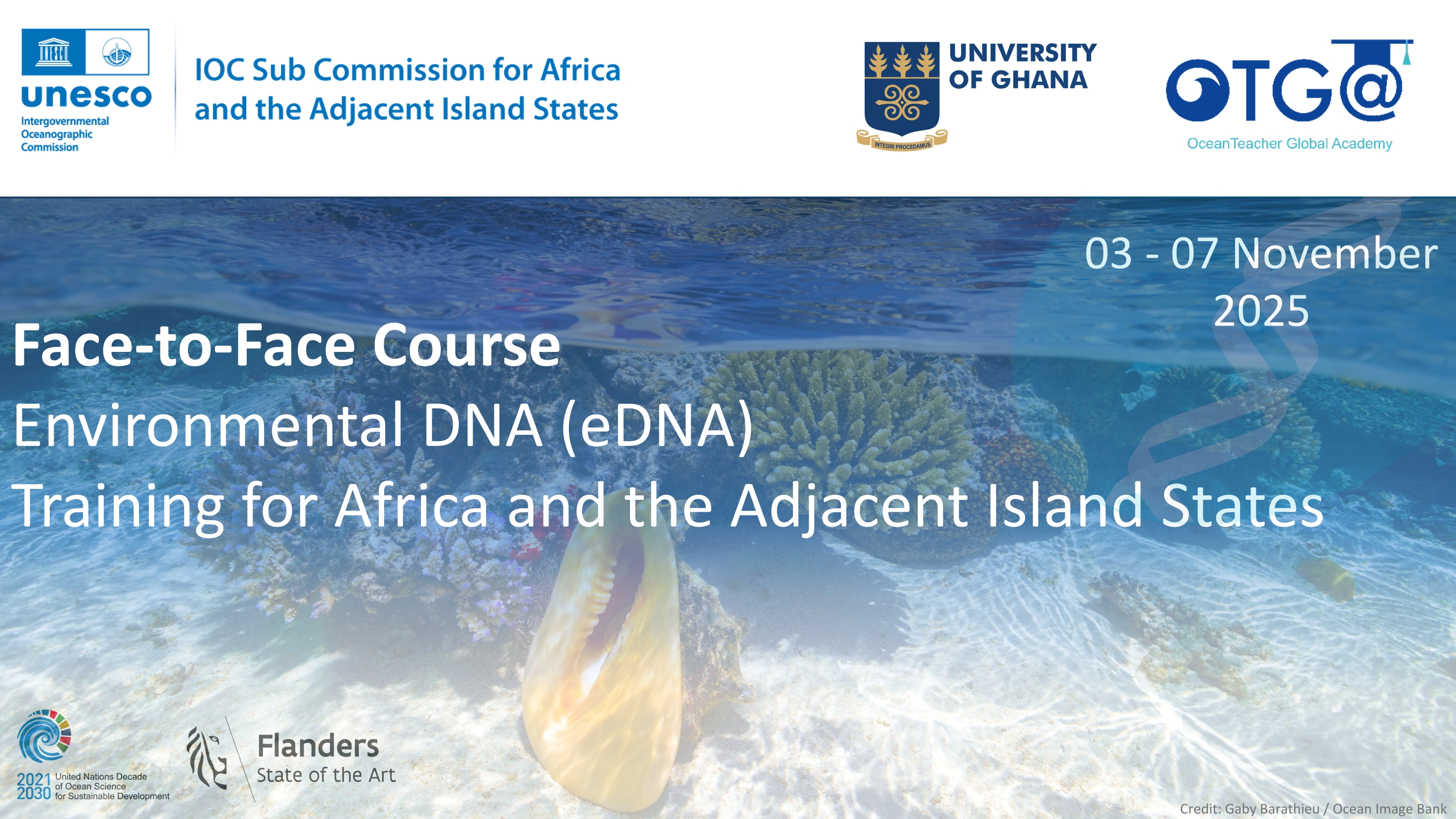
eDNA_Africa_2025
Environmental DNA (eDNA) Training for Africa and the Adjacent Island States
Environmental DNA (eDNA) sampling and analysis have become an increasingly popular tool for studying biodiversity and monitoring ecosystems. It provides a relatively easy, non-invasive method to scan environments; estimate number of species, assess biodiversity, and monitor changes in a community without having to collect organism samples. Additionally, eDNA has the potential to inform on the movements and habitat associations of endangered/rare species, migratory species, water quality, detecting and tracking invasive species, harmful algal blooms, pathogens, and parasites. eDNA uses traces of genetic materials that organisms leave behind in water, soil, or air. Regardless of its wide application, knowledge of this technique is still underused in several parts of the world, such as in Africa. Marine ecosystems of Africa and the adjacent island states are teeming with biodiversity, including 439 key marine biodiversity areas. These ecosystems are facing significant threats from climate change, overexploitation, invasive species, urbanization, and other factors, as such, impact on biodiversity. Therefore, there is an urgent need to accelerate the understanding of African biodiversity patterns and monitor ecosystems more efficiently. Implementing eDNA techniques in biodiversity assessment in African countries is a promising opportunity to maximize the conservation and management of marine life.
In this context, this blended training aims to provide participants with a comprehensive theoretical understanding of environmental DNA (eDNA) and its applications in environmental sciences. It will cover all relevant aspects from eDNA sampling, laboratory and bioinformatic analysis, data analysis of results and possible application. The participants will learn about the origins of eDNA, how it enters the environment, and its significance in measuring biodiversity. The training will give an overview of eDNA, including its definition and different ecosystems where it can be studied with a specific focus on marine ecosystems.
Venue
University of Ghana
General Learning Goals
By the end of the course, the participants are expected to have:
- Increased understanding of the eDNA technology and its practical application.
- Enhanced skills in the collection and preservation of eDNA samples.
- Practical knowledge and skills in the extraction of eDNA samples.
- Insights on the analysis of eDNA data, and use of bioinformatics tools.
- Knowledge of utilization of eDNA technique in assessing marine biodiversity and monitoring ecosystems.
This course includes an online preparation component where participants will learn how to:
- Explain what eDNA is, its sources, and its ecological significance.
- Describe workflows for eDNA sampling, preservation, laboratory analysis, and bioinformatics.
- Identify key challenges, limitations, and good practices in eDNA studies.
- Understand quality control (QC), data stewardship, and ethical considerations in eDNA research.
- Recognise how eDNA data can inform policy, conservation, and ecosystem monitoring in Africa’s marine environments.
Target audience
The training is focused on ocean practitioners from West and North African countries, including Early Ocean Career Professionals (ECOPs) and mid-career ocean scientists interested in and needing to use eDNA in their scientific or technical work.
Pre-requisites
Participants must:
-
Have prior knowledge of marine biodiversity sampling and monitoring.
-
Bring their laptop.
-
A working knowledge of English.
-
Applicants must be from West or North Africa.
Course content
Module 1: Foundations of Environmental DNA (eDNA) Science
Module 2: eDNA-Omics and Their Applications
Module 3: eDNA Workflows and Practical Considerations
Module 4: eDNA Bioinformatics Analysis
Module 5: Data Interpretation, Bias, and Policy Relevance
All these theoretical modules will be complemented by targeted hands-on activities for 1 week, face-to-face training in Ghana.
Language of instruction: English
Course Duration, Synchronous Sessions, and Format
The course will take place face-to-face between 3 to 7 November, 2025, with a duration of approximately 40 hours.
The course has an online learning component to be completed before the onsite classes of approximately 12h.
Participants will be required to:
- Complete online self-paced learning activities before the onsite classes.
- Familiarize themselves with the documentation and methods shared by the group previously.
Instructors
Organizers
Application process and selection criteria
OTGA online application form. Before starting the online application process, applicants must: (a) create a profile in OceanExpert (www.oceanexpert.org); (b) prepare a Curriculum Vitae; and (c) prepare a motivational statement highlighting the relevance of this course for the candidate's career (maximum 300 words).
A limited number of seats are available (20 seats). Please complete the online application form available on this LINK [https://otga.wufoo.com/forms/m164fy0026gyzv/]. The applications start on 5 August 2025. The deadline to submit the application is Sunday 24 August 2025.
UNESCO is committed to promoting equal access principles. Applications from minority or underrepresented groups are strongly encouraged.
Assessment & Certificate
Participants will be required to complete a preparation phase online before the course, attend all sessions of the face-to-face training in Ghana, and successfully complete the course activities and assessments. A certificate of completion will be issued for those who complete these requisites.
Contacts
- Course Coordinators: Ibukun Adewumi i.adewumi@unesco.org; Edwin Mwashinga e.mwashinga@unesco.org;
- RTC Ghana Coordinator: Benjamin Botwe
- OTGA Secretariat: ioc.training@unesco.org
Costs
Free of charge. There are no tuition fees.
For the selected participants, course organizers will cover the costs of travel, accommodation, local transport, and food. Eligibility for support requires meeting the pre-requisites and target audience.
The instructors will give the course voluntarily.
Cancellation policy
In the event of cancellation of the course by the OTGA or its affiliates, we will provide notification of cancellation at least 7 days prior to the course date. In the event of cancellation by the attendee, we should receive notification of cancellation at least 7 days prior to the course date.
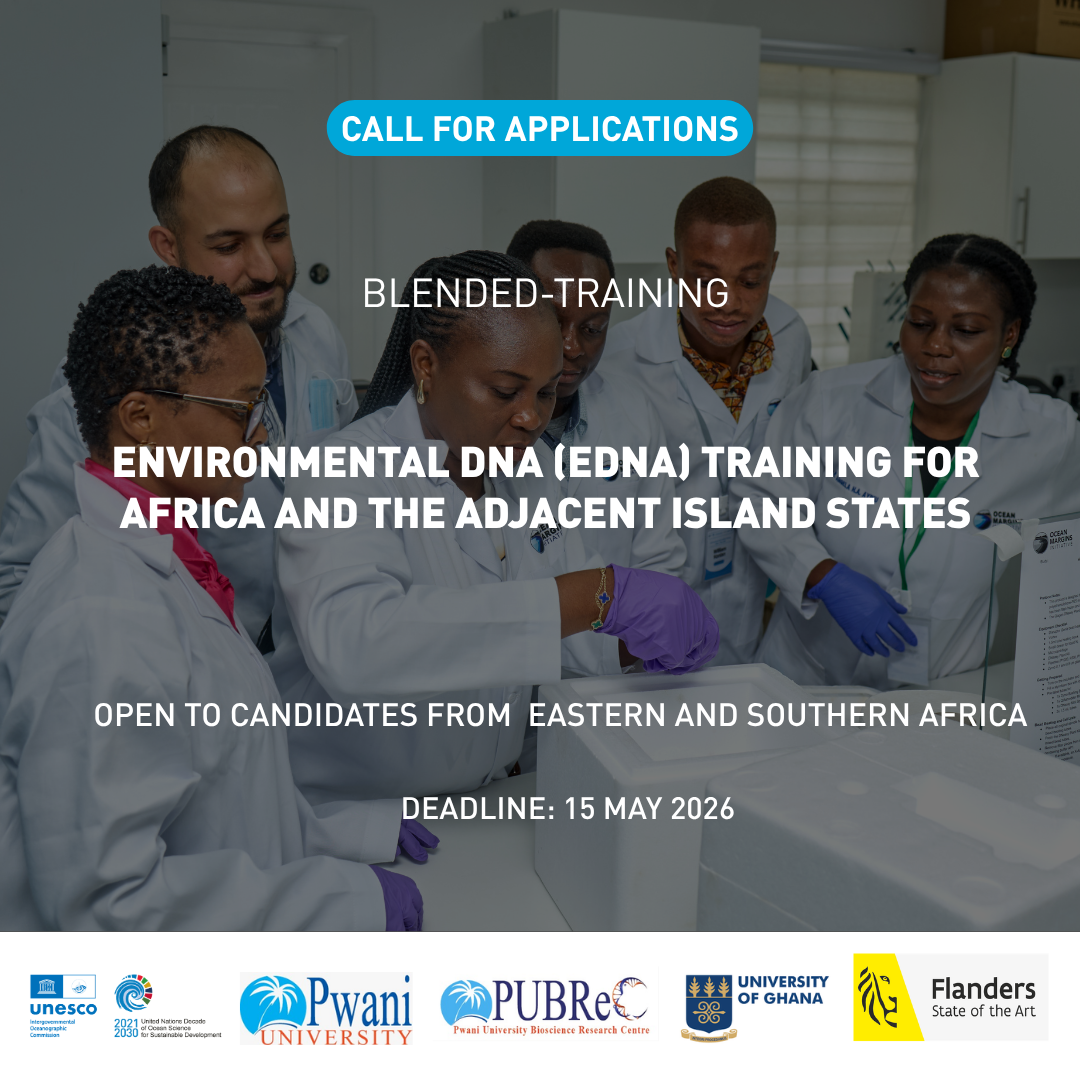
eDNA_Africa_2026
Environmental DNA (eDNA) Training for Africa and the Adjacent Island States 2026
Environmental DNA (eDNA) sampling and analysis have become an increasingly popular tool for studying biodiversity and monitoring ecosystems. It provides a relatively easy, non-invasive method to scan environments; estimate number of species, assess biodiversity, and monitor changes in a community without having to collect organism samples. Monitoring of endangered species, invasive species, pathogens, and harmful algal bloom Additionally, eDNA has the potential to inform on the movements and habitat associations of endangered/rare species, migratory species, water quality, detecting and tracking invasive species, harmful algal blooms, pathogens, and parasites. eDNA uses traces of genetic materials that organisms leave behind in water, soil, or air. Regardless of its wide application, knowledge of this technique is still underused in several parts of the world, such as in Africa.
Marine ecosystems of Africa and the adjacent island states are teeming with biodiversity, including 439 key marine biodiversity areas. These ecosystems are facing significant threats from climate change, overexploitation, invasive species, urbanization, and other factors, as such, impact on biodiversity. Therefore, there is an urgent need to accelerate the understanding of African biodiversity patterns and monitor ecosystems more efficiently. Implementing eDNA techniques in biodiversity assessment in African countries is a promising opportunity to maximize the conservation and management of marine life.
In this context, this blended training aims to provide participants with a comprehensive theoretical understanding of environmental DNA (eDNA) and its applications in environmental sciences. It will cover all relevant aspects from eDNA sampling, laboratory and bioinformatic analysis, data analysis of results and possible application. The participants will learn about the origins of eDNA, how it enters the environment, and its significance in measuring biodiversity. The training will give an overview of eDNA, including its definition and different ecosystems where it can be studied with a specific focus on marine ecosystems.
Venue
Pwani University, Kenya
General Learning Goals
By the end of the course, the participants are expected to have:
- Increased understanding of the eDNA technology and its practical application.
- Enhanced skills in the collection and preservation of eDNA samples.
- Practical knowledge and skills in the extraction of eDNA samples.
- Insights on the analysis of eDNA data, and use of bioinformatics tools.
- Knowledge of utilization of eDNA technique in assessing marine biodiversity and monitoring ecosystems.
This course includes an online preparation component where participants will learn how to:
- Explain what eDNA is, its sources, and its ecological significance.
- Describe workflows for eDNA sampling, preservation, laboratory analysis, and bioinformatics.
- Identify key challenges, limitations, and good practices in eDNA studies.
- Understand quality control (QC), data stewardship, and ethical considerations in eDNA research.
- Recognise how eDNA data can inform policy, conservation, and ecosystem monitoring in Africa’s marine environments.
Target audience
The training is focused on ocean practitioners from Eastern and Southern Africa countries, including Early Ocean Career Professionals (ECOPs) and mid-career ocean scientists interested in and needing to use eDNA in their scientific or technical work.
Pre-requisites
Participants must:
-
Have prior knowledge of marine biodiversity sampling and monitoring.
-
Bring their laptop.
-
A working knowledge of English.
-
Applicants must be from Eastern or Southern Africa.
Course content
Module 1: Foundations of Environmental DNA (eDNA) Science
Module 2: eDNA-Omics and Their Applications
Module 3: eDNA Workflows and Practical Considerations
Module 4: eDNA Bioinformatics Analysis
Module 5: Data Interpretation, Bias, and Policy Relevance
All these theoretical modules will be complemented by targeted hands-on activities for 1 week, face-to face training at the Pwani University, Kenya.
Language of instruction: English
Course Duration, Synchronous Sessions, and Format
The course will take place face-to-face between 27 July and 2 August, 2026, with a duration of approximately 40 hours.
The course has an online learning component to be completed before the onsite classes of approximately 12h.
Participants will be required to:
- Complete online self-paced learning activities before the onsite classes.
- Familiarize themselves with the documentation and methods shared by the group previously.
Instructors
Organizers
Application process and selection criteria
OTGA online application form. Before starting the online application process, applicants must: (a) create a profile in OceanExpert (www.oceanexpert.org); (b) prepare a Curriculum Vitae; and (c) prepare a motivational statement highlighting the relevance of this course for the candidate's career (maximum 300 words).
A limited number of seats are available (20 seats). Please complete the online application form available on this LINK [https://otga.wufoo.com/forms/mfp4obc0qqy8qa/]. The applications start on 30 April 2026. The deadline to submit the application is 15 May 2026.
UNESCO is committed to promoting equal access principles. Applications from minority or underrepresented groups are strongly encouraged.
Assessment & Certificate
Participants will be required to complete a preparation phase online before the course, attend all sessions of the face-to-face training in Kenya, and successfully complete the course activities and assessments. A certificate of completion will be issued for those who complete these requisites.
Contacts
- Course Coordinators: Ibukun Adewumi i.adewumi@unesco.org; Edwin Mwashinga e.mwashinga@unesco.org;
- OTGA Secretariat: ioc.training@unesco.org
Costs
Free of charge. There are no tuition fees.
For the selected participants, course organizers will cover the costs of travel, accommodation, local transport, and food. Eligibility for support requires meeting the pre-requisites and target audience. The instructors will give the course voluntarily.
Costs of this training are co-sponsored by the Ocean Decade Capacity Development Facility and the UNESCO IOC Project Office for IODE.
Cancellation policy
In the event of cancellation of the course by the OTGA or its affiliates, we will provide notification of cancellation at least 7 days prior to the course date. In the event of cancellation by the attendee, we should receive notification of cancellation at least 7 days prior to the course date.
Event details: https://www.oceanexpert.org/event/5013
ERASMUSMARIS-26
Erasmus Maris 2026: Monitoring microplastic pollution in coastal waters: From sampling and analysis to data
Collaboration and teamwork are central, and the training concludes with a certificate ceremony recognizing participants' achievements.
Who is it for?
The course is designed for approximately 60 upper secondary students and 14 science teachers from participating European Schools. The teachers will follow the trainer pathway, enabling them to implement Erasmus Maris activities with their students after the course. Two facilitators from Wings of the Ocean will also follow the trainer pathway to support future implementation in France.
Venue
Microplastic sampling with a manta net.
This includes:
Approximately 20 hours of synchronous practical training distributed across 14–18 September 2026;
approximately 12 hours of online/asynchronous learning, including lessons and quizzes.
The practical training includes laboratory analysis, field sampling, introduction to the MARIS database, and supervised data-entry activities. The online component includes theoretical lessons and quizzes
Language of Instruction
Spanish.
The online lessons and quizzes are currently in English. If translation is completed before the course, the online materials may also be made available in Spanish.
Instructors
- Kamel Labibes: Chair- Ayam Sailing Europe,ASE)
- Carlos Sanz Lázaro: Professor, Department of Ecology, Faculty of Sciences, University of Alicante; Ramón Margalef Multidisciplinary Institute for Environmental Studies (IMEM), University of Alicante
Internal process. Each of the schools participating in the Erasmus Maris program, spread across EU different countries, have chosen six students to participate in the program. Applicants have expressed a genuine interest in environmental issues. presentation, and performance at school were also taken into account.
UNESCO is committed to promoting equal access principles. Applications from minority or underrepresented groups are strongly encouraged. For any questions please contact the OTGA Secretariat (ioc.training@unesco.org) always using the name of the course as the email subject.
Contacts
- Dr Kamel Labibes: coordination@ayamsailing.eu
- OTGA Secretariat: ioc.training@unesco.org
In case of need for further clarifications please use the contacts above, always using as email subject.
Feedback survey
At the end of the course, you will be asked to fill out a feedback survey. This information will be used to improve future courses.
Cancellation policy
In the event of cancellation of the course by the OTGA or its affiliates, we will provide notification of cancellation at least 7 days prior to the course date. In the event of cancellation by the attendee, we should receive notification of cancellation at least 7 days prior to the course date.